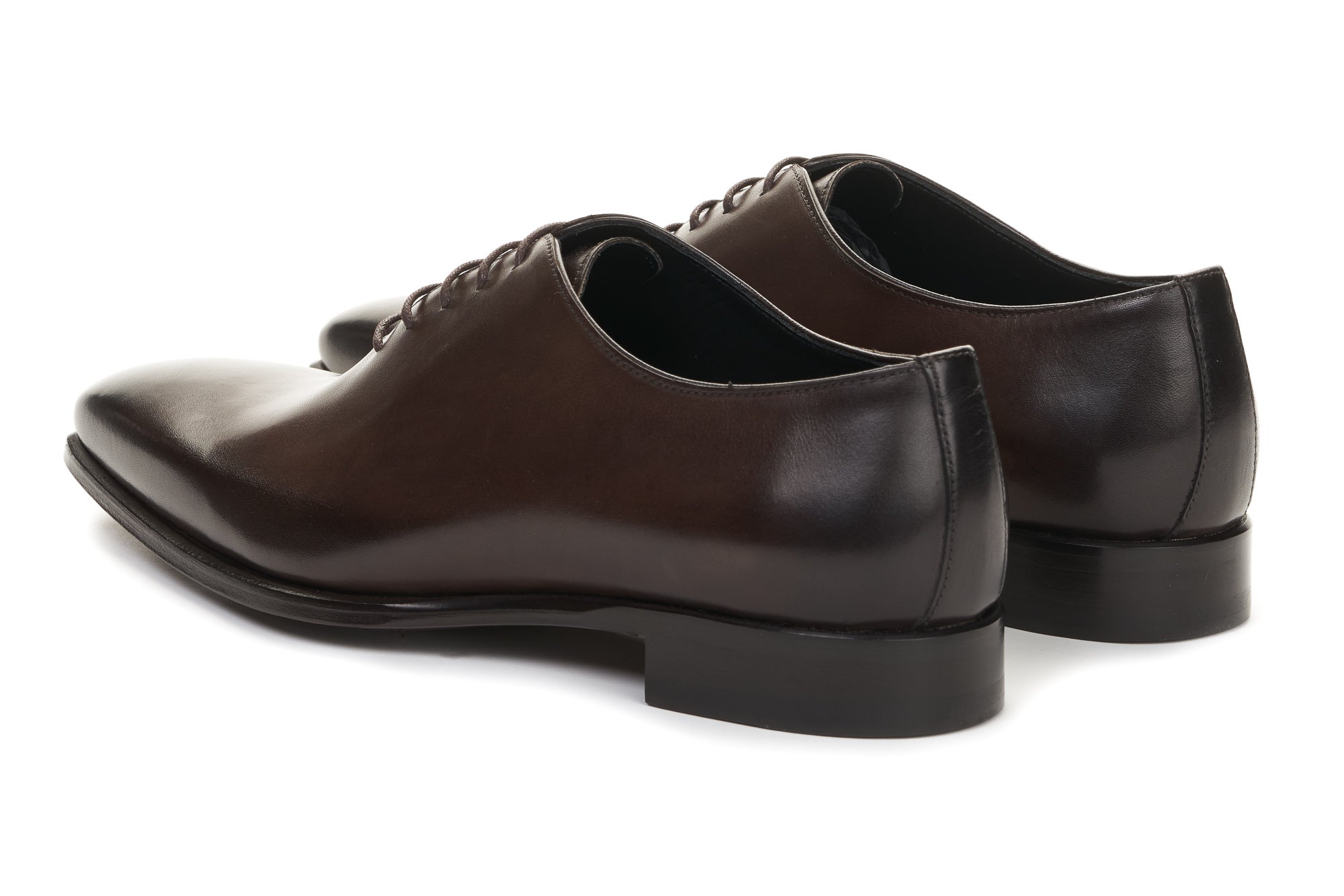
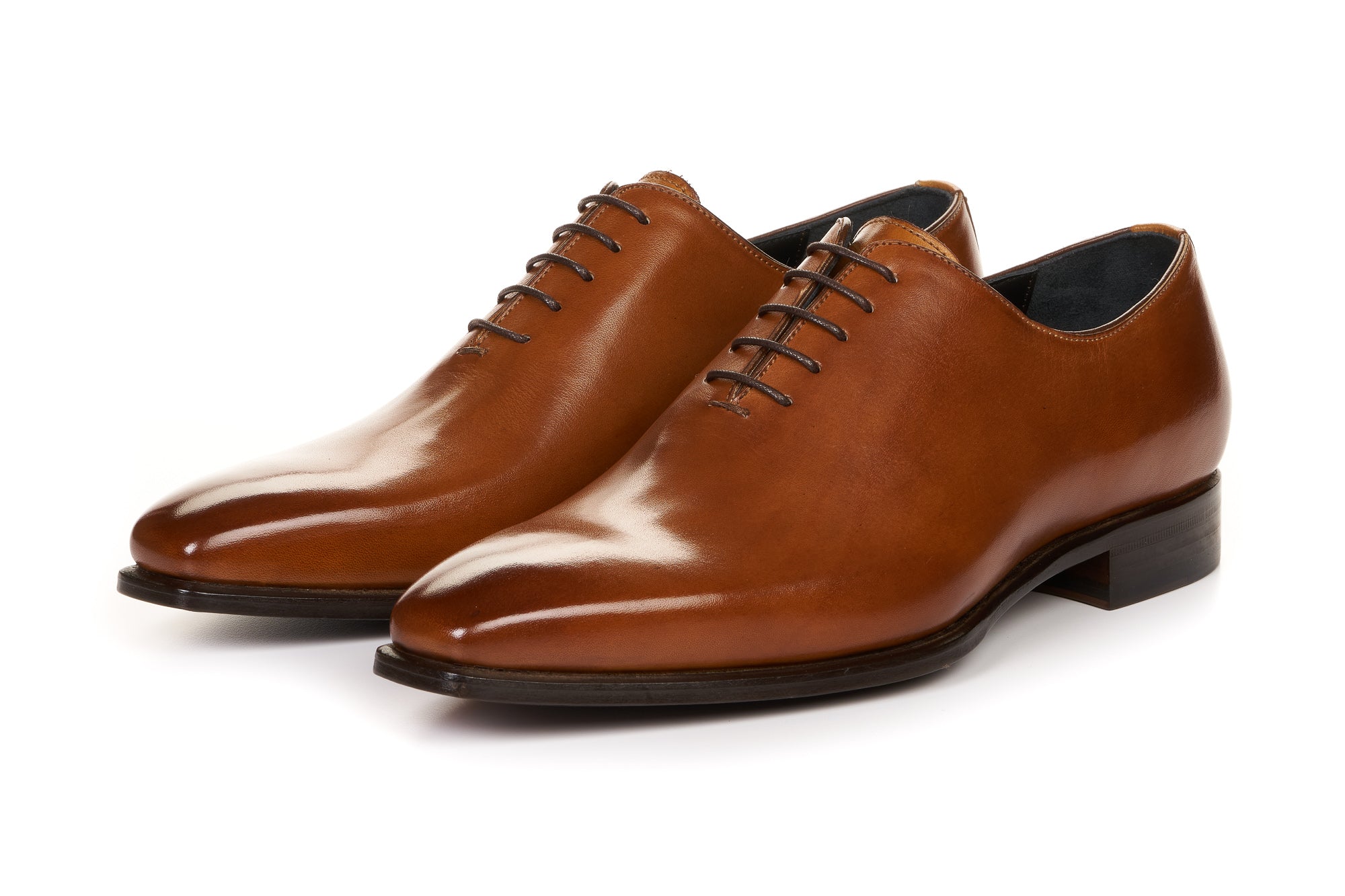
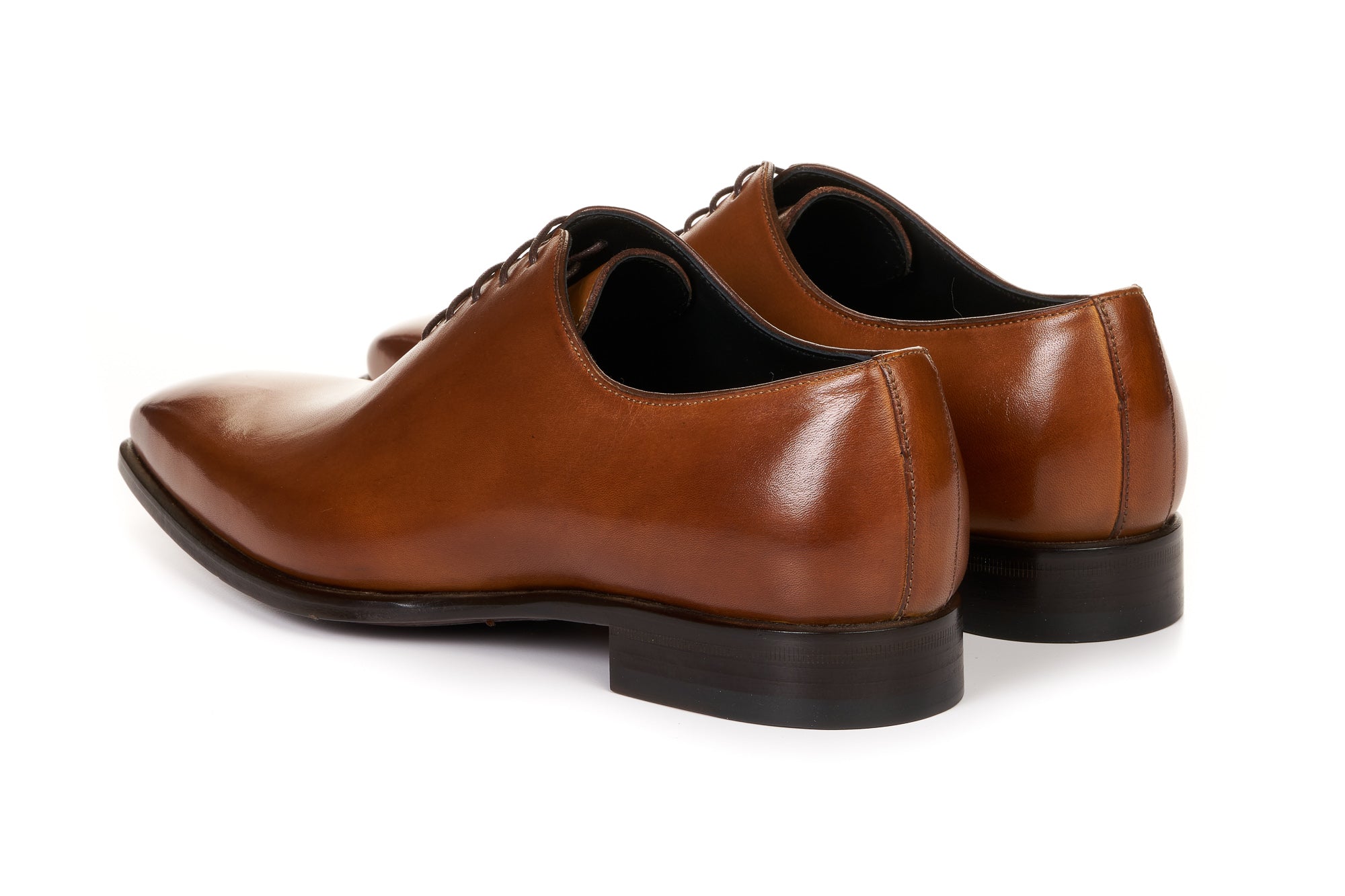
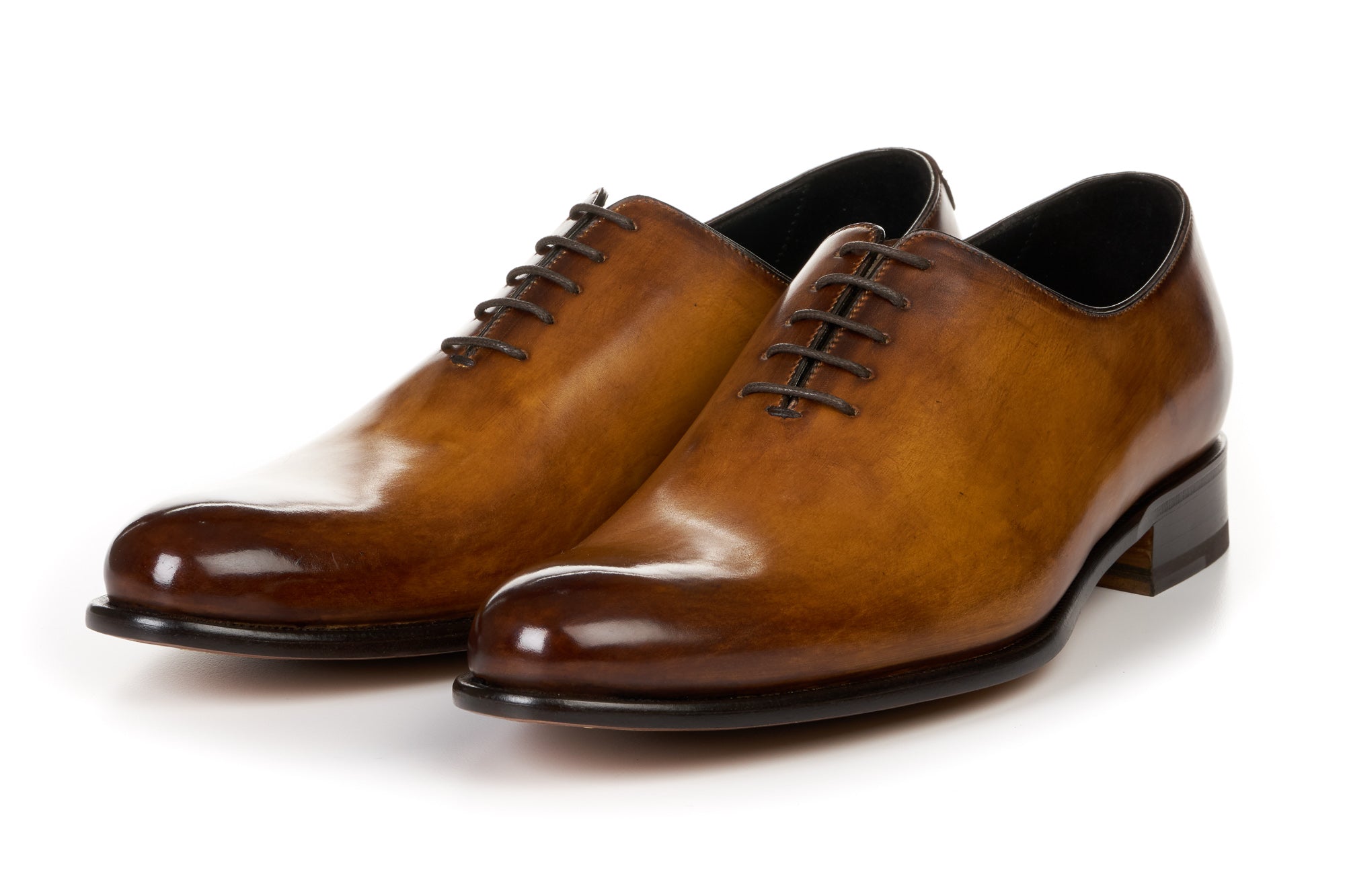
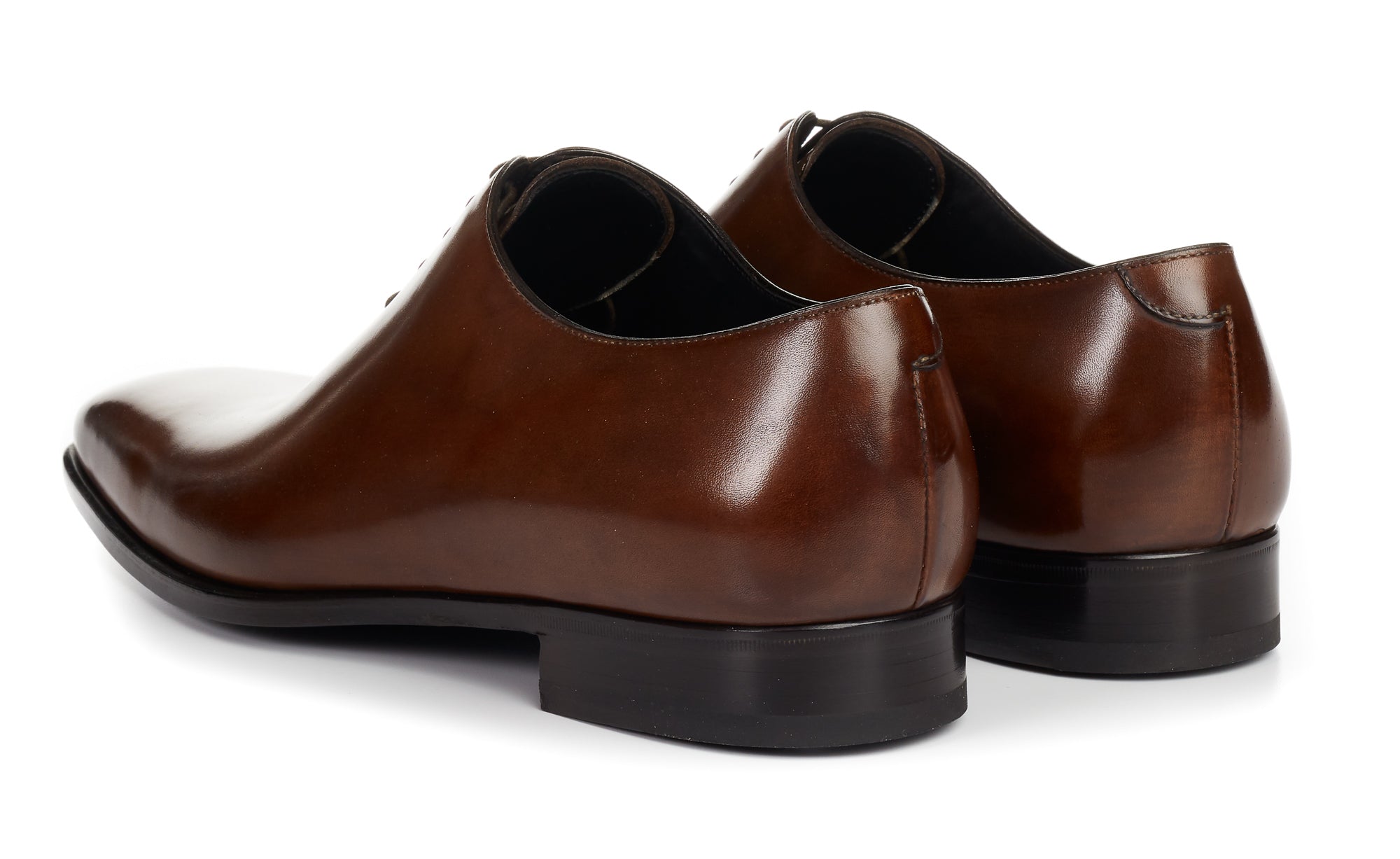
What is a whole cut oxford?
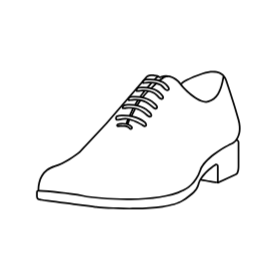
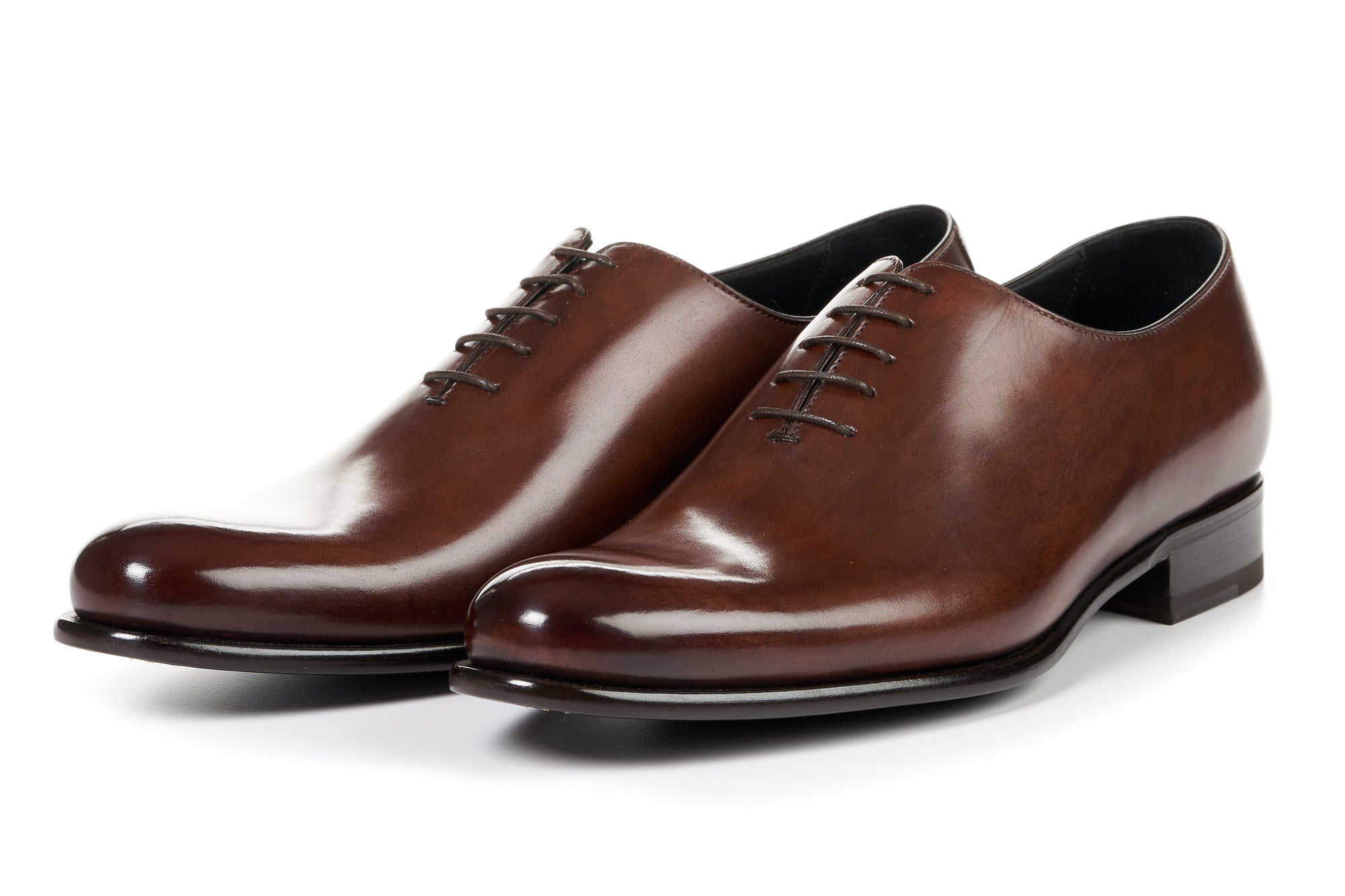
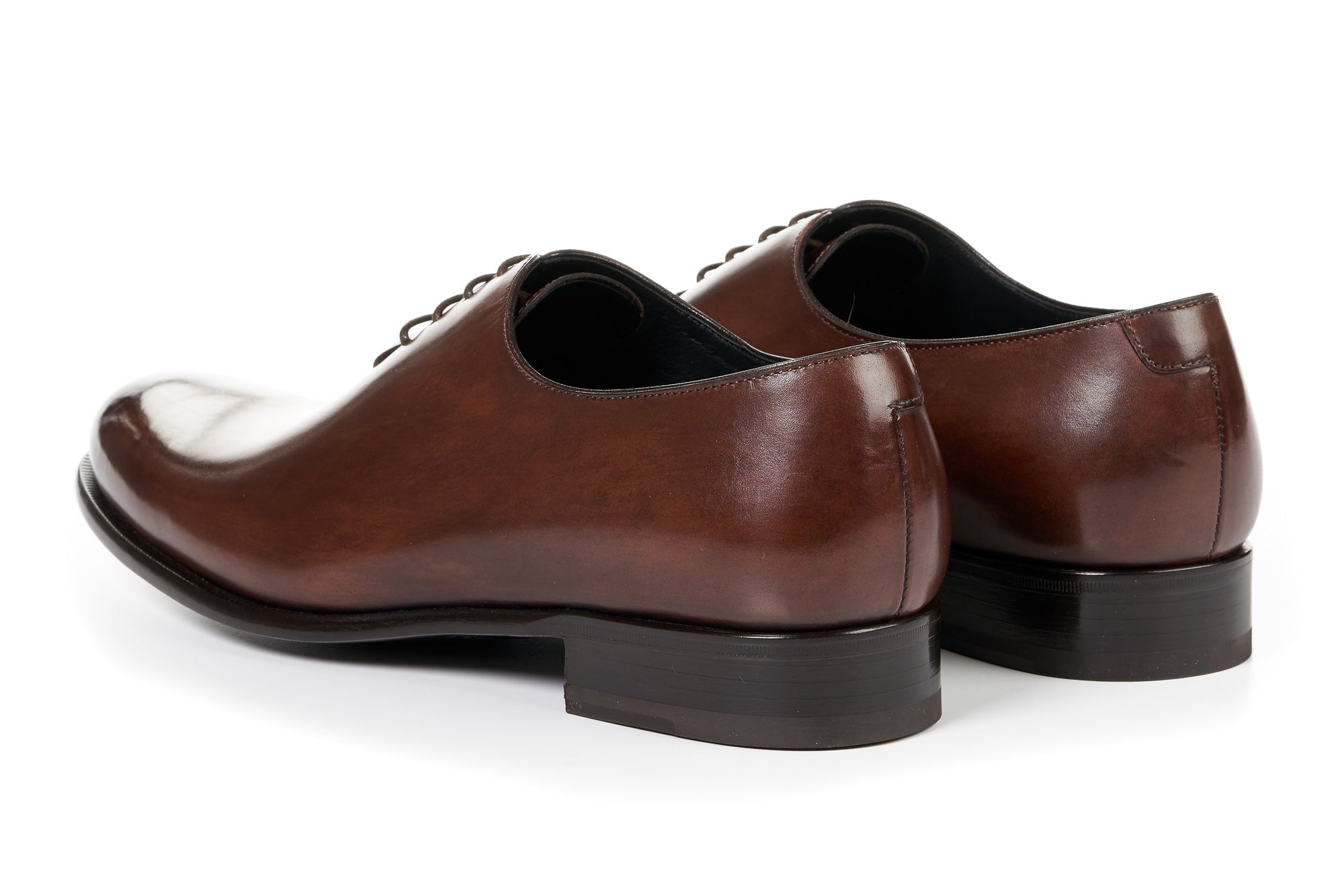
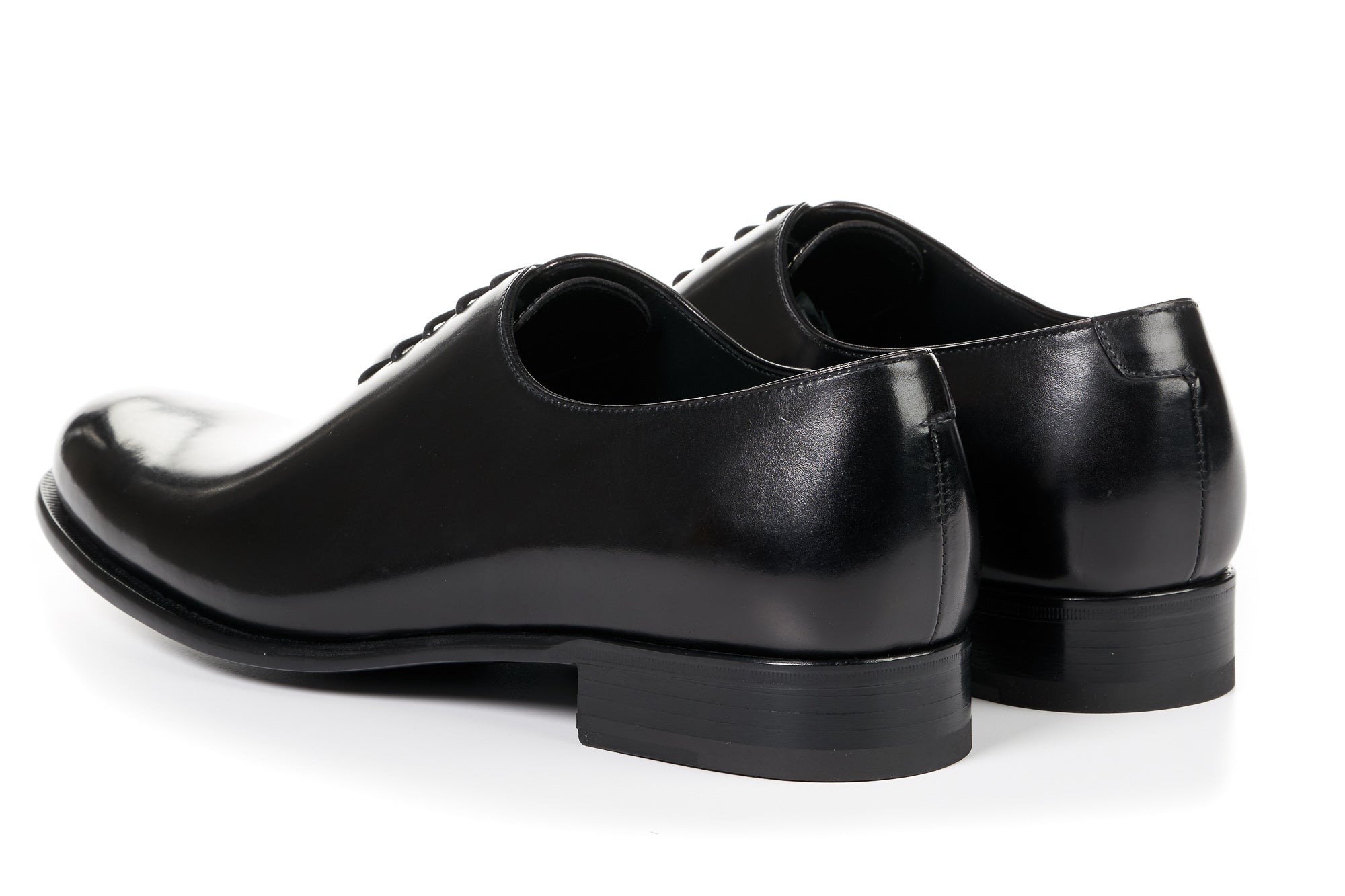
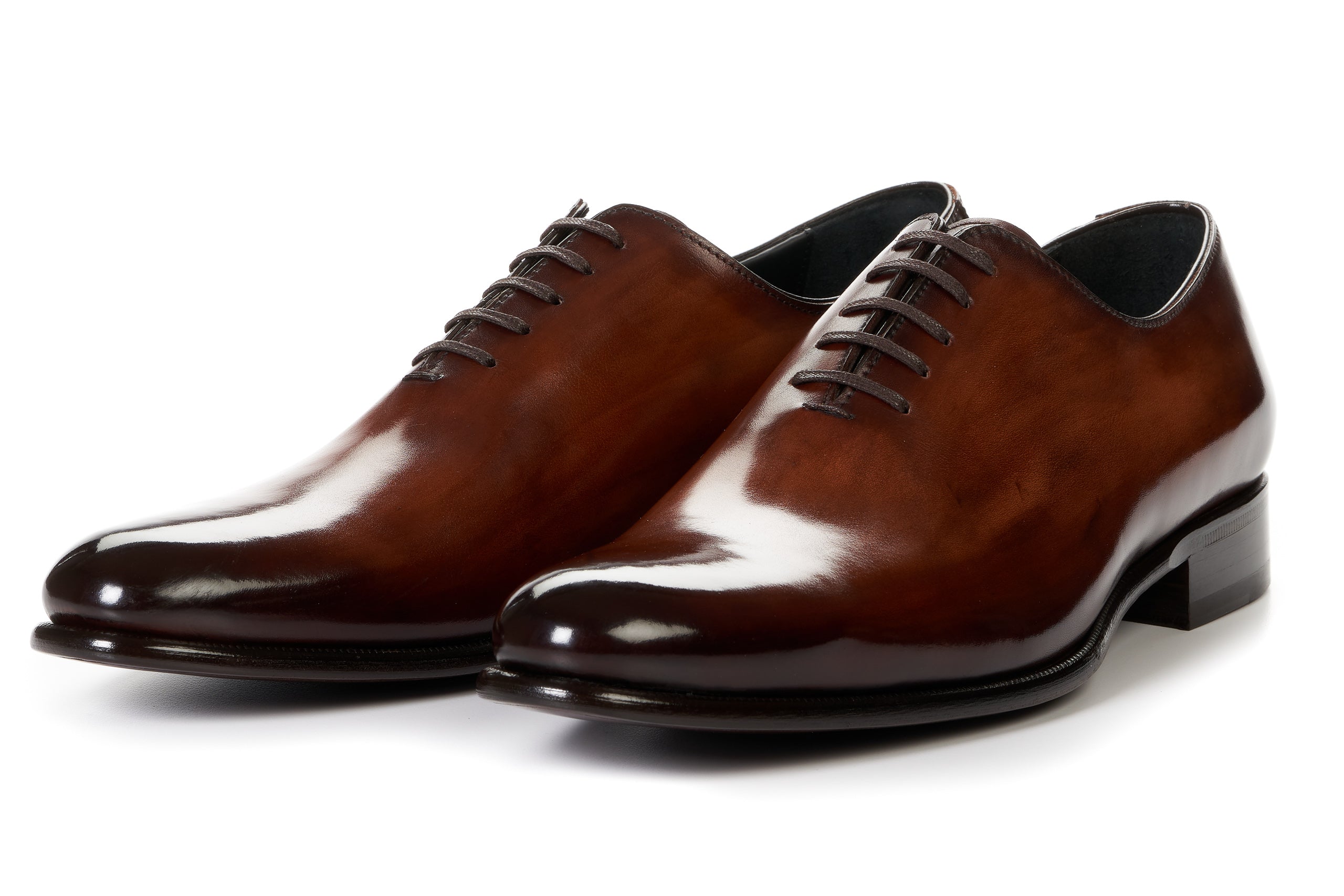
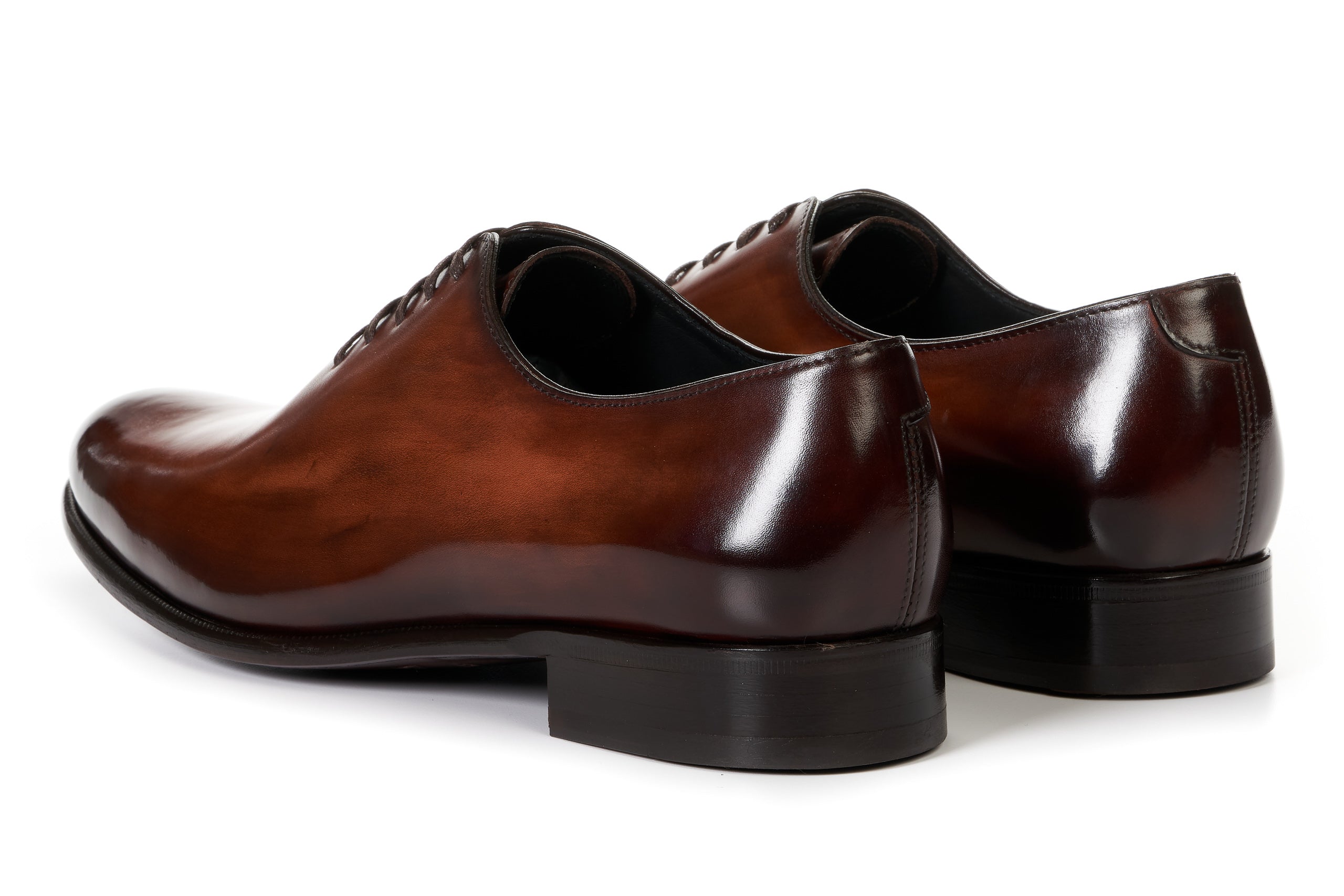
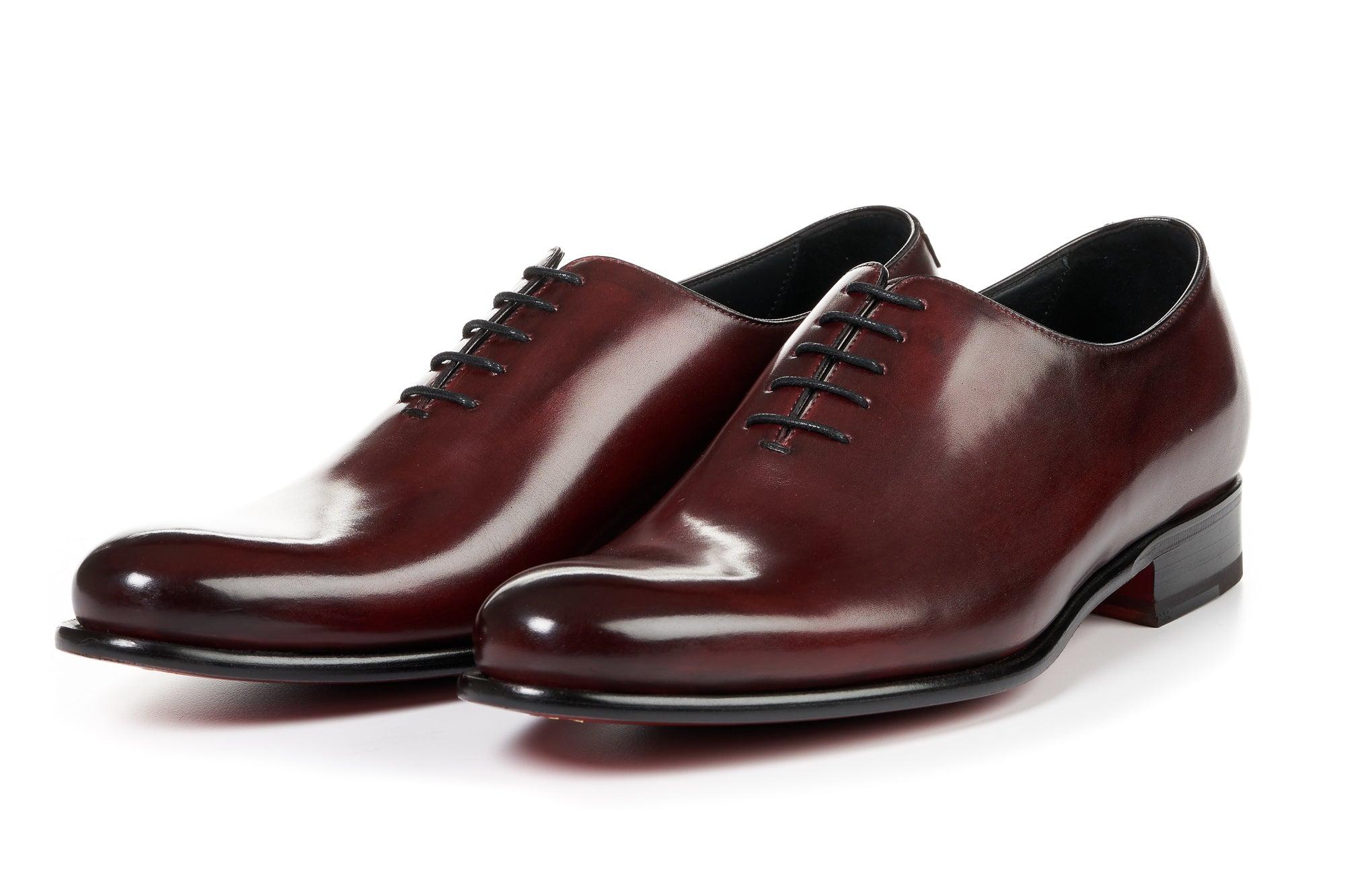
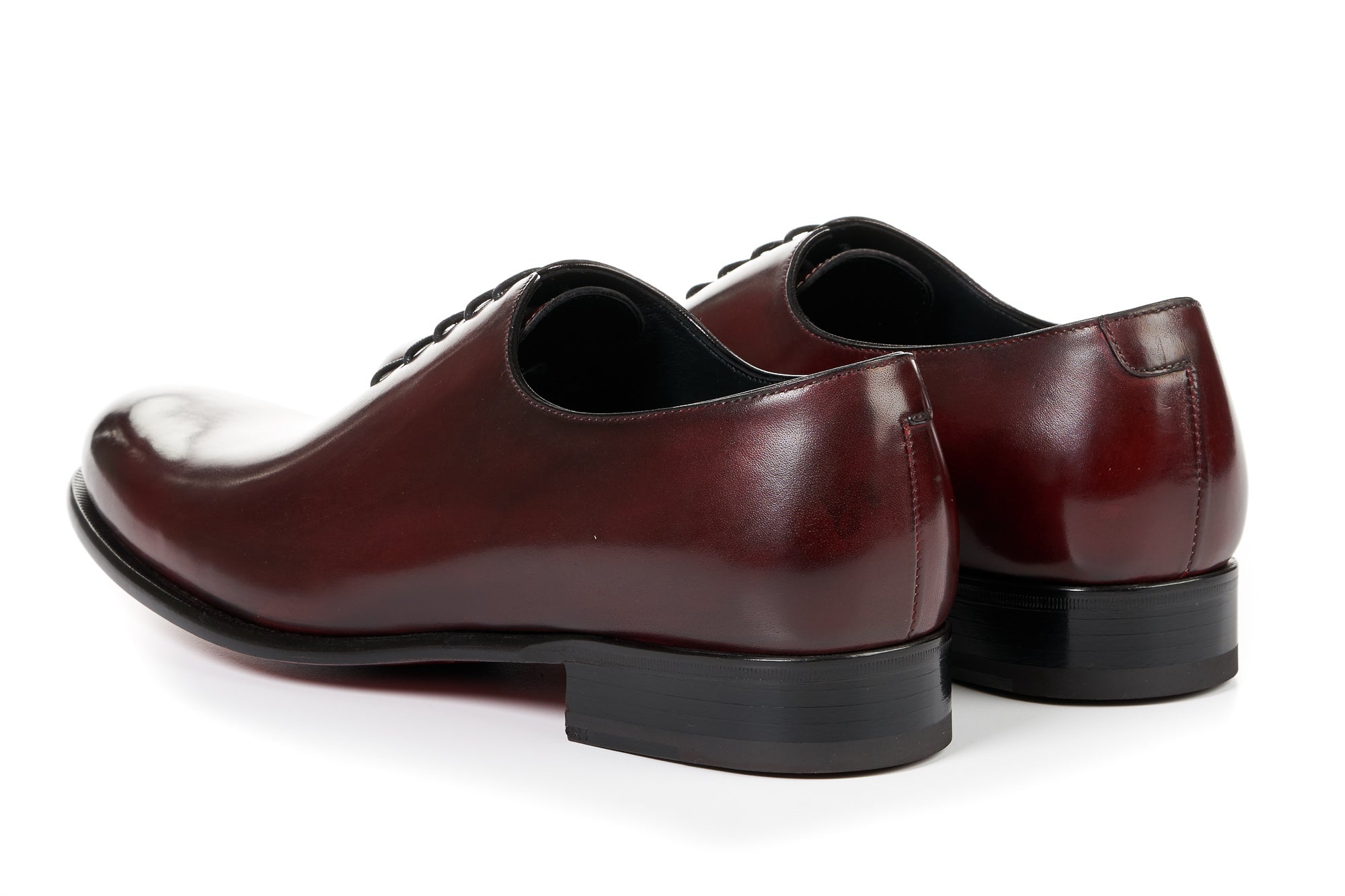
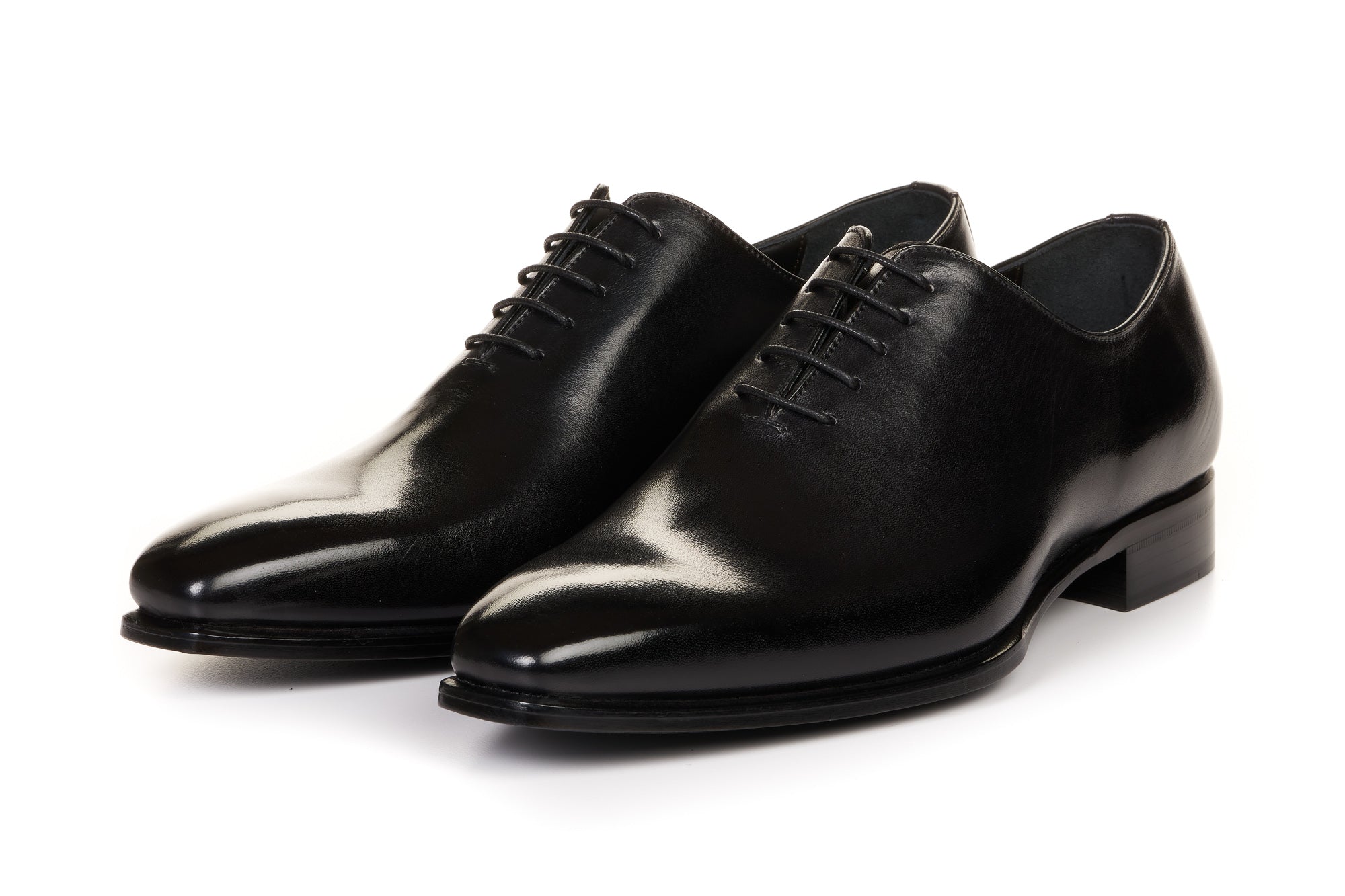
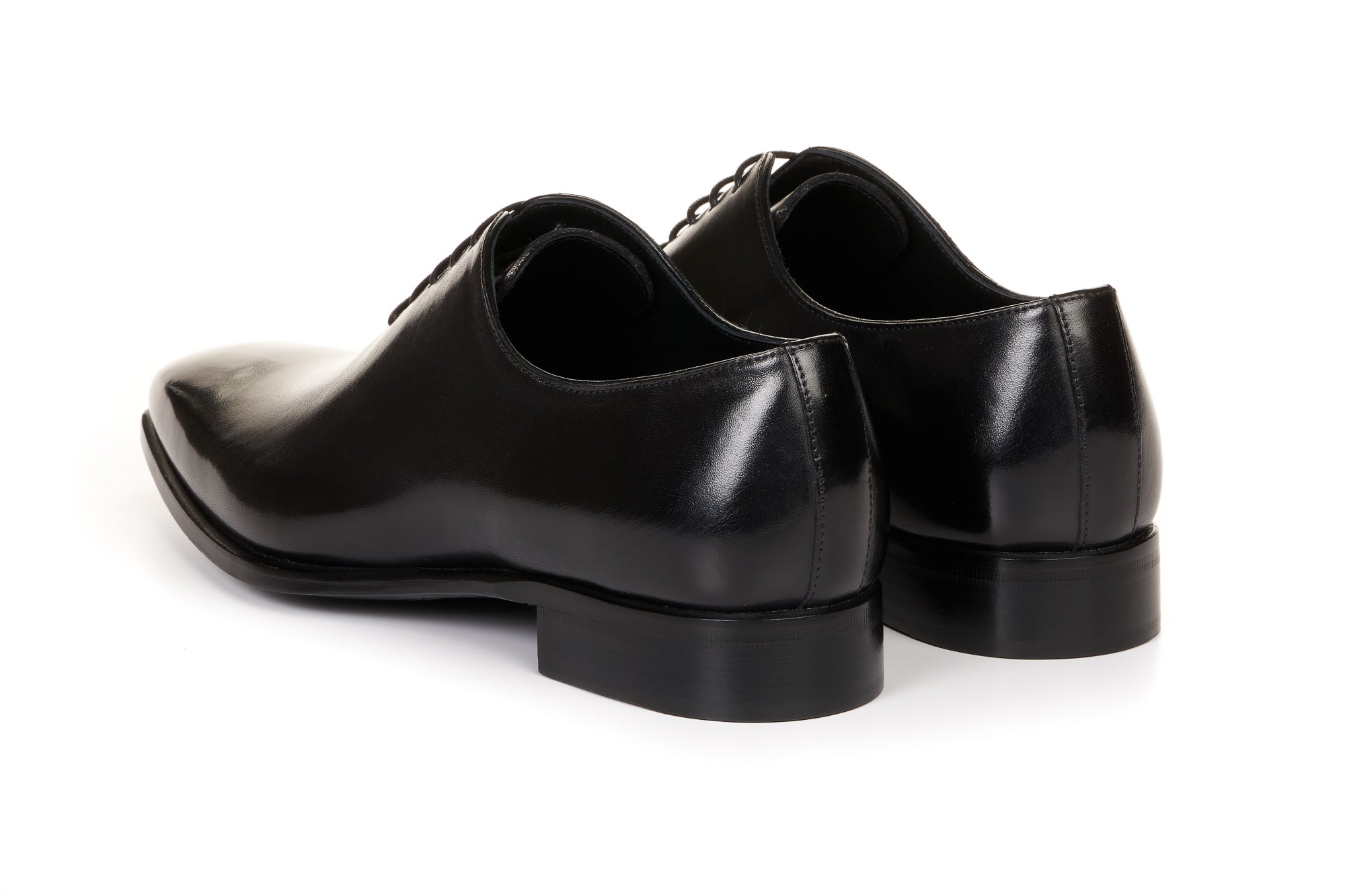
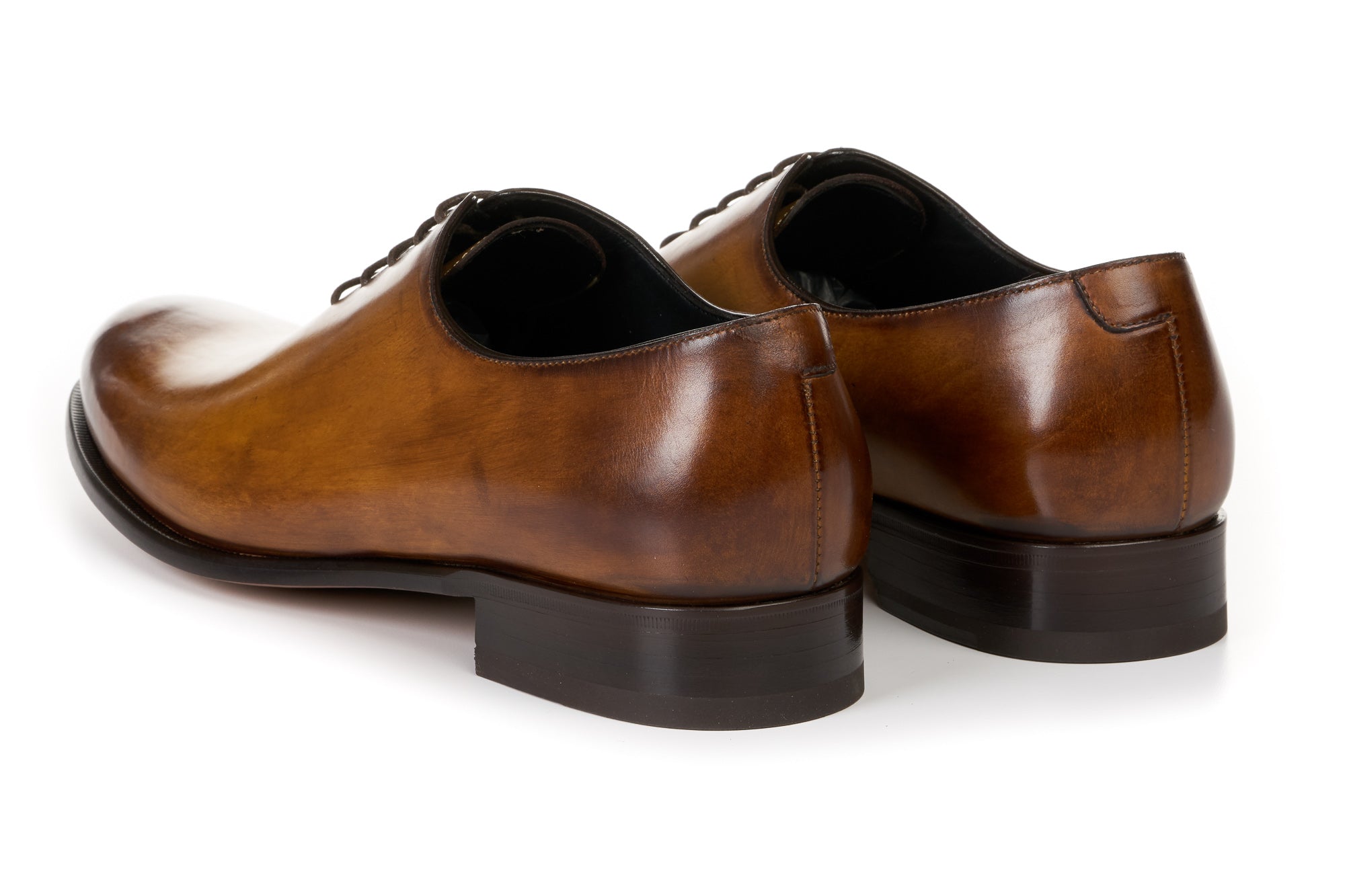
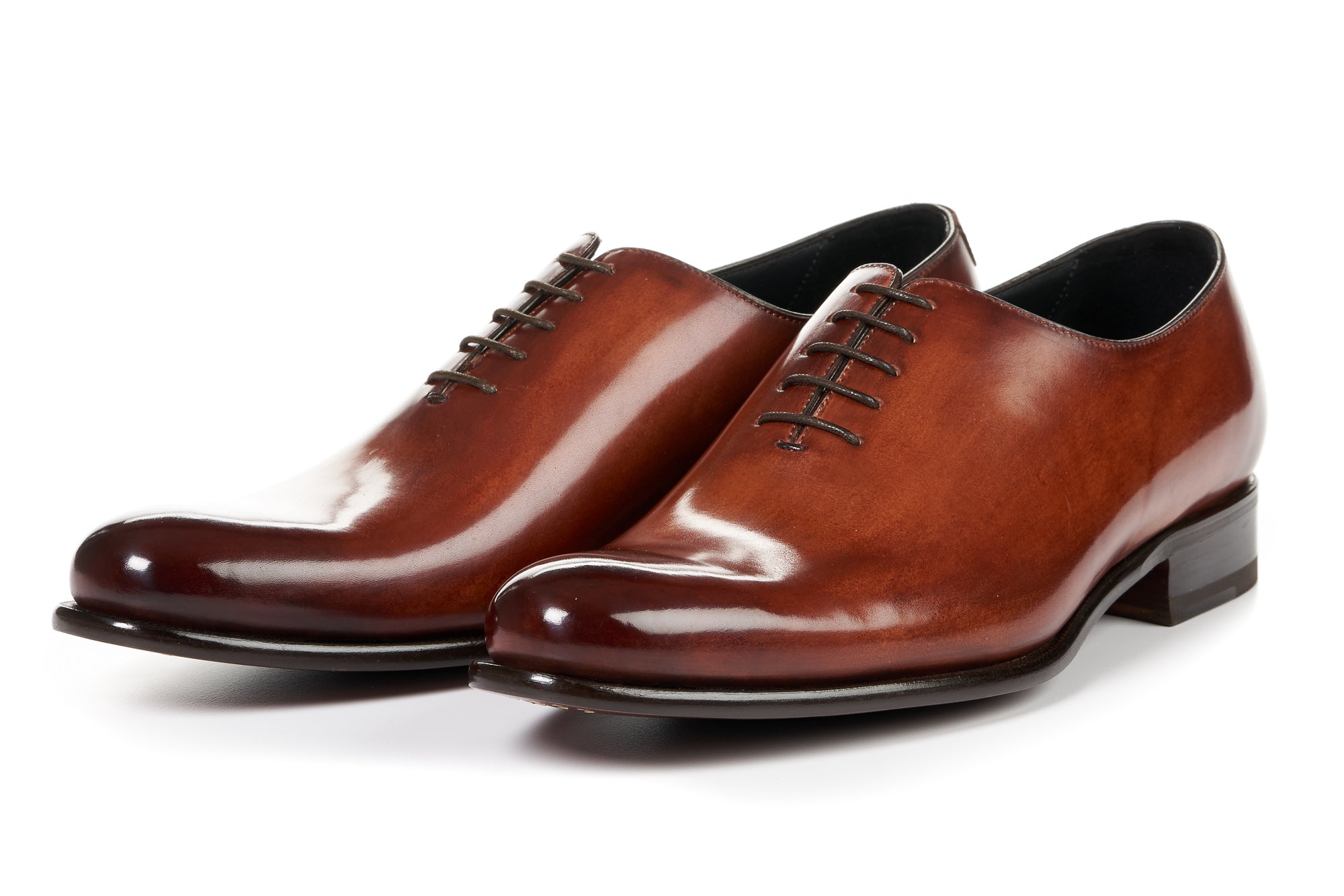
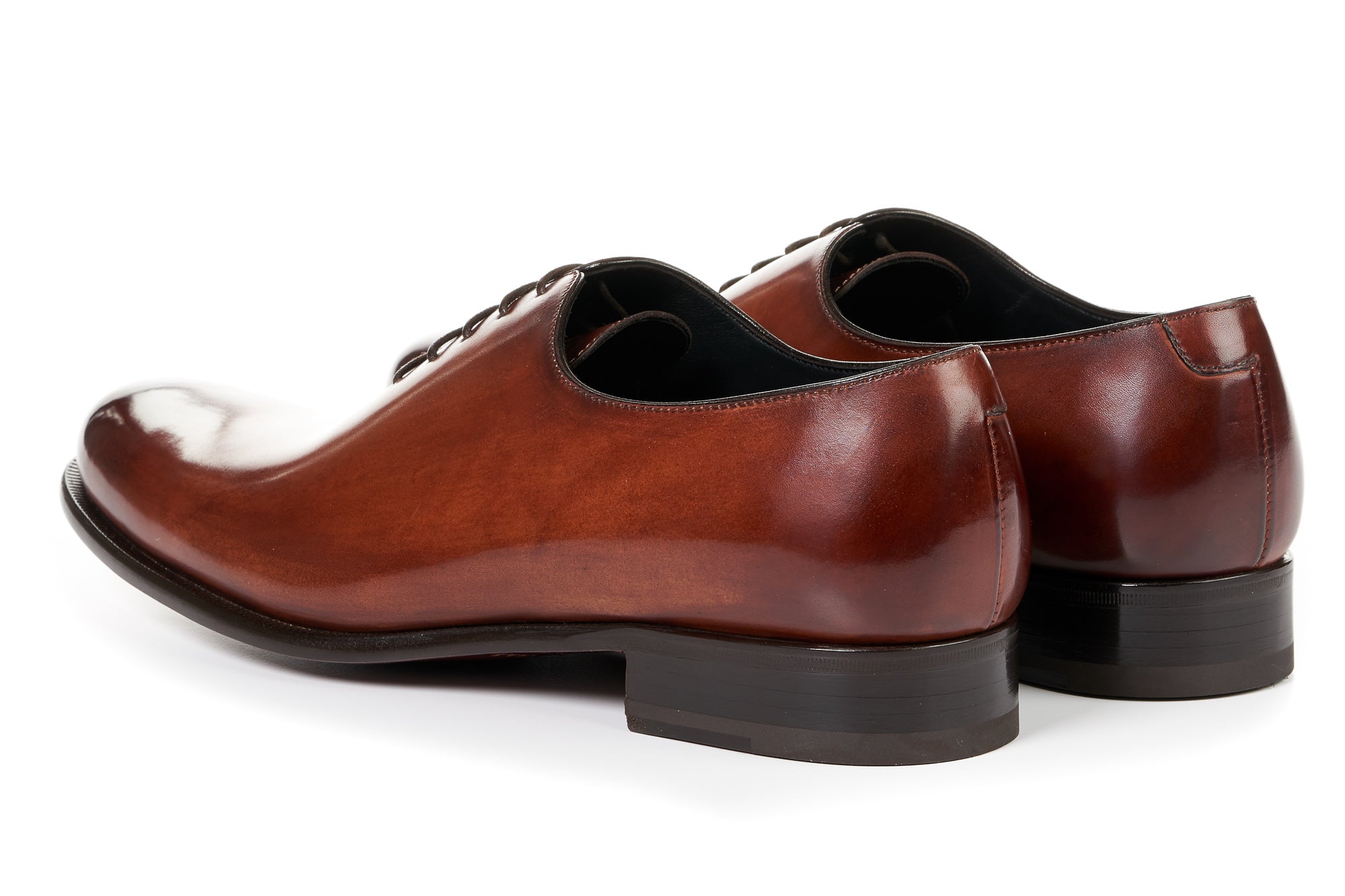
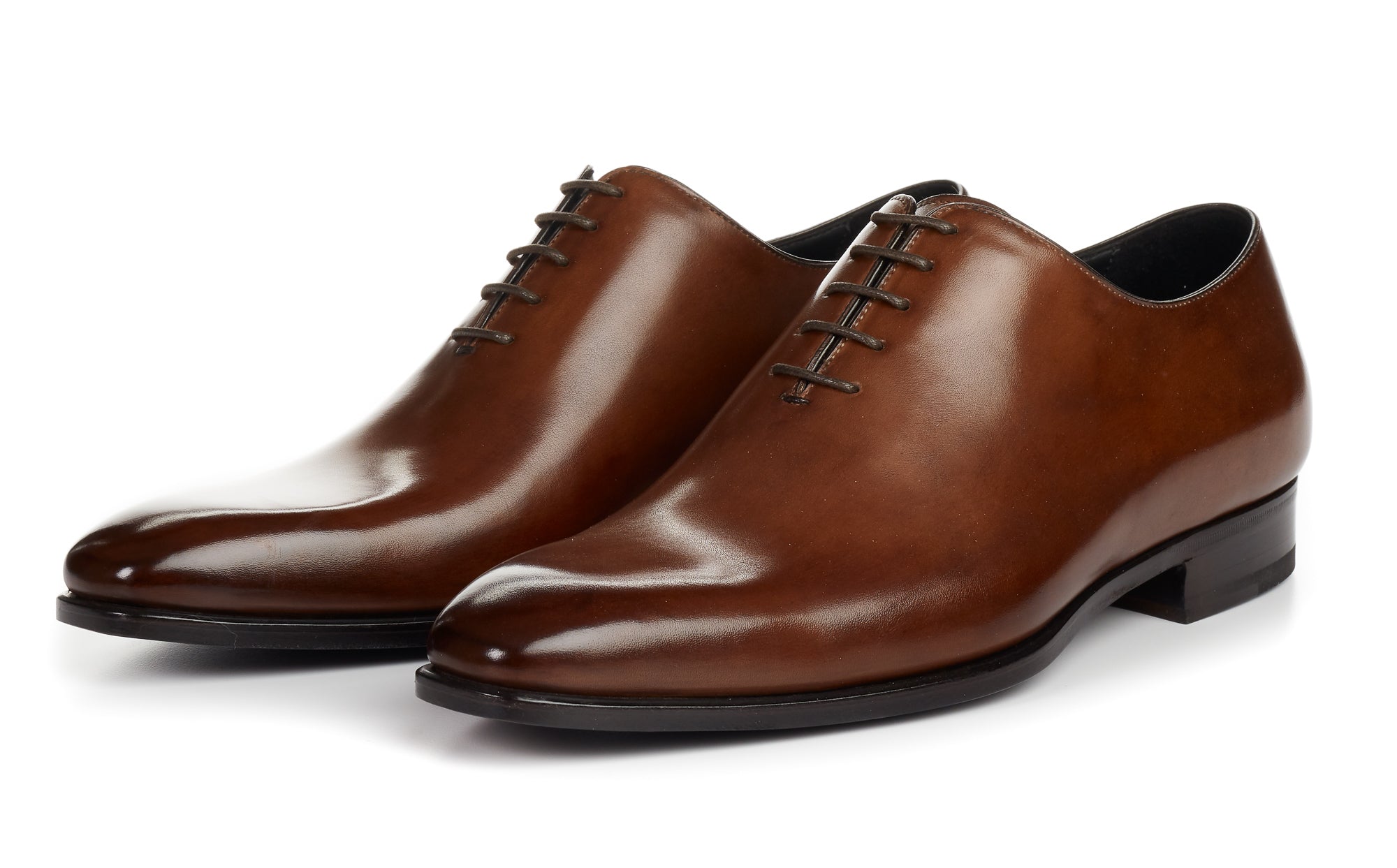
A whole cut oxford is a dress shoe where the entire upper is cut from a single, continuous piece of leather. Unlike brogues, cap-toes, or saddle shoes, there are no separate panels stitched together to form the upper. The leather wraps around the last seamlessly, with only one seam running up the back of the heel. This construction is considered one of the most technically difficult in shoemaking because any imperfection in the hide, the cut, or the lasting shows immediately. There's nowhere to hide it.
How is a whole cut oxford different from a regular oxford?
A standard oxford uses multiple pieces of leather stitched together to form the upper, typically with a separate vamp, quarters, and toe cap. A whole cut oxford, by contrast, uses one piece. That single-piece construction gives the shoe a visually unbroken surface, which reads as significantly more refined and minimal at a distance. The difference isn't subtle once you know what to look for. It's the difference between a suit with visible topstitching and one finished by hand at a Neapolitan tailor.
What occasions are whole cut oxford shoes best suited for?
Whole cut dress shoes are the right choice for black-tie events, formal business settings, and any occasion where a clean, uninterrupted silhouette matters. They read as more formal than a brogue or a monk strap and more intentional than a plain-toe derby. For a job interview in finance or law, a formal dinner, or a wedding where you're in a suit or morning dress, this is the shoe. They also work in conservative business environments where the shoe is expected to disappear into the outfit rather than compete with it.
What leather do Paul Evans whole cut shoes use?
Paul Evans sources full-grain Italian leathers for the uppers on every whole cut oxford in this collection. Full-grain leather retains the outermost layer of the hide, which means it carries the natural grain pattern, develops a patina over time, and resists moisture better than corrected-grain or bonded alternatives. The hides are selected in Italy, where the tanneries have been producing leather for formal footwear for generations. Because the whole cut construction puts the entire hide on display, Paul Evans only uses hides that meet the quality threshold for that kind of exposure. You can't fake it on a seamless leather oxford.
What does Blake-stitched construction mean and why does it matter?
Blake-stitching is a method where a single thread runs through the insole, the welt, and the outsole in one continuous stitch. The result is a shoe with a closer, trimmer profile than a Goodyear-welted shoe because there's no need for a thick midsole to accommodate the welt channel. For a whole cut oxford, this matters because the slim profile and clean lines of the silhouette depend on the shoe not being bulky underfoot. Blake-stitched construction also makes the shoe easier to resole than a glued shoe, which extends its service life significantly with proper care.
How should whole cut oxford shoes fit?
The fit should be snug across the widest part of the foot with no lateral movement when you walk, and the heel should sit firmly in the cup without lifting. Because whole cut shoes have no seam breaks across the vamp, there's no built-in flex point in the upper the way there is in a multi-panel shoe. That means break-in can feel more noticeable at first, particularly in the toe box, until the single piece of leather molds to the shape of your foot. A properly fitted whole cut oxford will feel like a second skin after 8 to 10 wears. If it feels loose out of the box, size down.
Are whole cut shoes for men difficult to maintain?
No, but the maintenance is non-negotiable. Because the entire visible surface is one unbroken piece of leather, scuffs and dry patches are immediately visible. A cedar shoe tree after every wear is the baseline. Polish the leather regularly with a cream polish that matches the shade of the upper, brush it out, and finish with a wax polish if you want a higher shine. Full-grain leather responds well to conditioning and will develop a patina over years of wear that actually improves the appearance of the shoe. Neglect it, and the same single-piece construction that makes it beautiful will make the deterioration obvious.
Can you wear a whole cut oxford with anything other than a suit?
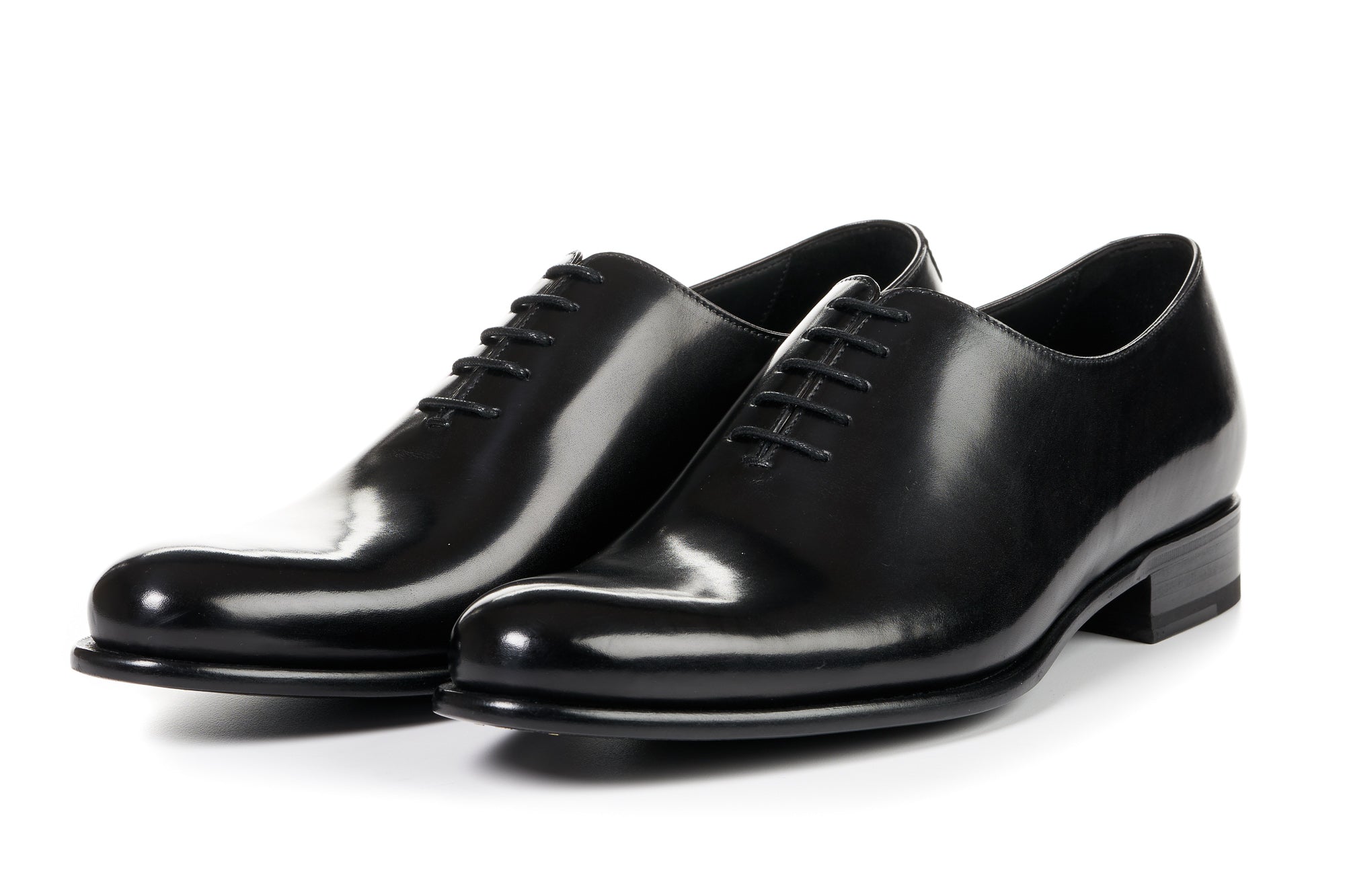
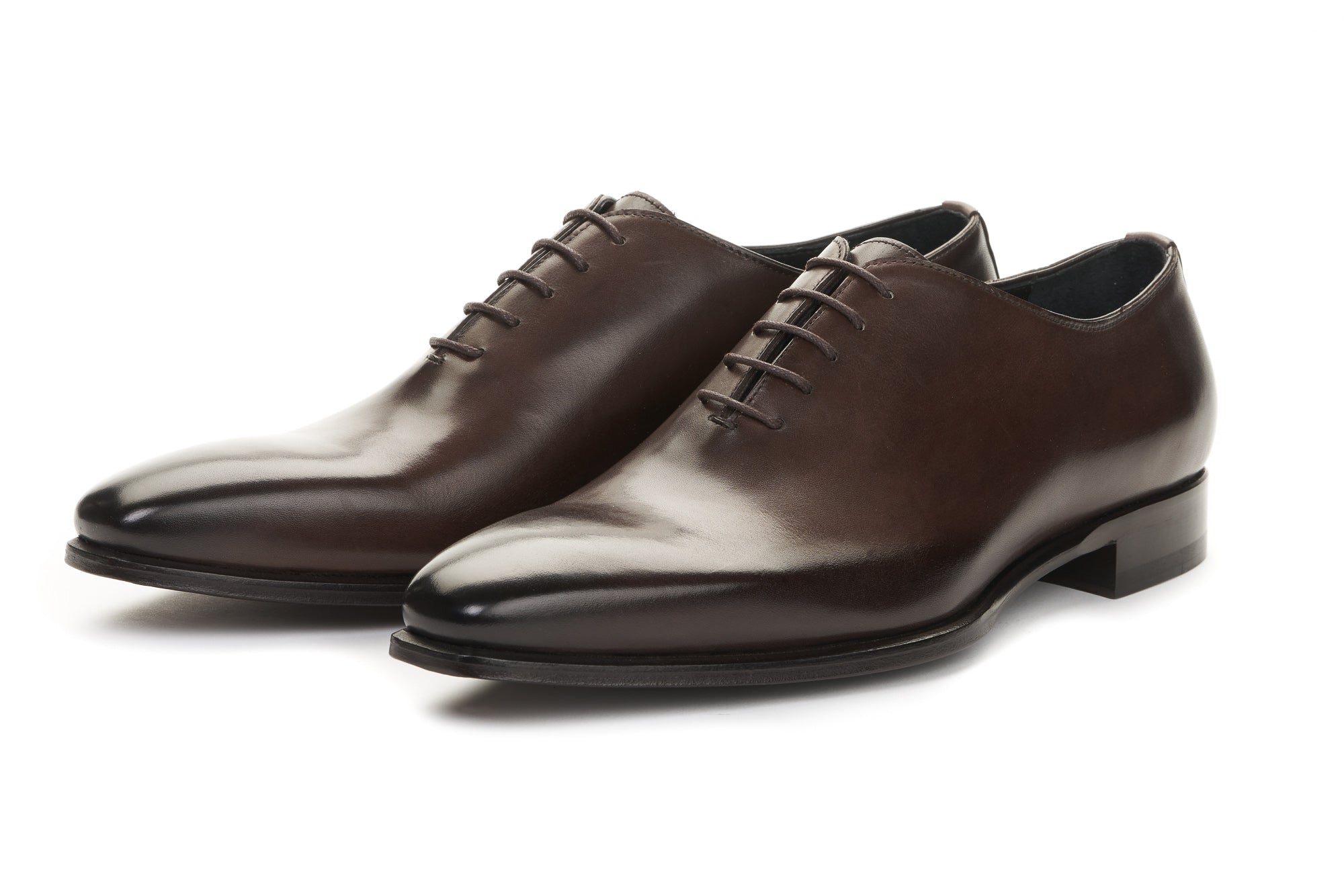
Yes, but the context matters. A whole cut oxford in black is strictly formal, it belongs with a suit, a tuxedo, or formal separates. A whole cut in dark brown or cognac gives you more range. It works with tailored trousers and a sport coat, with dark denim at a dinner where the dress code is smart casual, or with a blazer and chinos in a business casual environment. The key variable is the finish and color of the leather, not the silhouette itself. The cleaner the shoe, the more deliberately it should be worn.
What makes an Italian whole cut oxford different from other dress shoes?
Italian shoemaking, particularly from Naples, has a distinct construction philosophy built around lightness, closeness to the foot, and a hand-finished surface that reflects skill rather than machinery. A Neapolitan whole cut oxford will typically have a more flexible sole, a more pronounced waist, and a softer overall structure than a British or American-made formal shoe. The lasting is done by hand, meaning the leather is pulled and shaped over the last by a craftsman rather than a machine applying uniform tension. That hand-lasting is what gives Italian whole cut shoes for men the slight variations in toe shape and waist that make them look alive rather than stamped out.
What sets Paul Evans whole cut oxford shoes apart?
Paul Evans makes these shoes in Naples, Italy, in the same workshops that produce footwear for European tailoring houses. The construction is Blake-stitched with a leather insole, the uppers are full-grain Italian leather selected hide by hide, and every pair is lasted and finished by hand. The brand operates without middlemen, which means you're getting Neapolitan craft at a price point that doesn't require a six-month wait list. The size range covers men's sizes across standard and extended widths, the toe shapes are built on lasts developed specifically for the Paul Evans silhouette, and every shoe ships with cedar shoe trees because no serious shoe should arrive without them. This is not marketing language. It's the construction brief the factory works from.