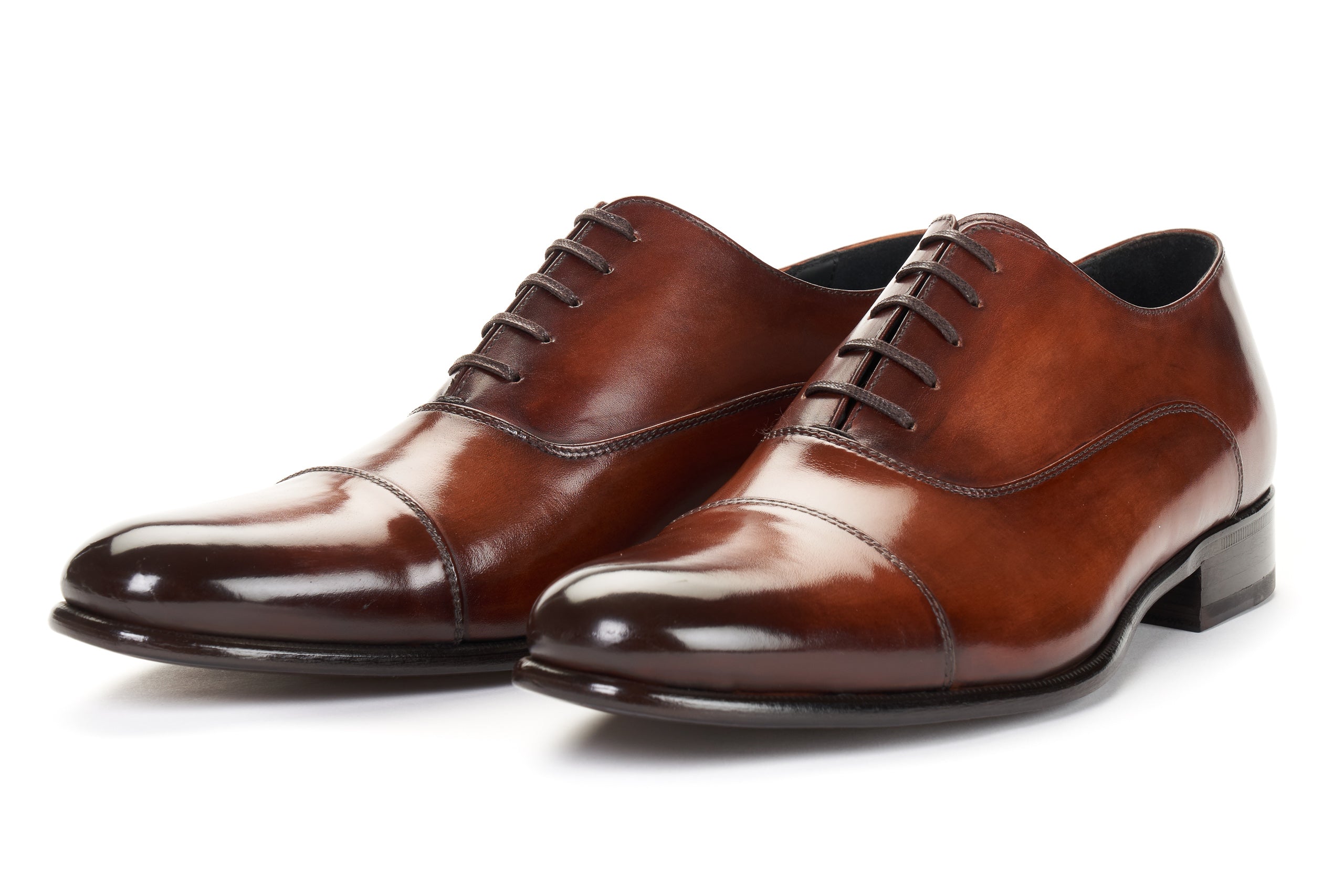
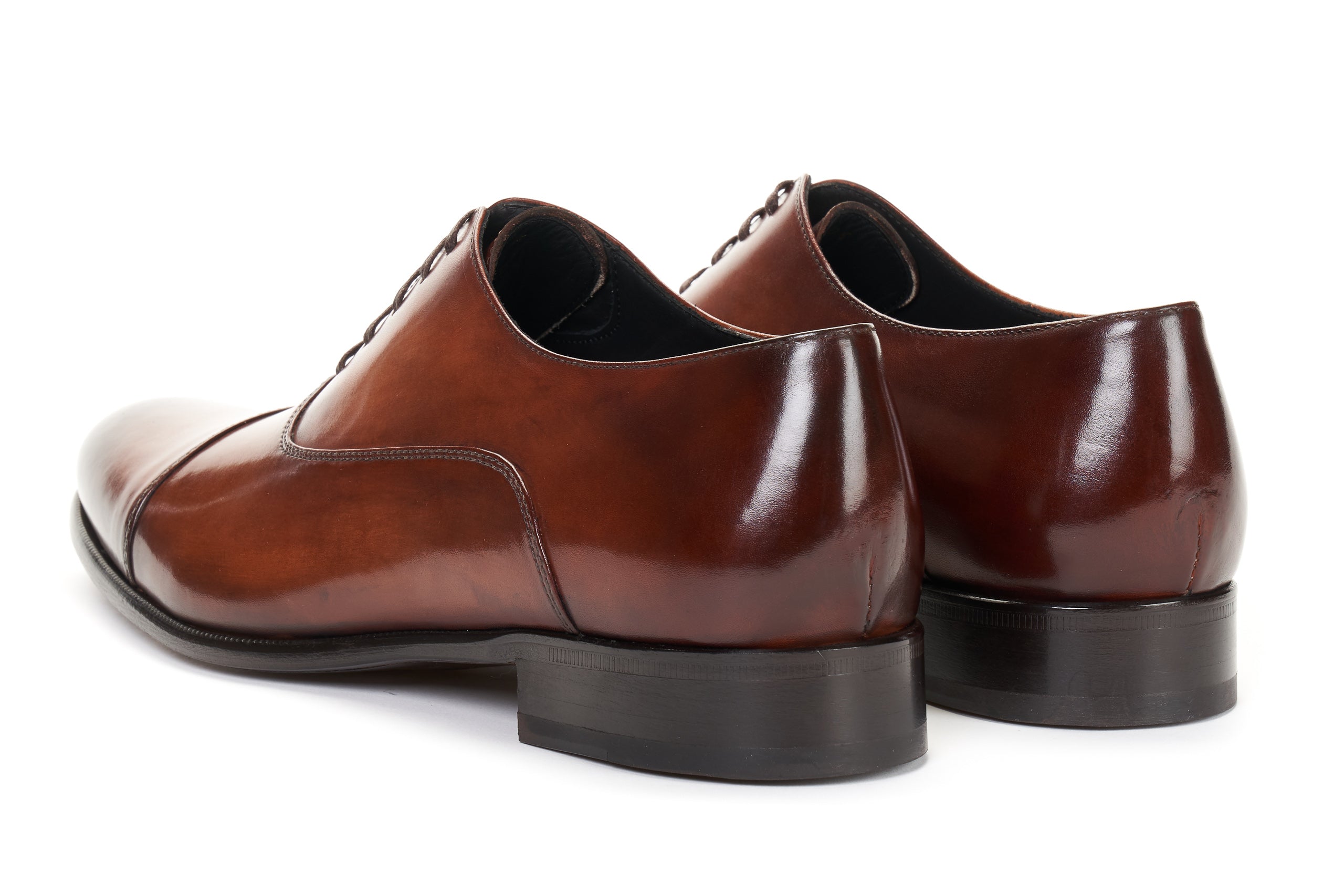
What makes Paul Evans wedding shoes different from other men's dress shoes?
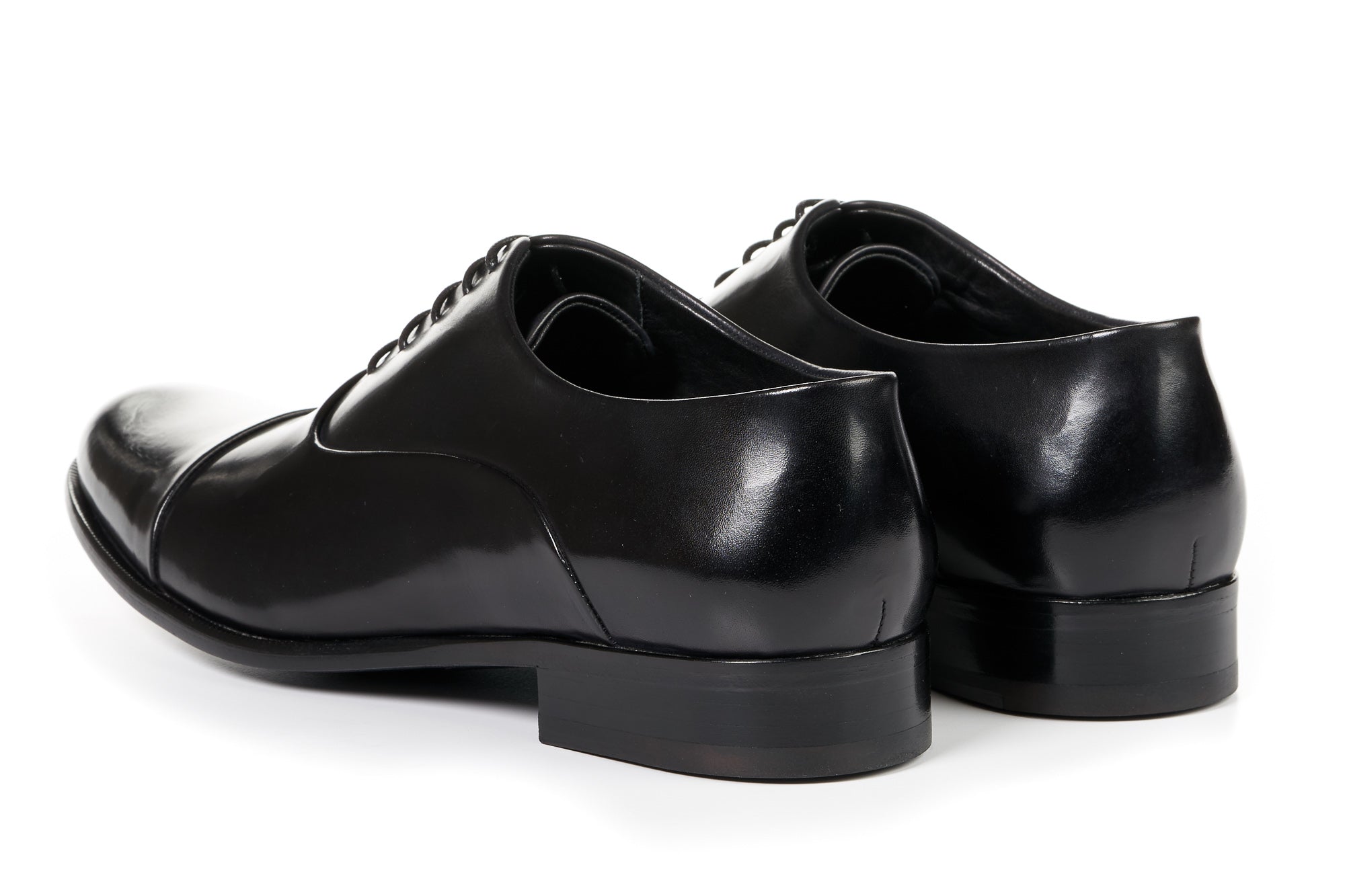
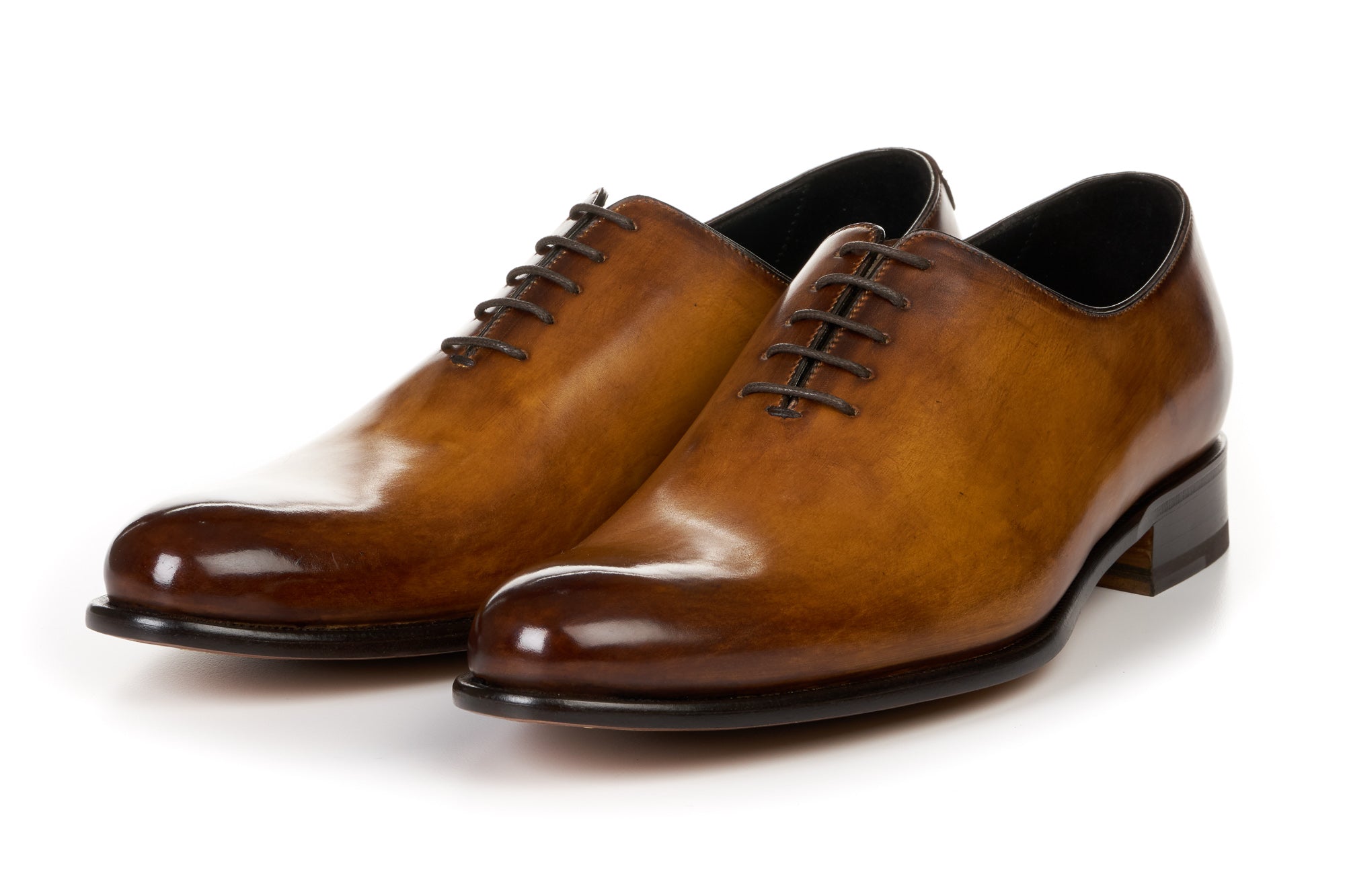
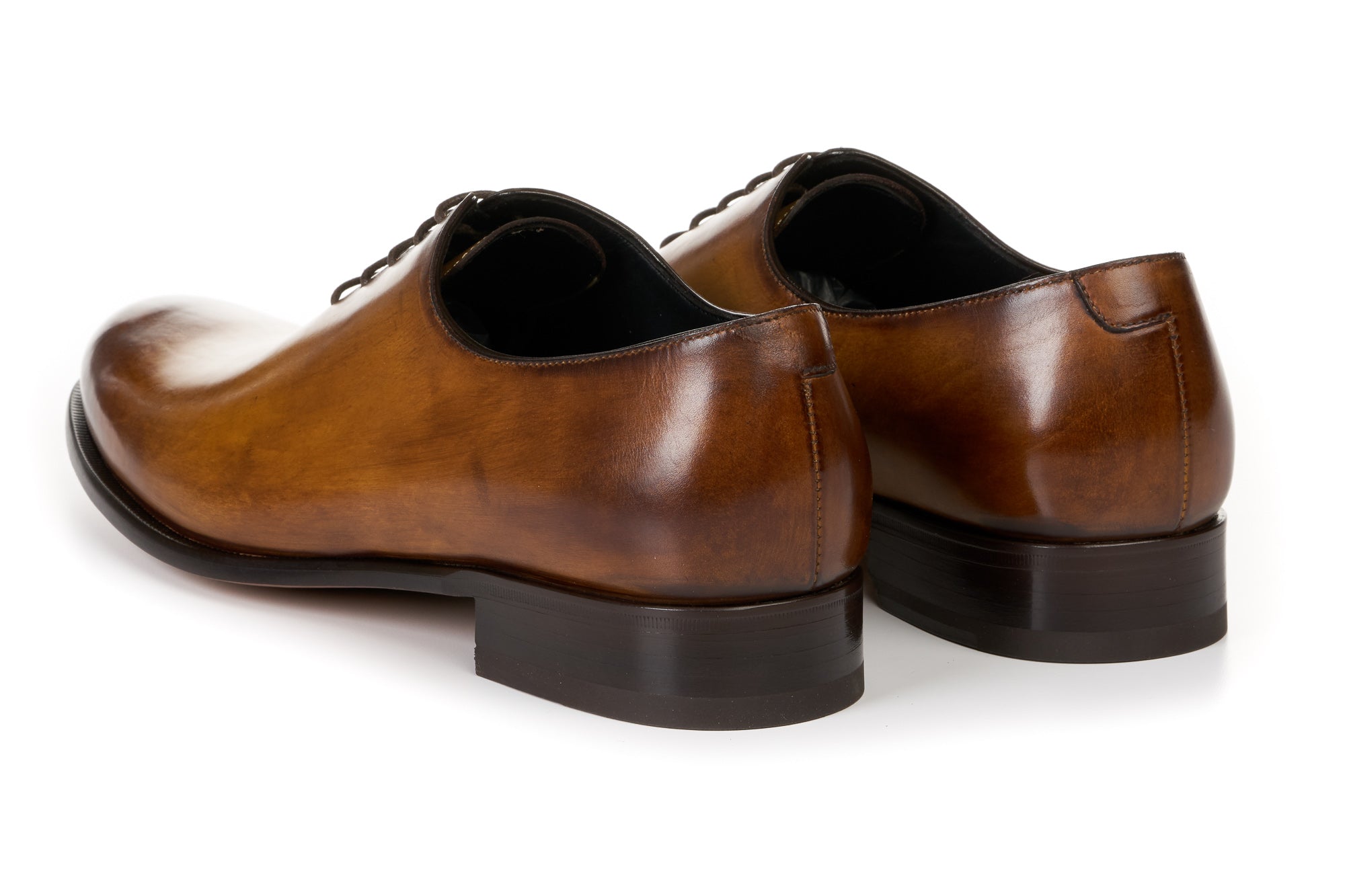
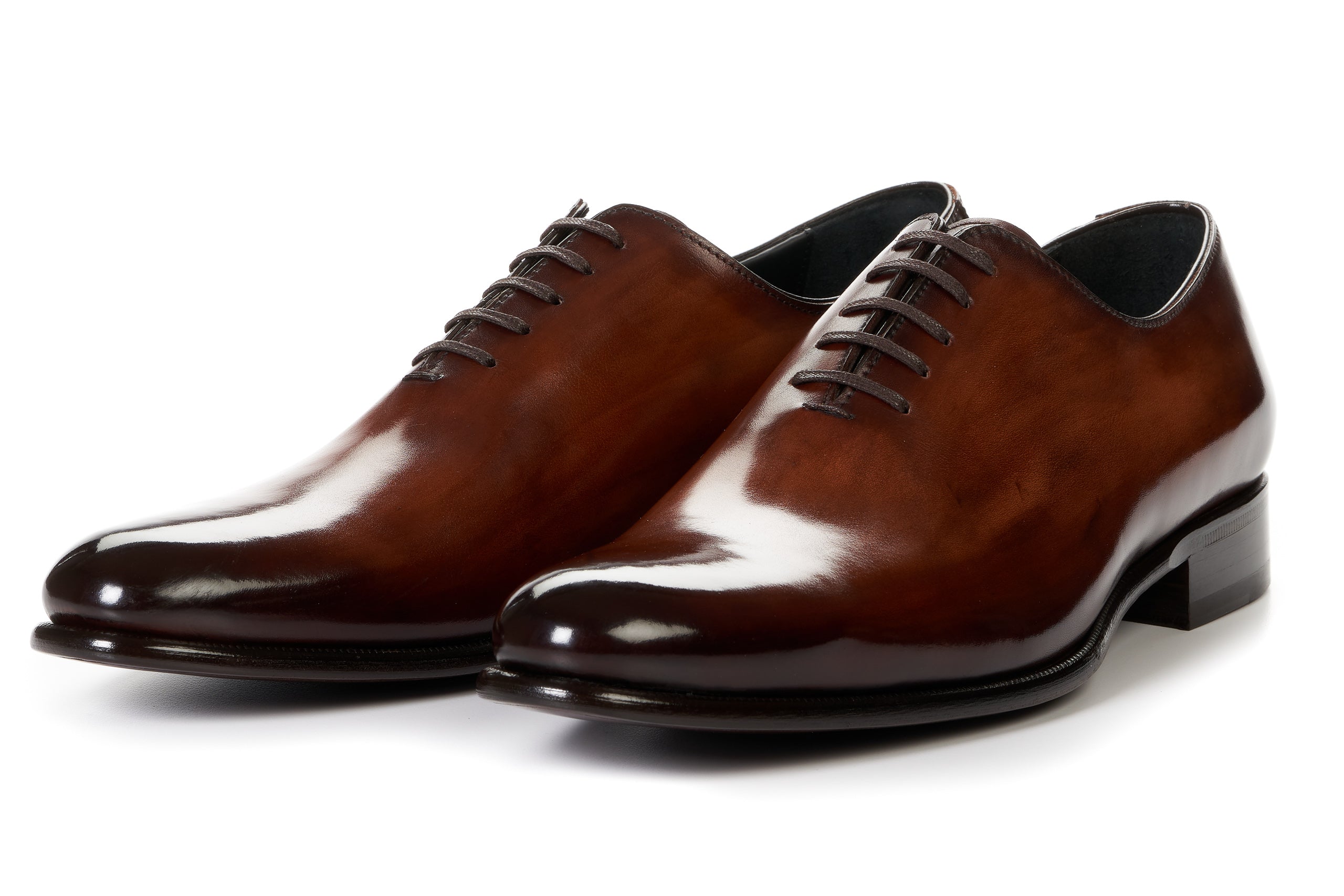
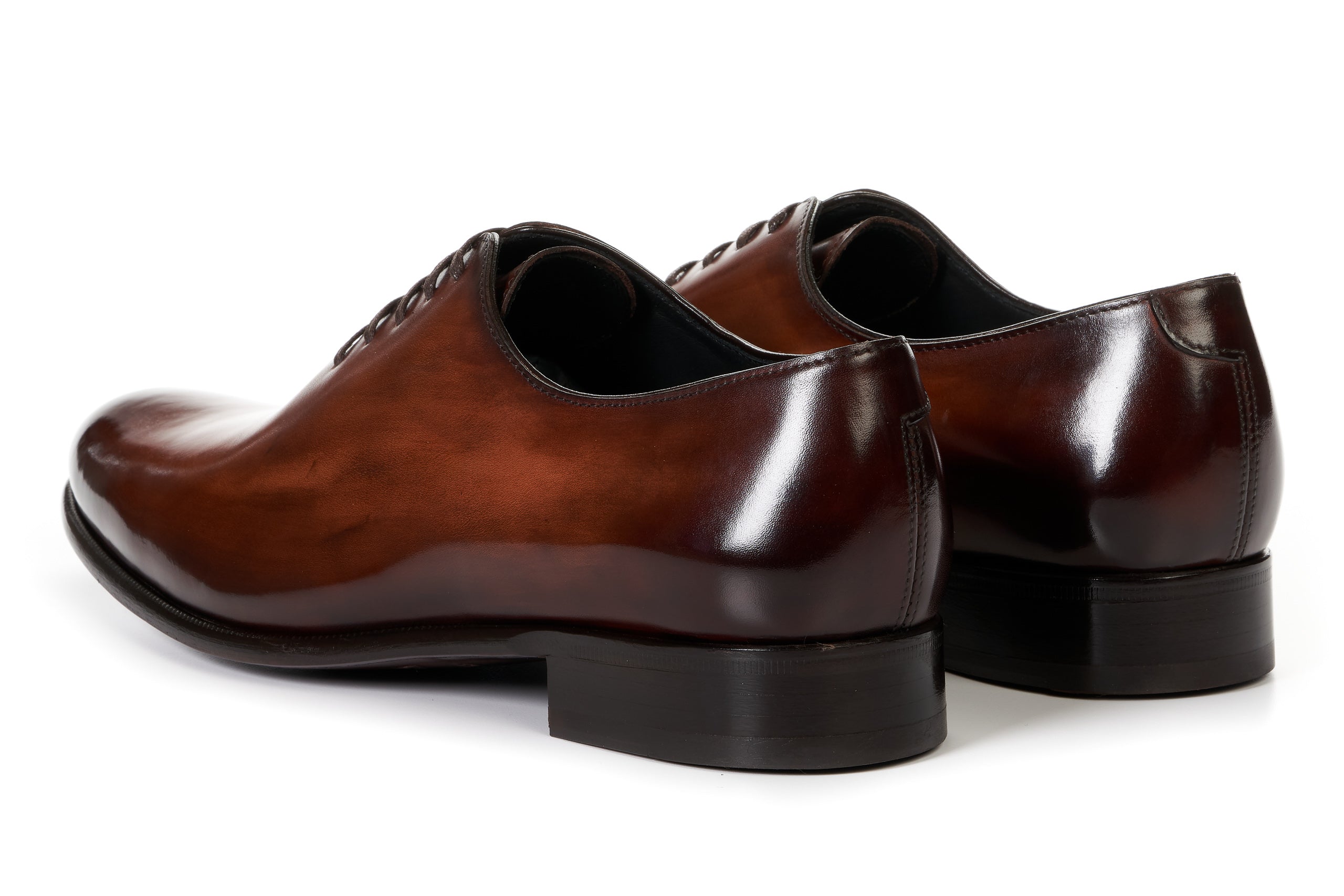
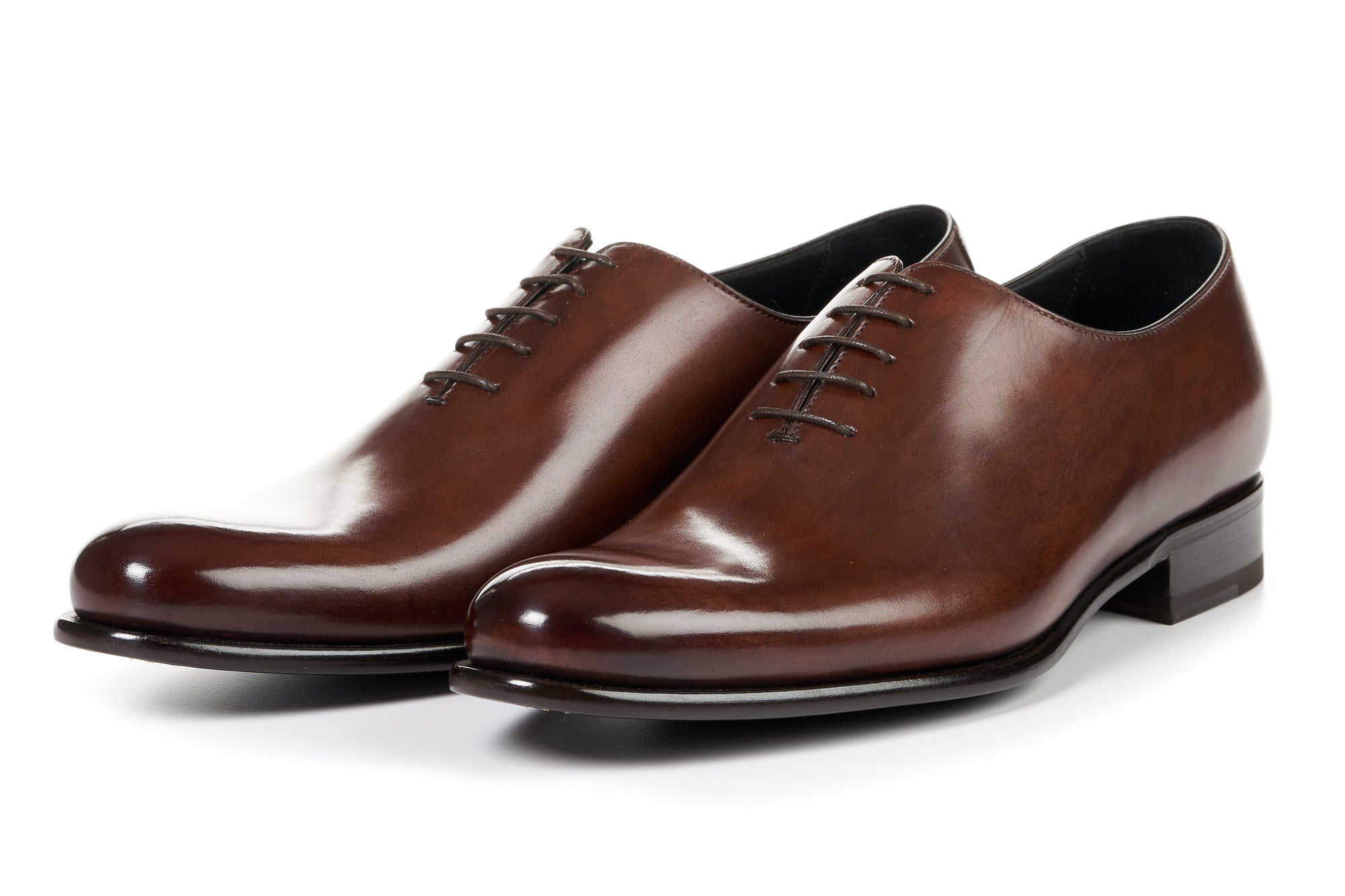
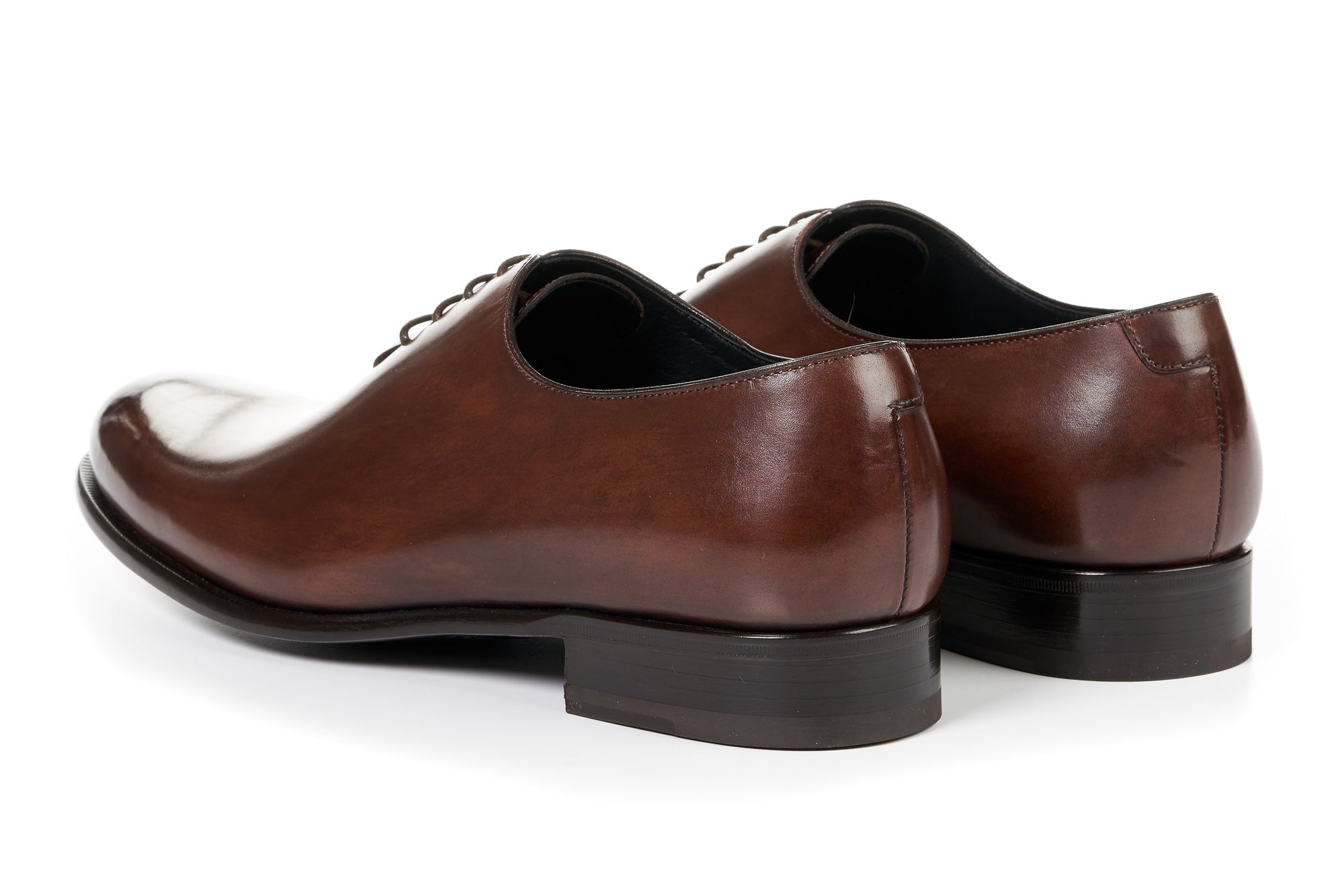
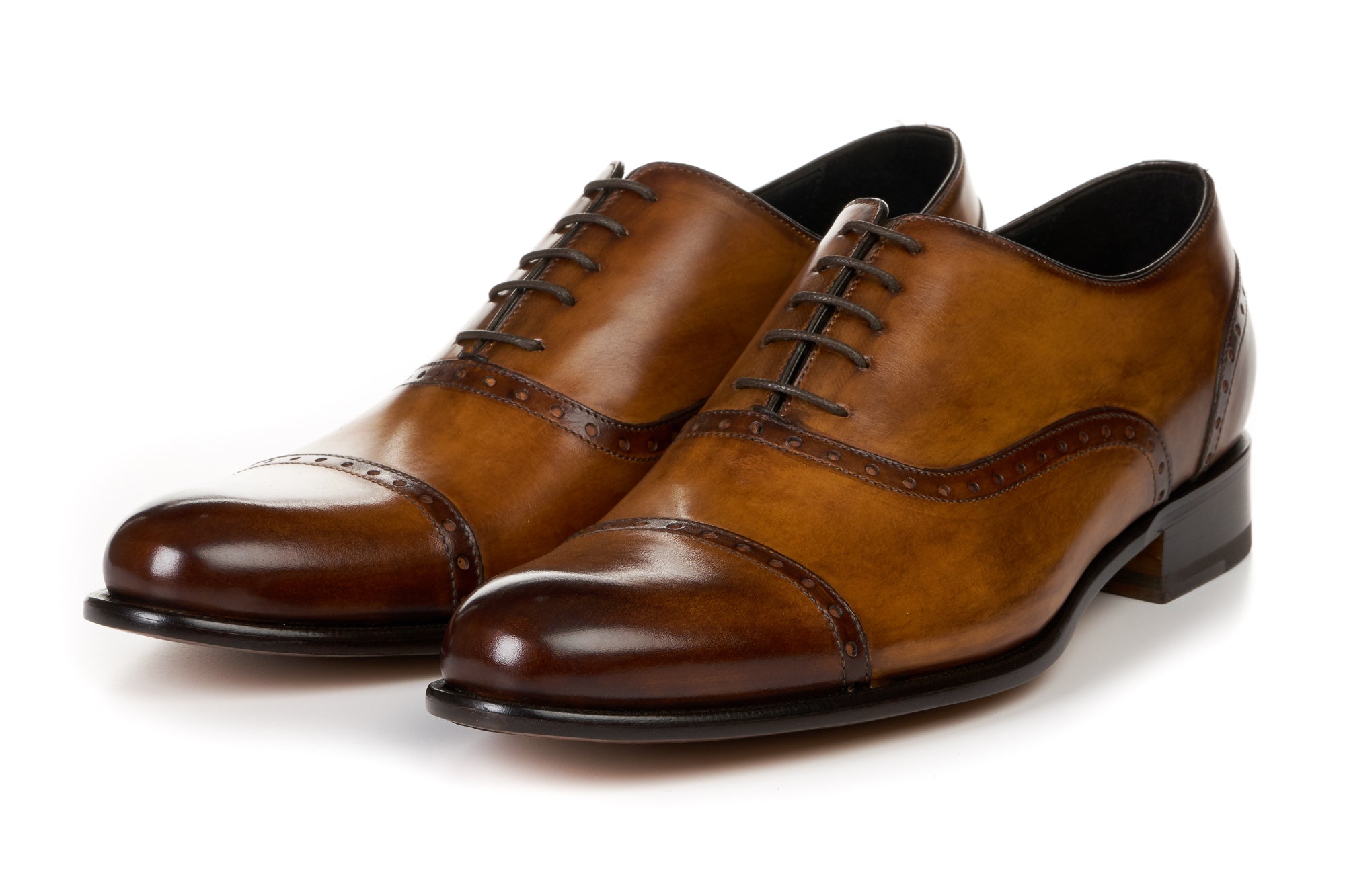
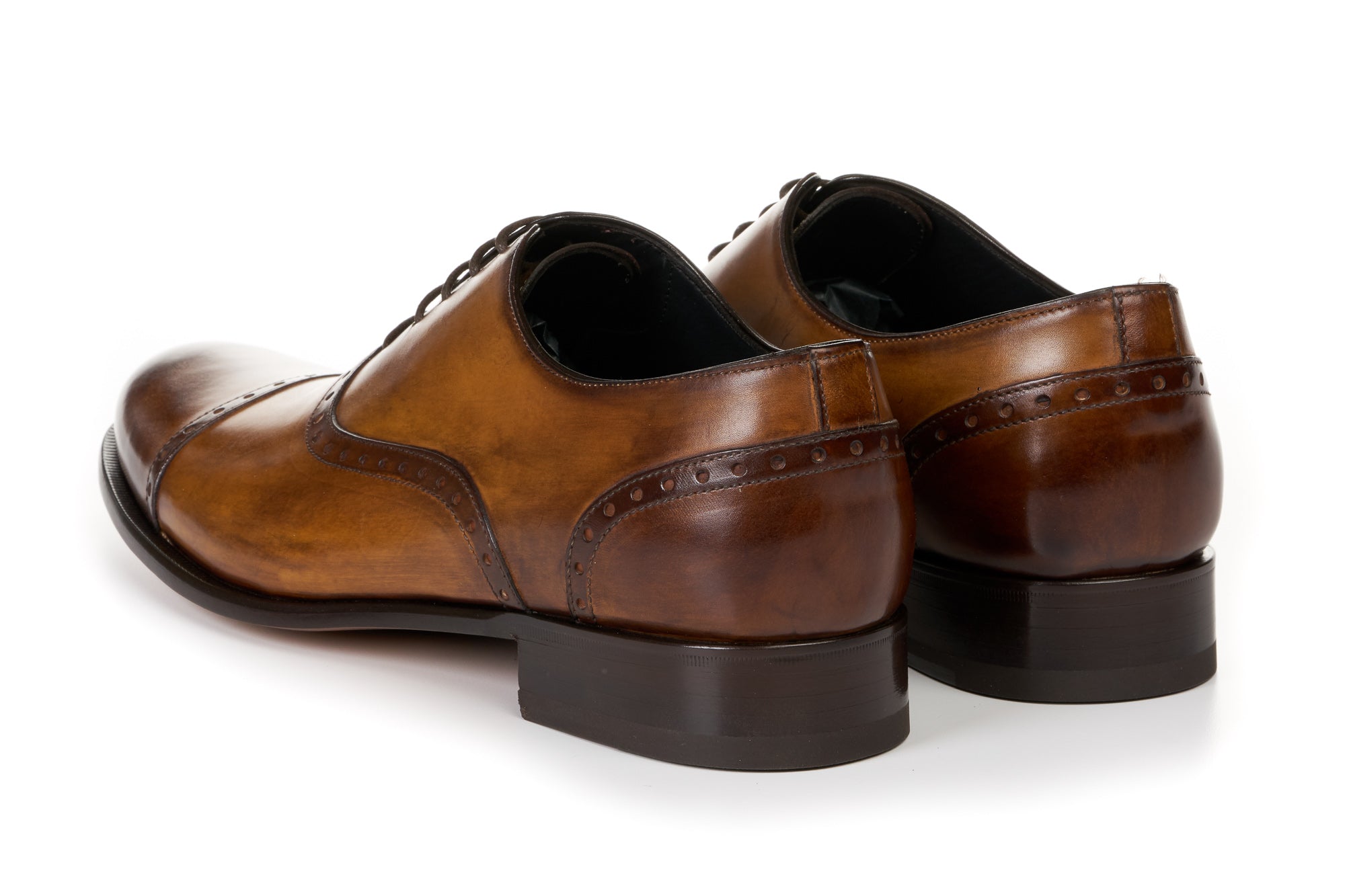
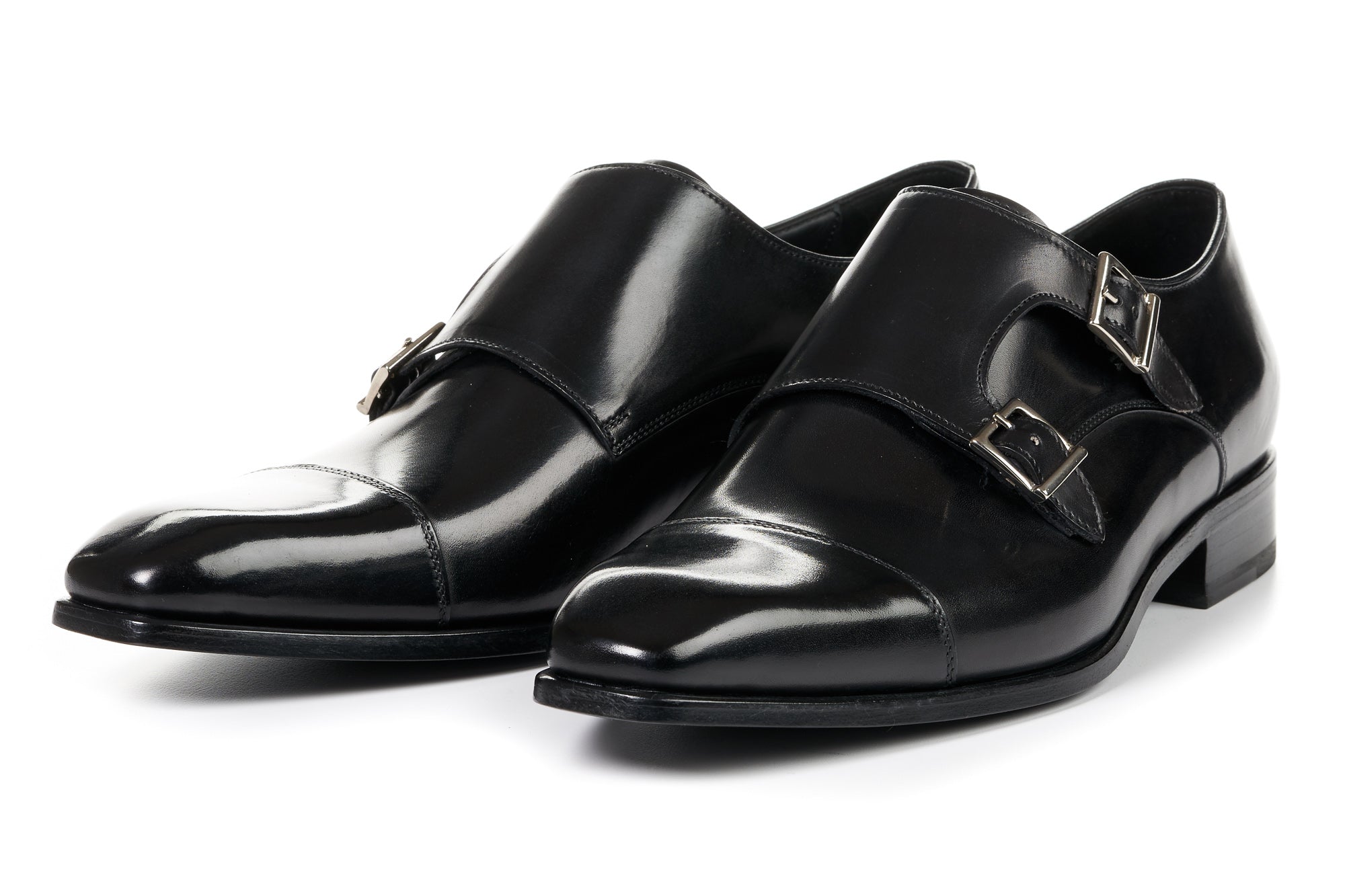
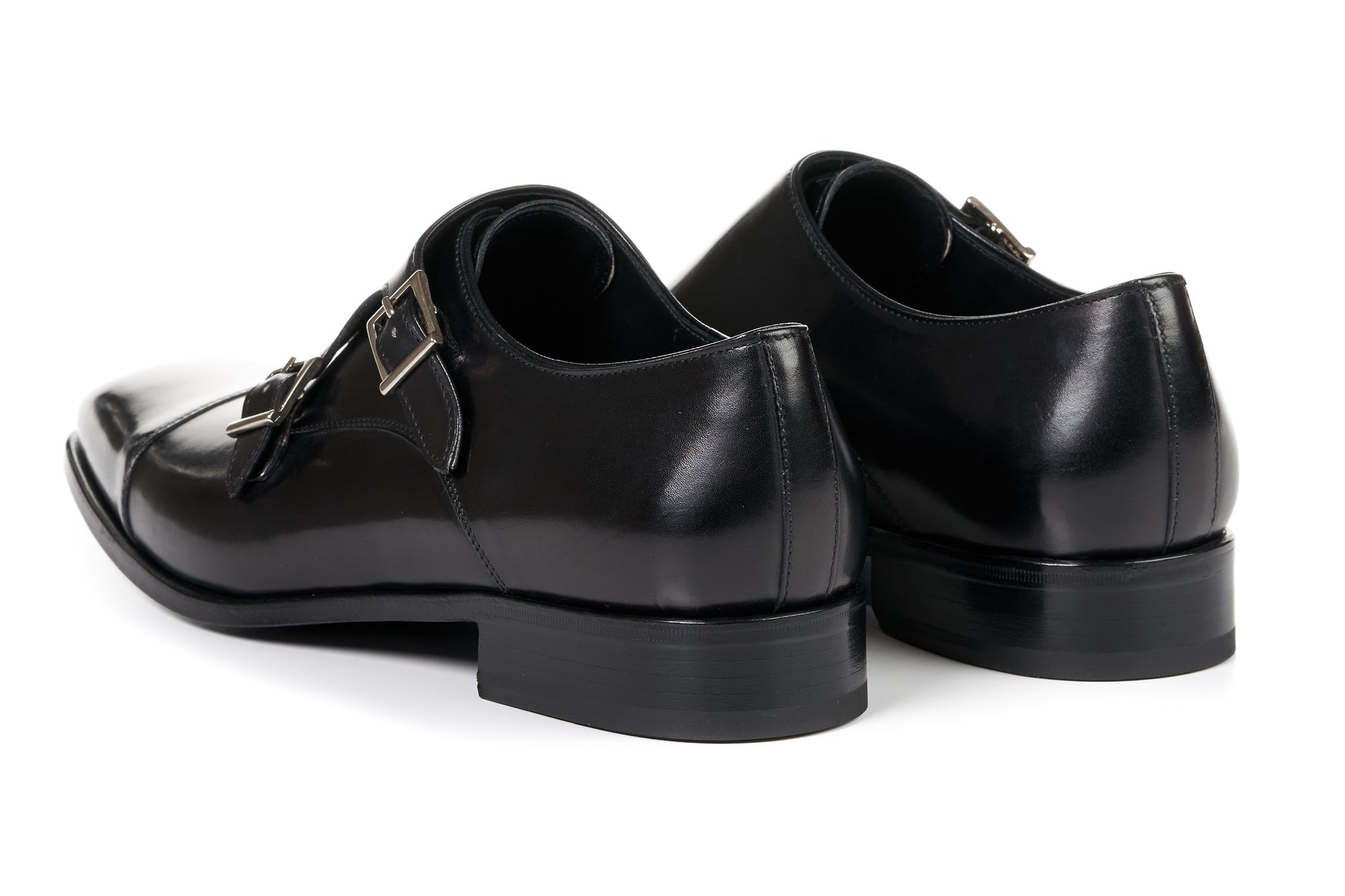
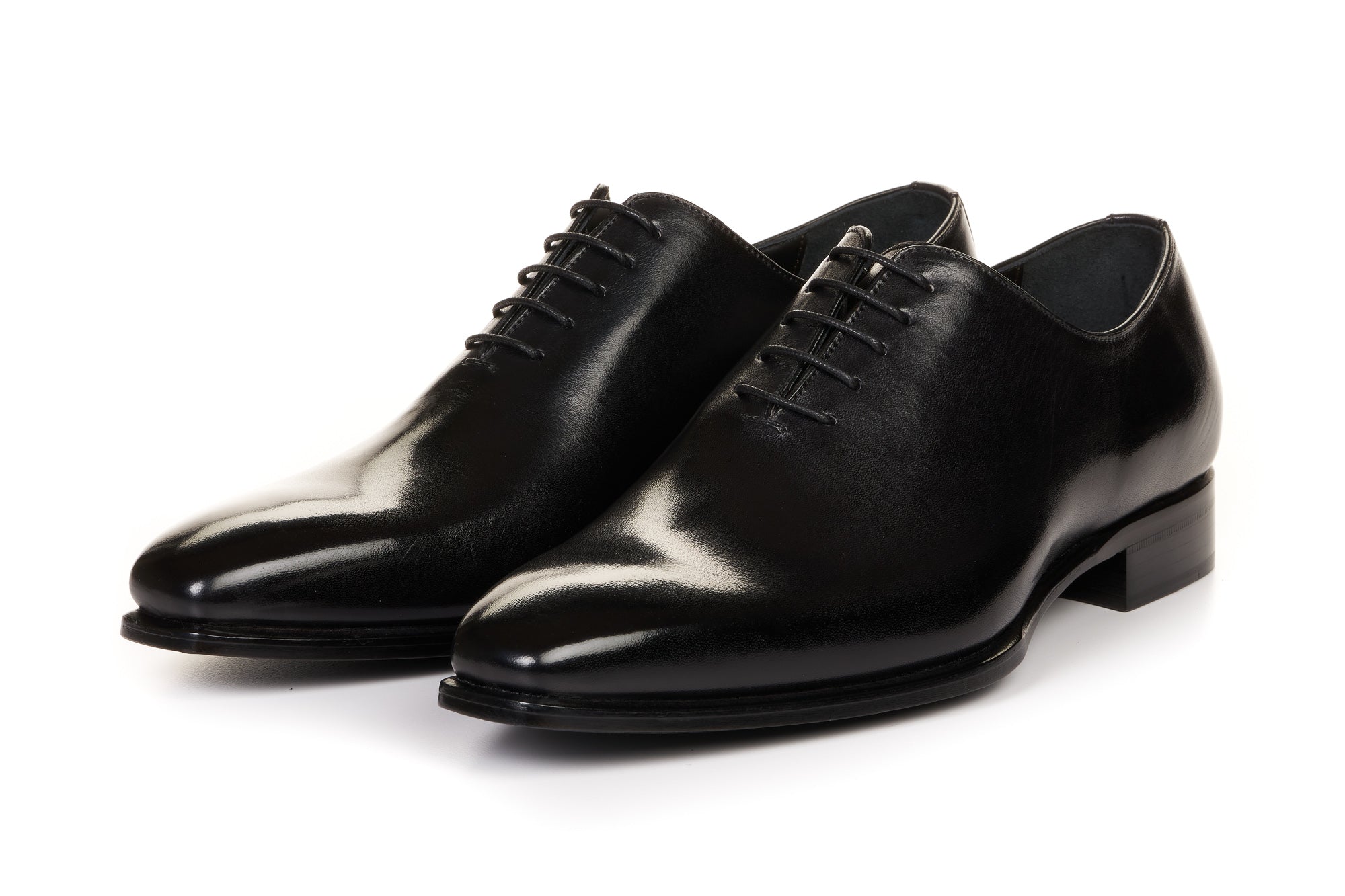
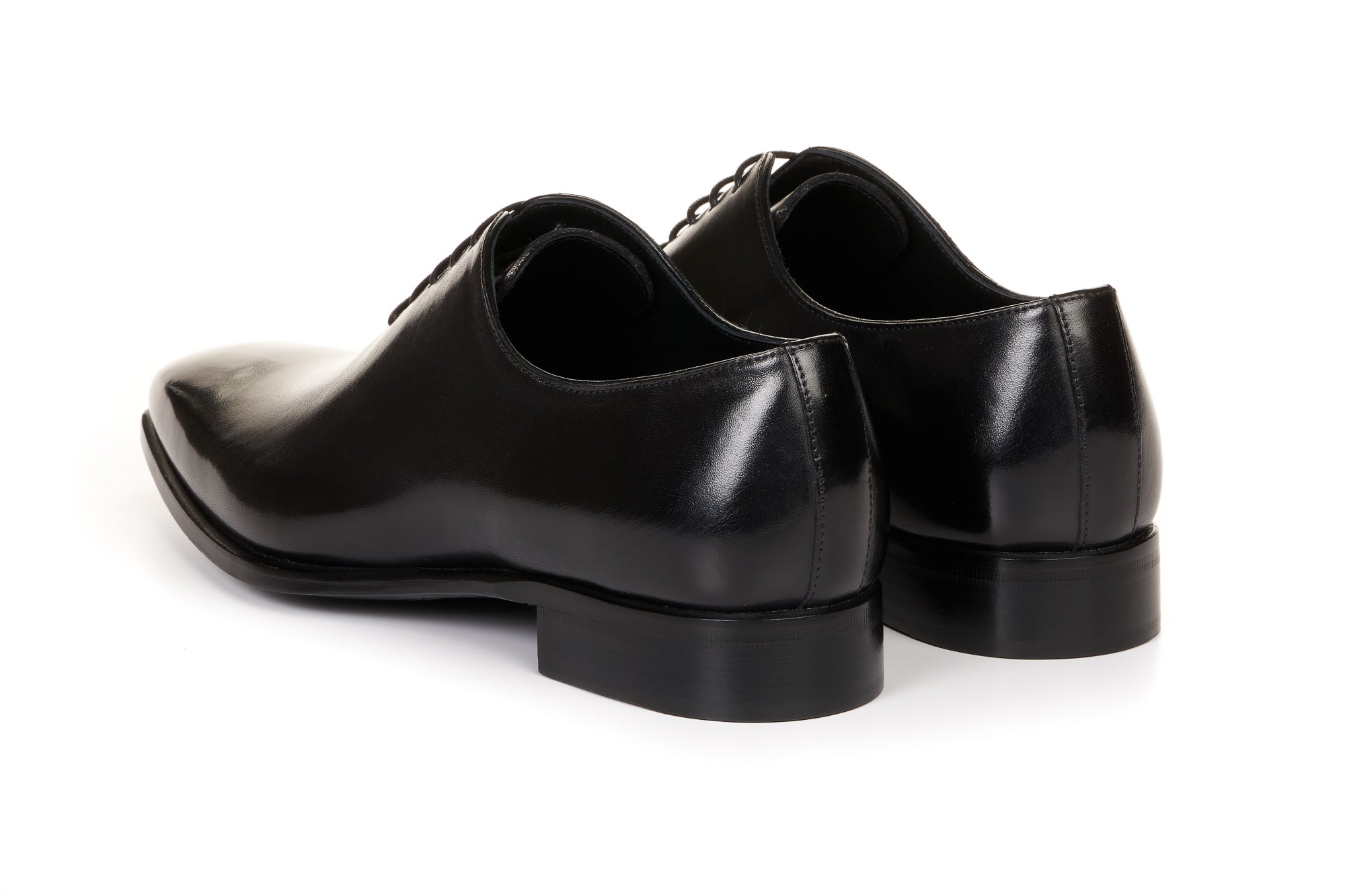
Paul Evans shoes are made in Naples, Italy by hand, using full-grain Italian leathers and Blake-stitch construction. Blake-stitching connects the upper, insole, and outsole in a single pass, producing a thinner, more flexible sole than Goodyear-welted construction. The result is a dress shoe that looks more refined on the foot and breaks in faster — both things that matter when you're wearing them for twelve hours on your wedding day. The leather quality starts at full-grain, which means the surface is untouched and develops a patina over time rather than wearing down to something dull.
What is the difference between an Oxford and a Derby for a wedding?
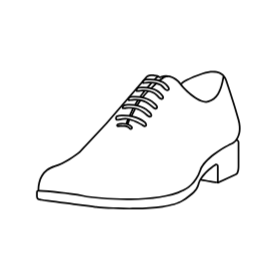
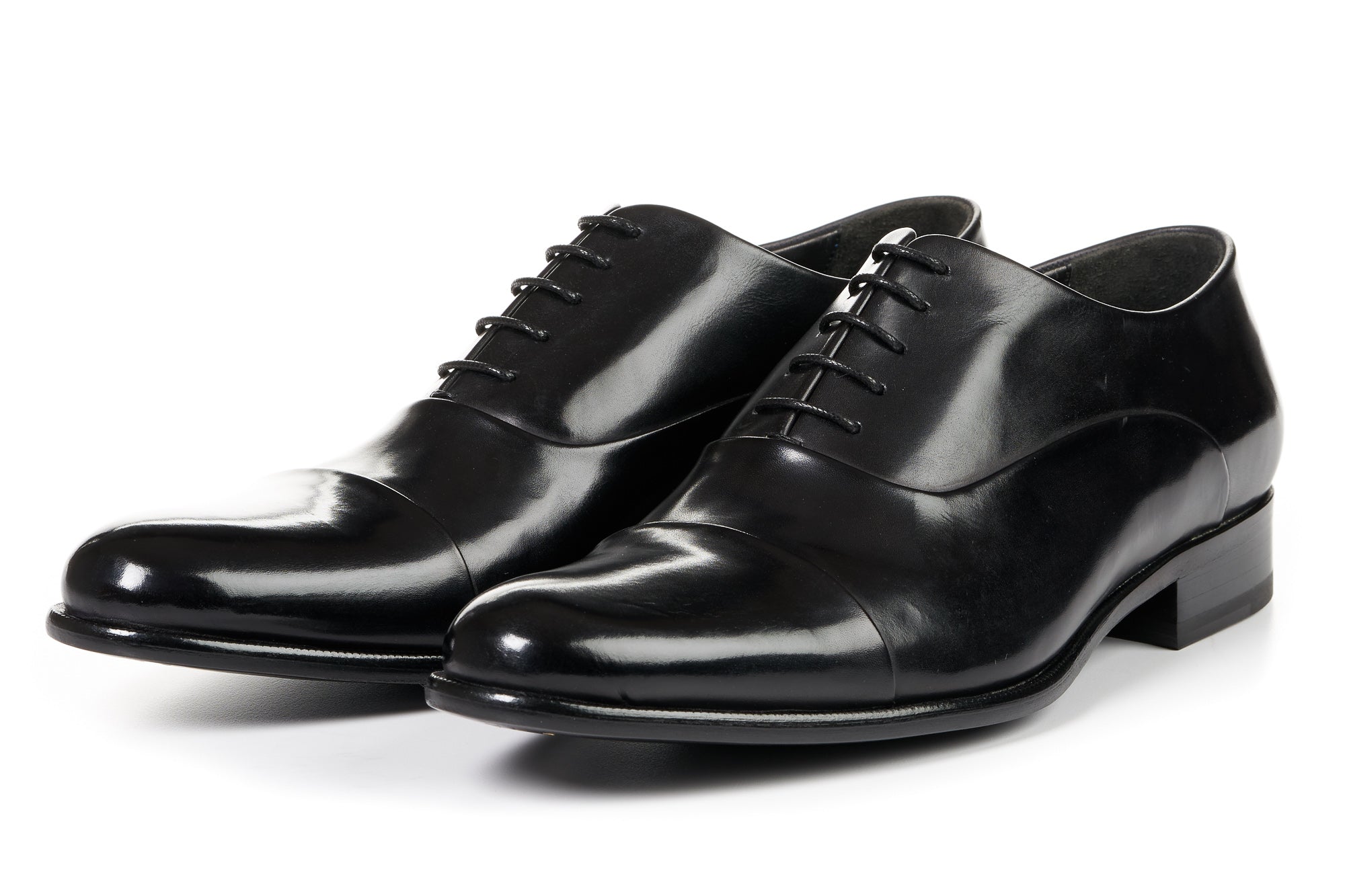
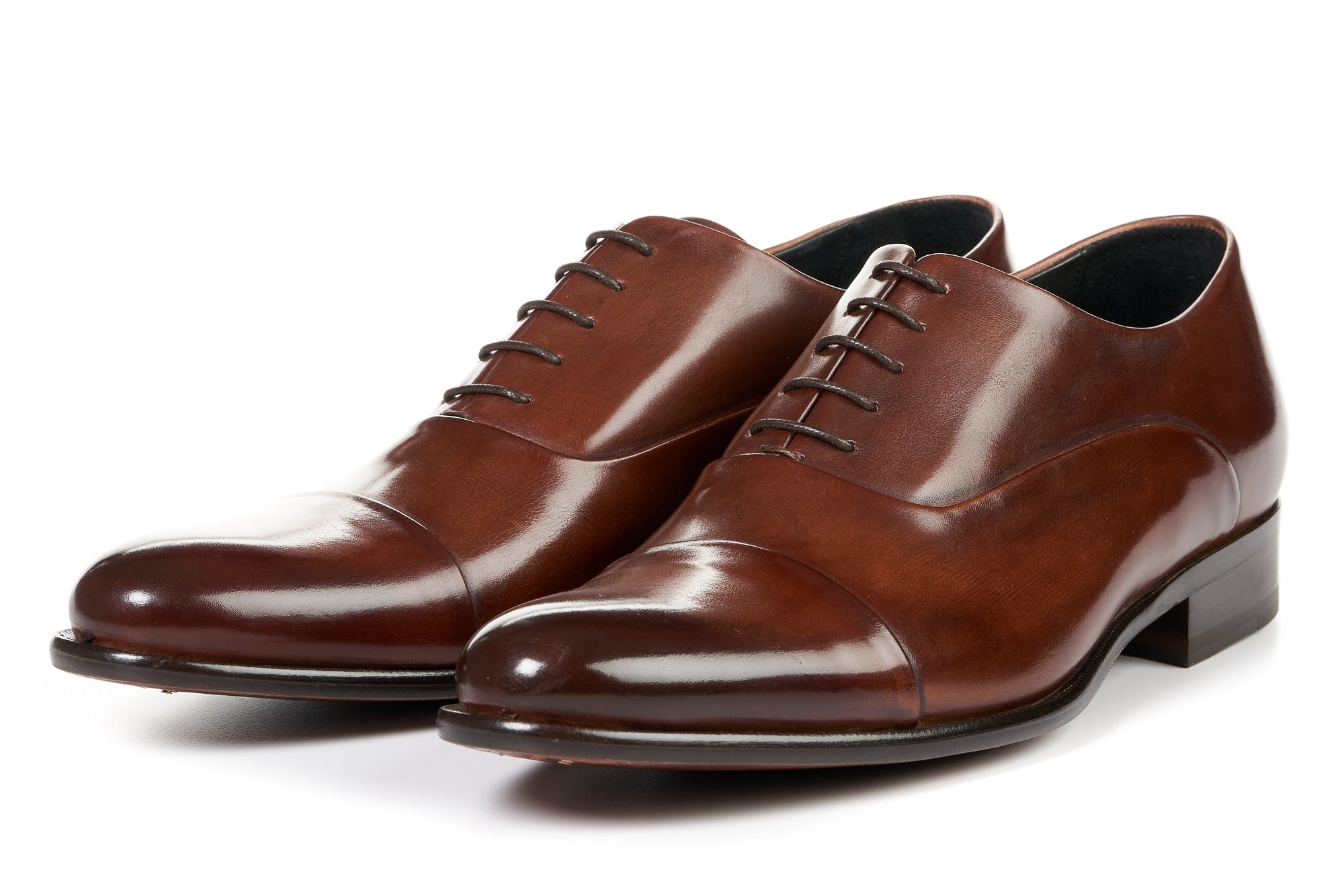
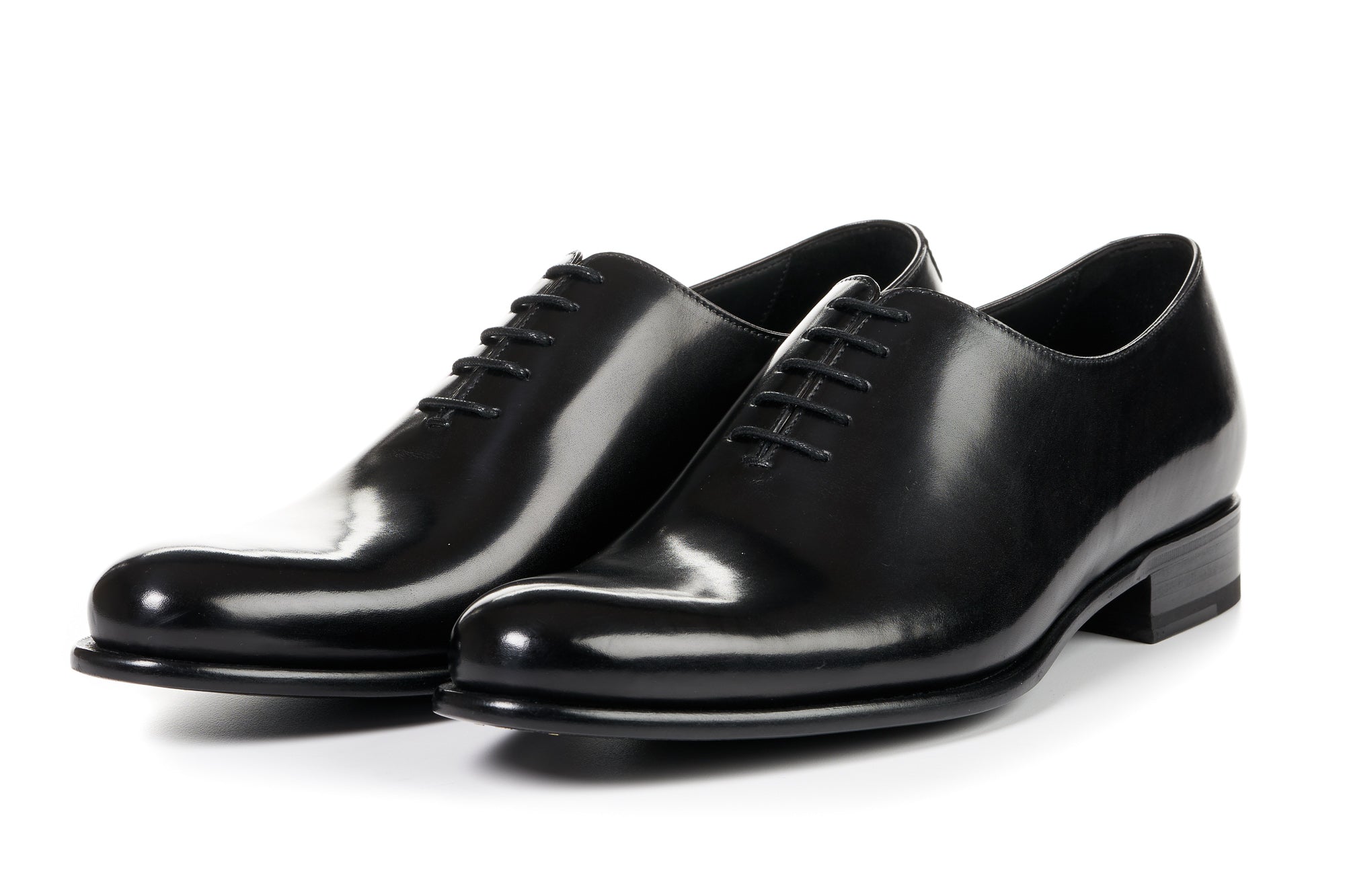
The Oxford has closed lacing, meaning the two eyelets are sewn under the vamp and sit close together. The Derby has open lacing, with the eyelets sitting on top, which gives slightly more room across the instep. For a formal wedding — black tie, white tie, or traditional morning dress — the Oxford is the more correct choice. For a smart-casual or contemporary formal wedding, either works, and the Derby often fits a wider foot more comfortably. Both are strong picks as men's Oxford wedding shoes go, but if you're unsure, the Oxford is the safer call for a traditional ceremony.
Are wedding loafers appropriate for a formal wedding?
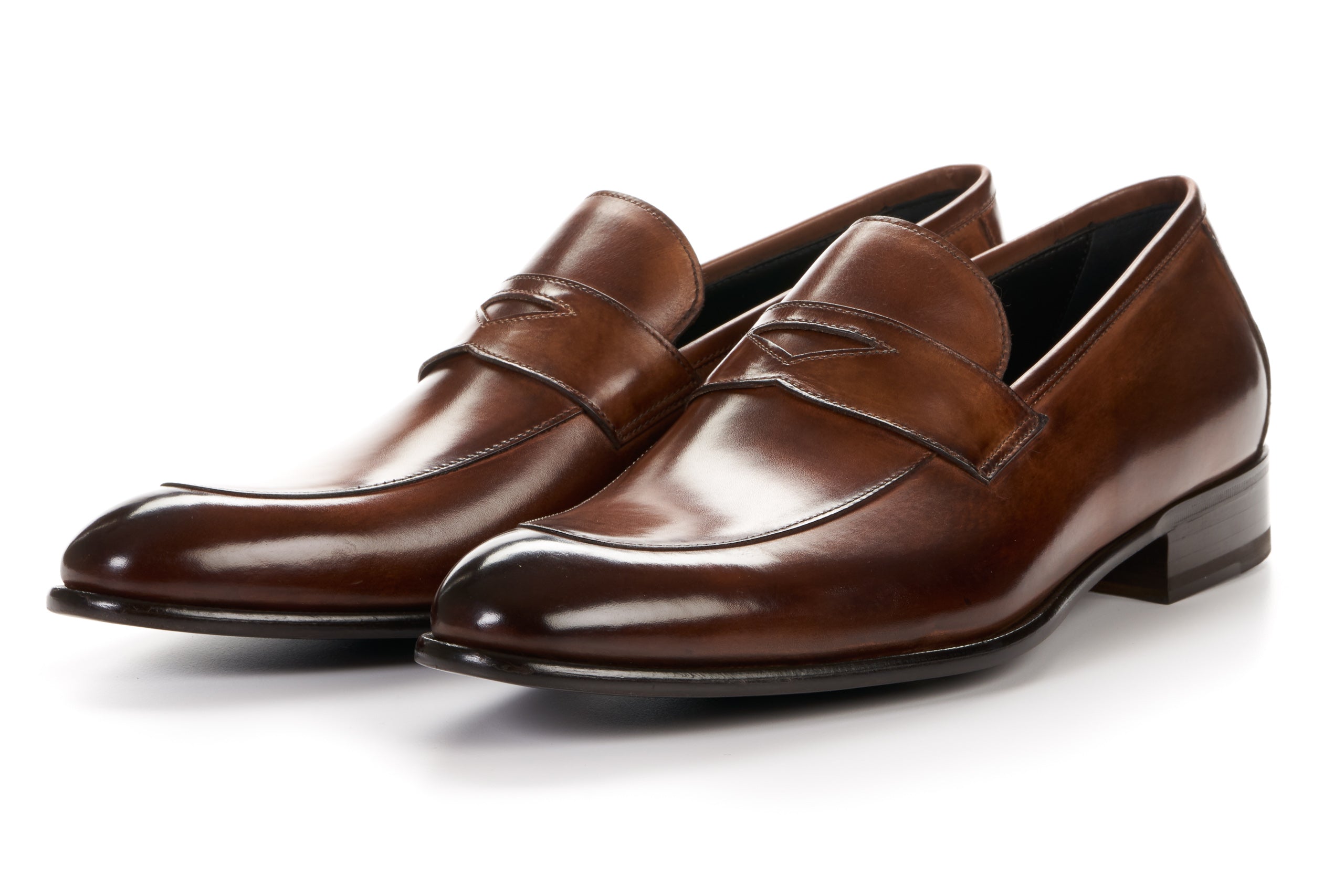
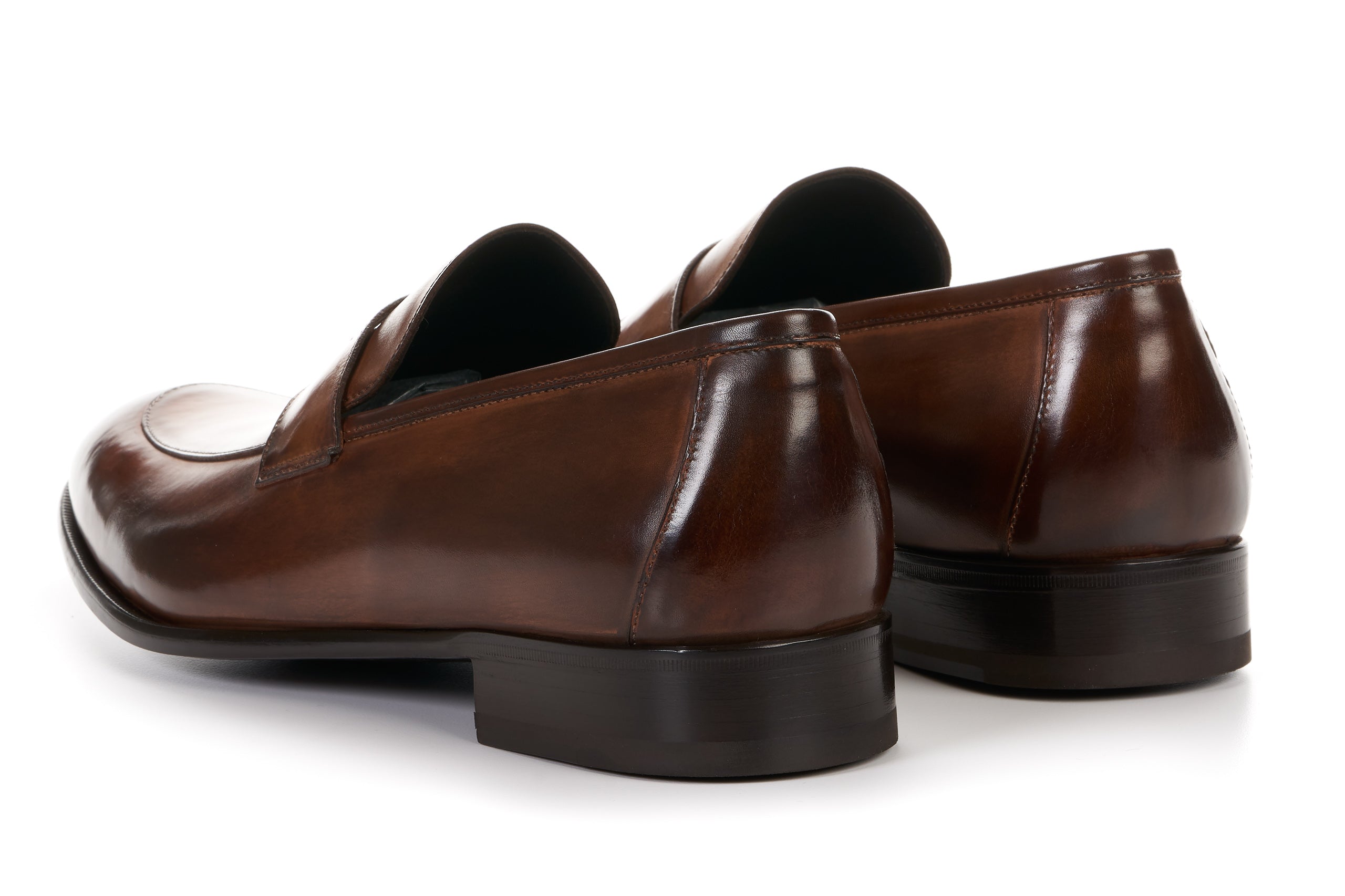
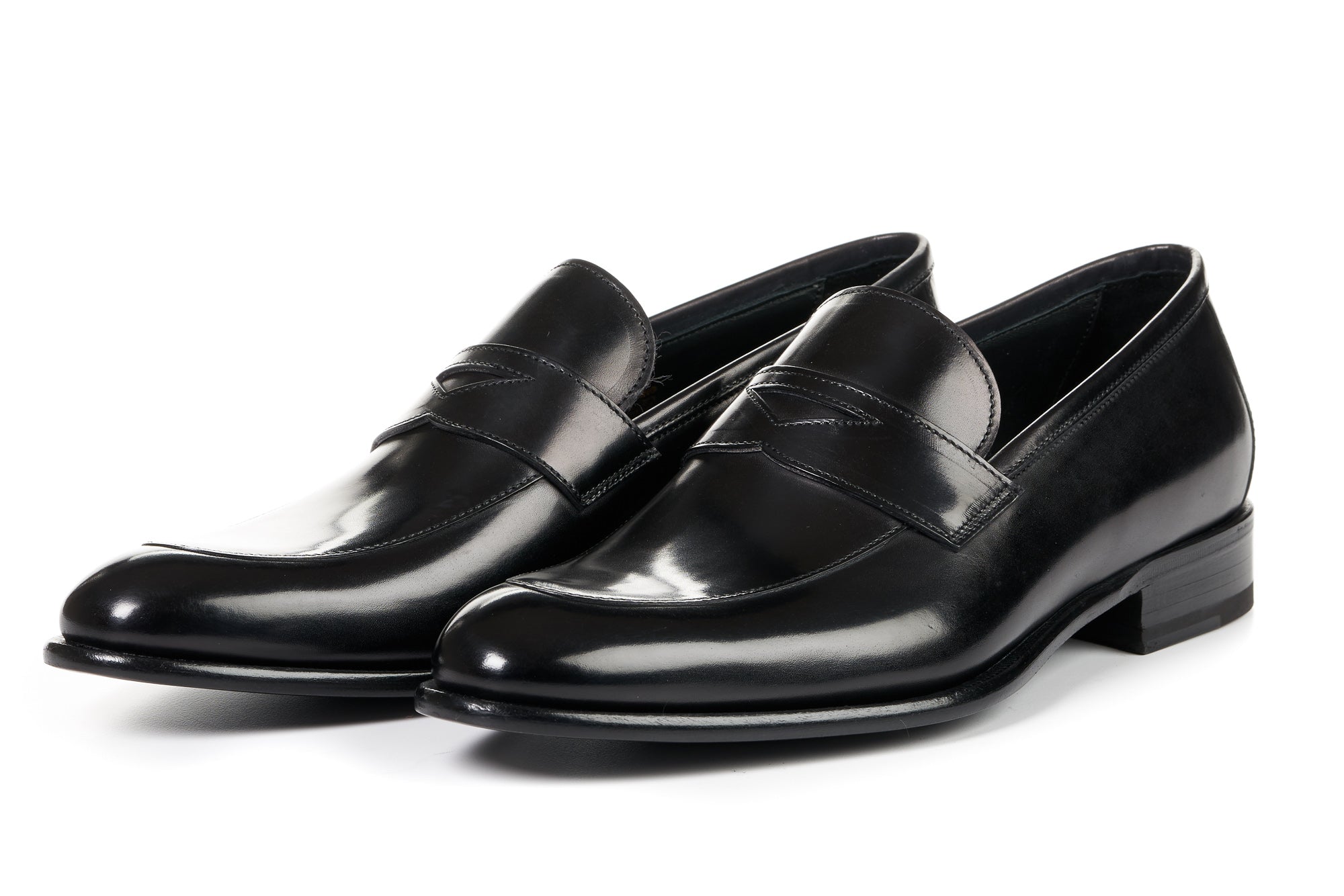
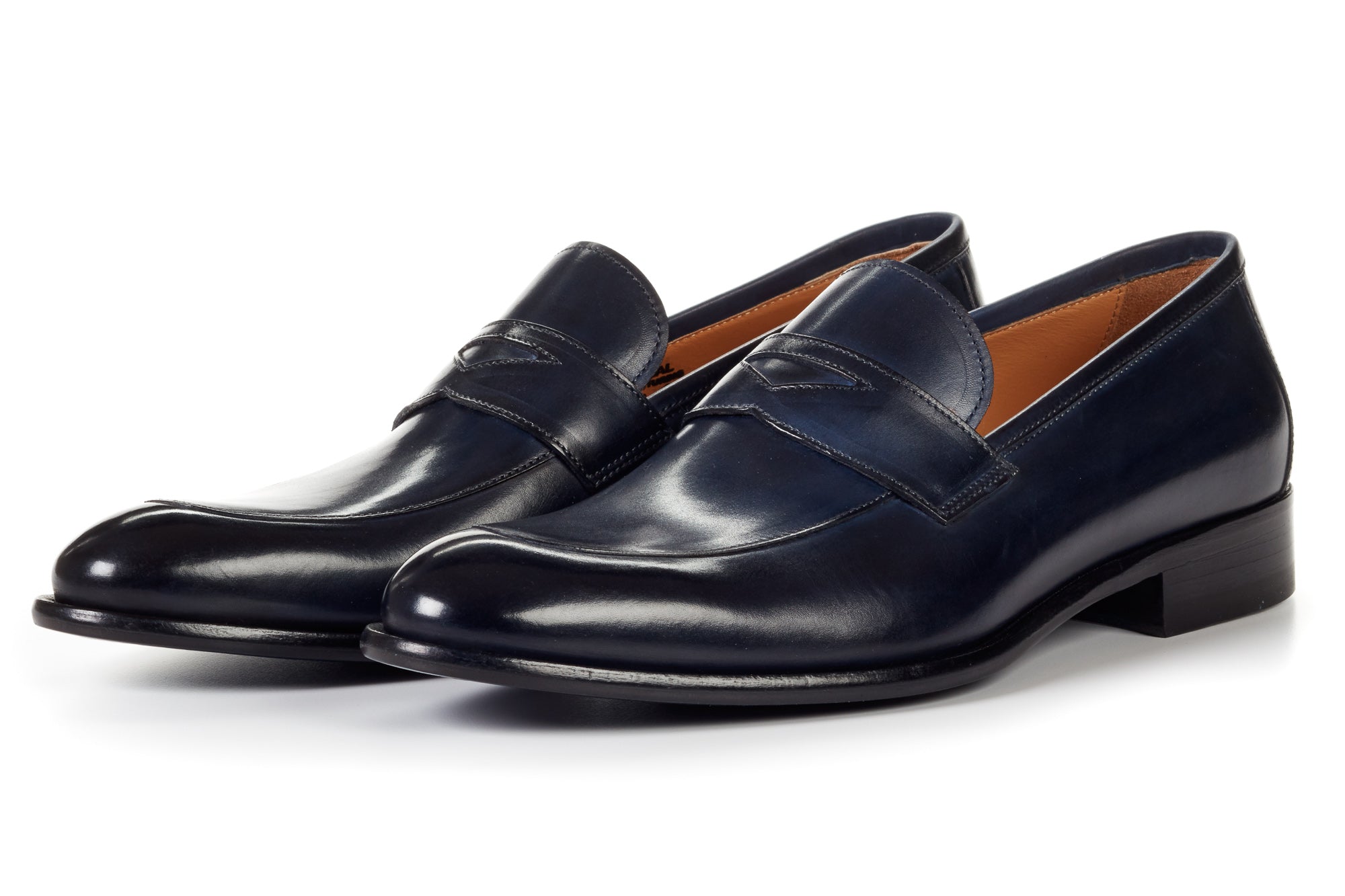
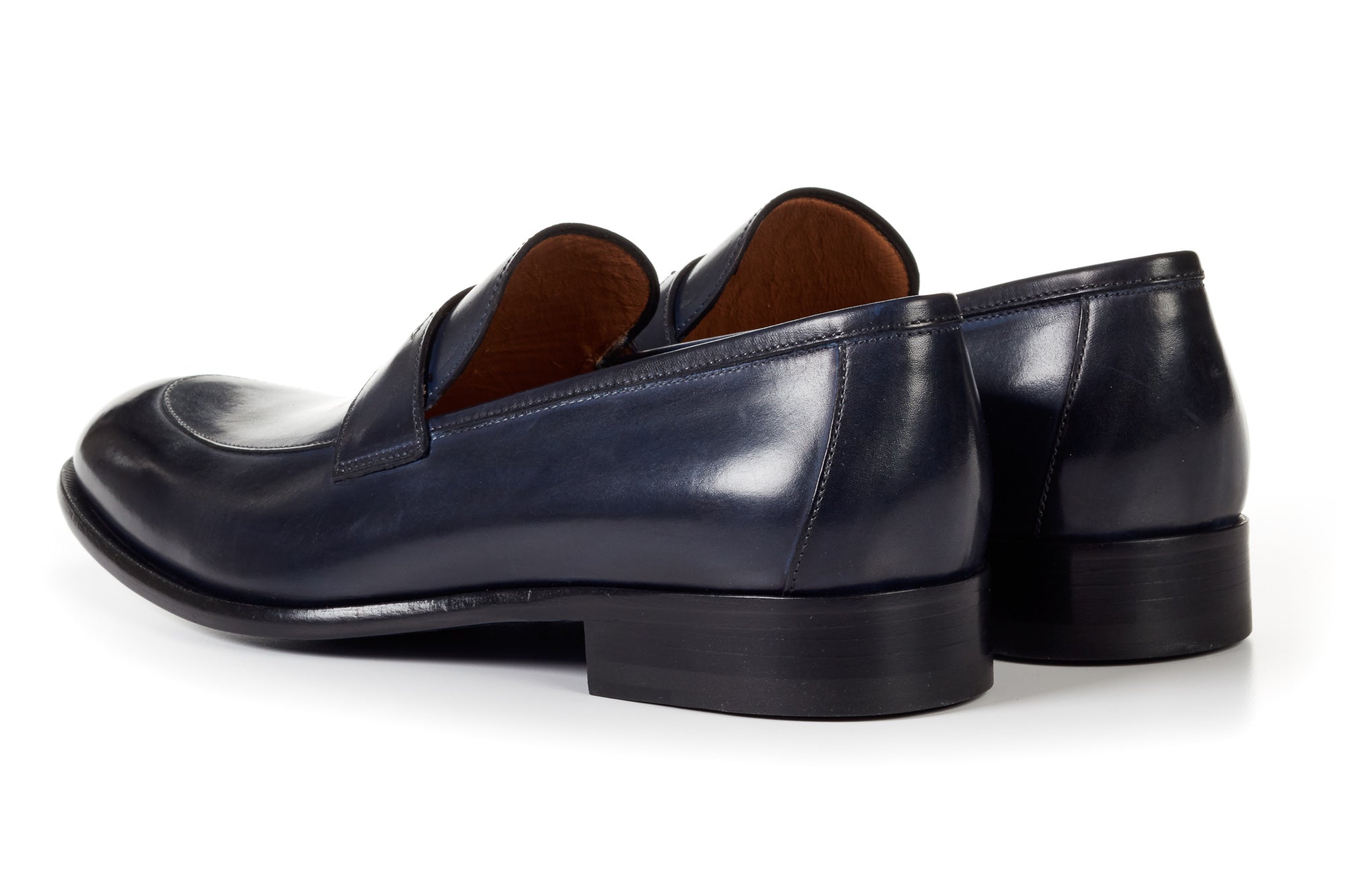
Wedding loafers for men work well at ceremonies that aren't strictly black tie. A clean, hardware-free penny loafer or a tassel-free slip-on in full-grain Italian leather reads as polished and intentional rather than casual. For destination weddings, outdoor venues, or warm-weather receptions, a loafer often makes more practical sense than an Oxford anyway. The fit matters as much as the style — a loafer cut in quality leather holds its shape and looks sharp in photographs. Where it falls short is at white tie or formal military ceremonies, where a laced Oxford is the expected standard.
How should men's wedding dress shoes fit?
Your wedding shoes should fit snug at the heel with no slippage, and your toes should have just enough room to flex without pressing against the toe box. Don't buy a size up thinking it'll be more comfortable — a loose shoe creates friction that causes blisters far faster than a properly fitted one. Paul Evans shoes are available in half sizes and multiple widths, so getting the right fit isn't a guess. If you're between sizes, go down rather than up. Blake-stitched shoes also have thinner insoles than welted dress shoes, so they tend to feel more immediate on the foot from the first wear.
How far in advance should a groom order his wedding shoes?
Order at least four to six weeks before the wedding. That gives you time to receive the shoes, wear them around the house for several short sessions, and let the leather soften to your foot before the day. New leather-soled dress shoes are slippery until the sole gets some wear, so breaking them in on a hardwood or tile floor at home is a smart step before you take them to the venue. If you're ordering groomsmen shoes for the full wedding party, add extra lead time for coordination.
What color wedding shoes should a groom wear?
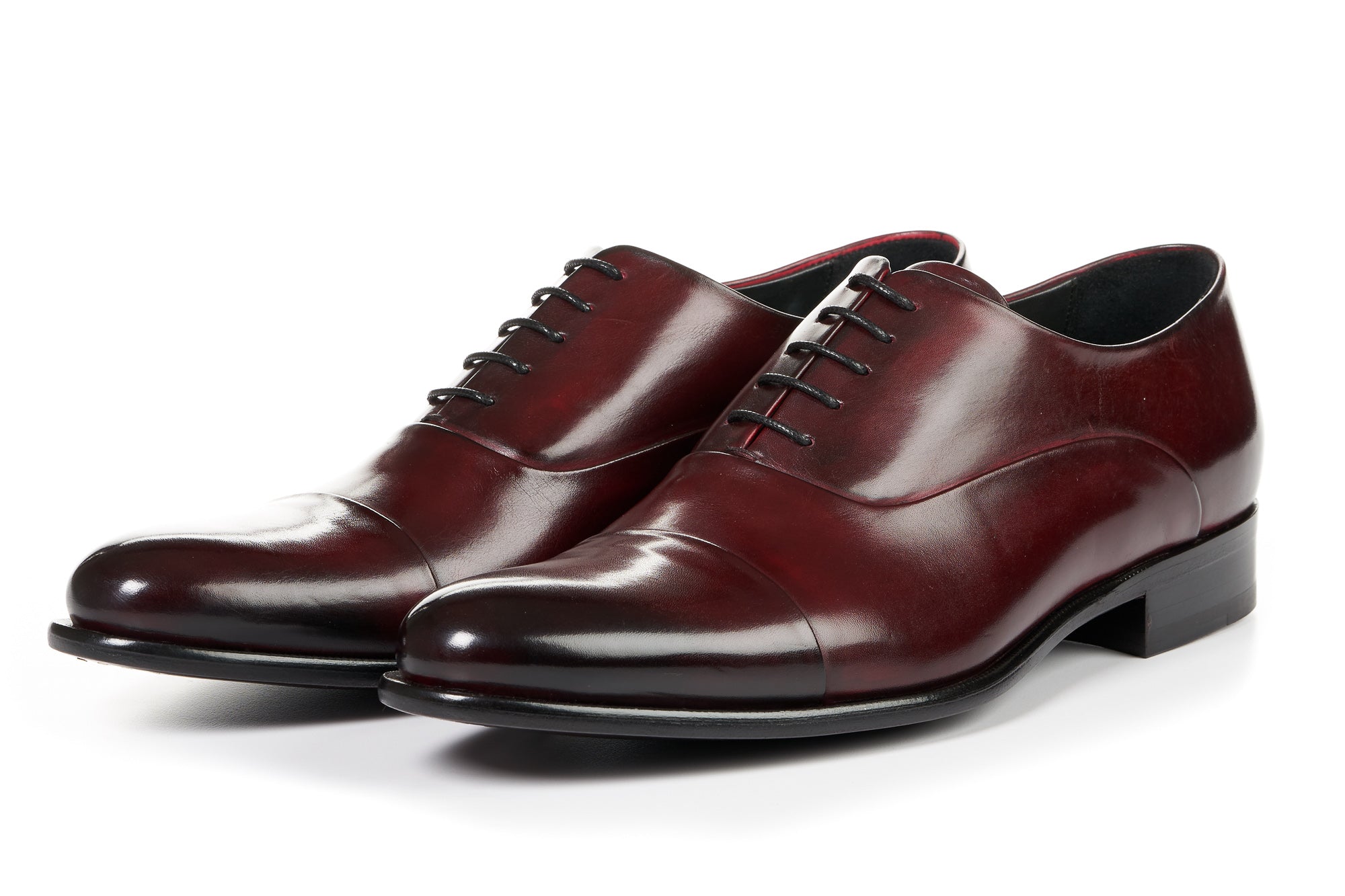
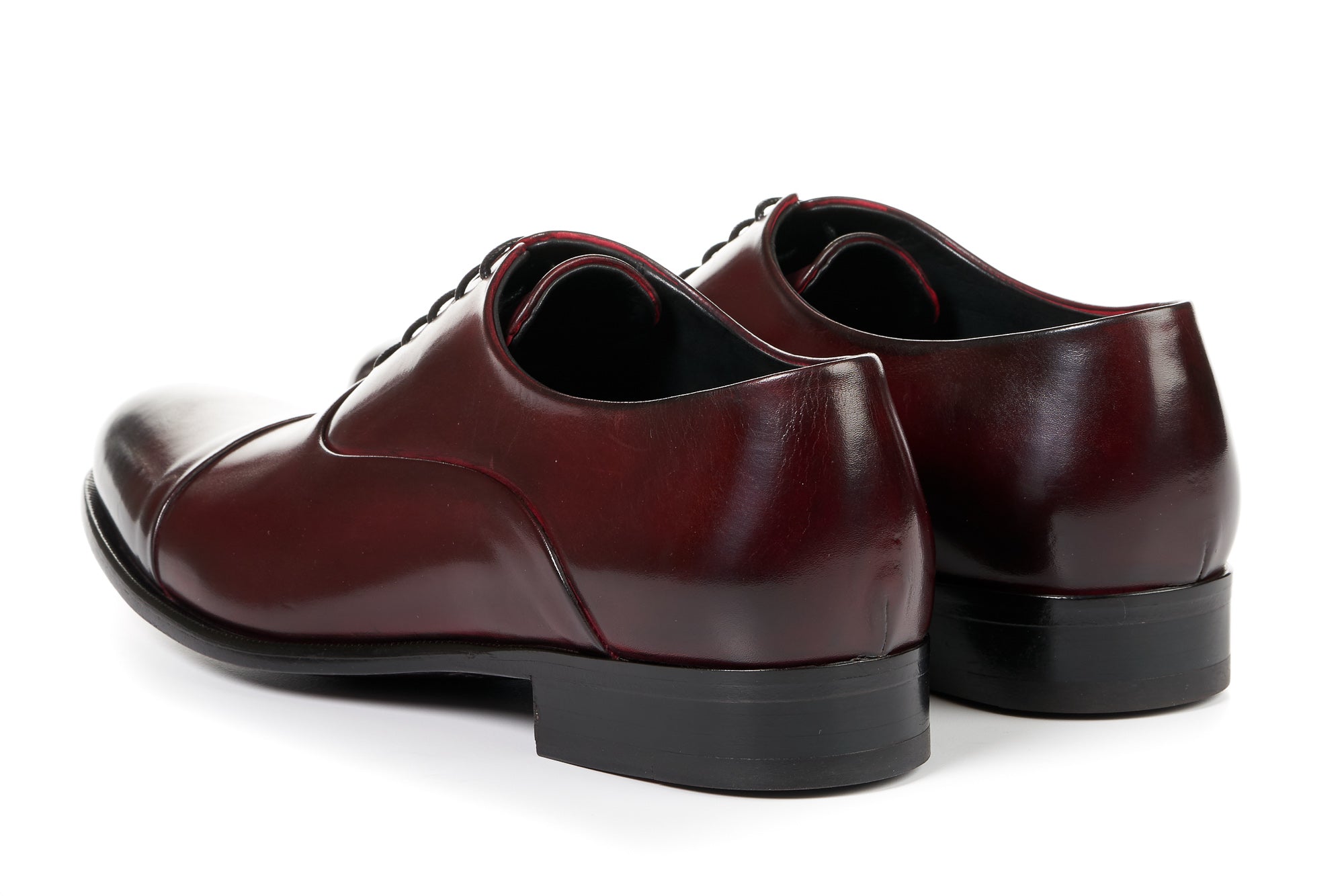
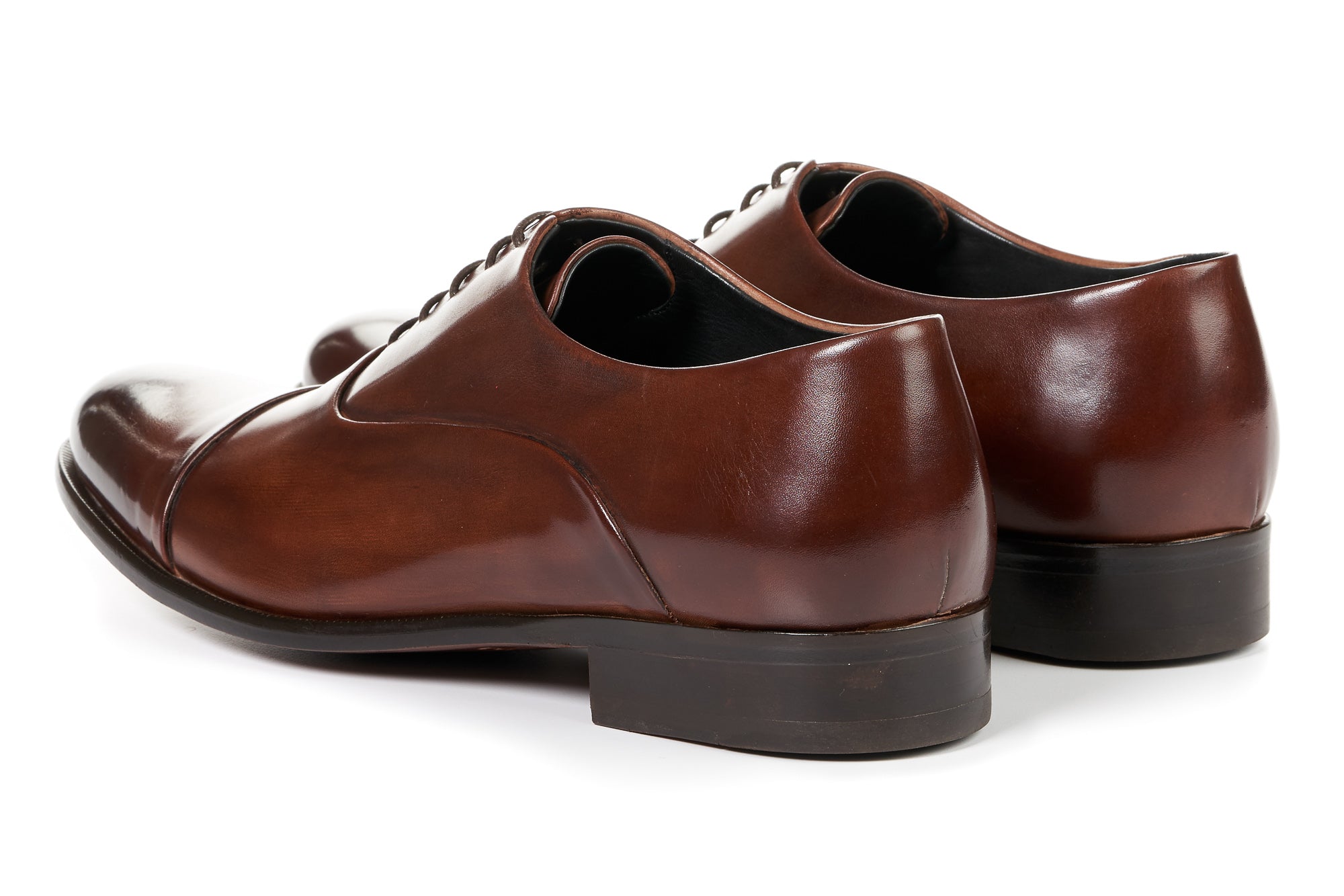
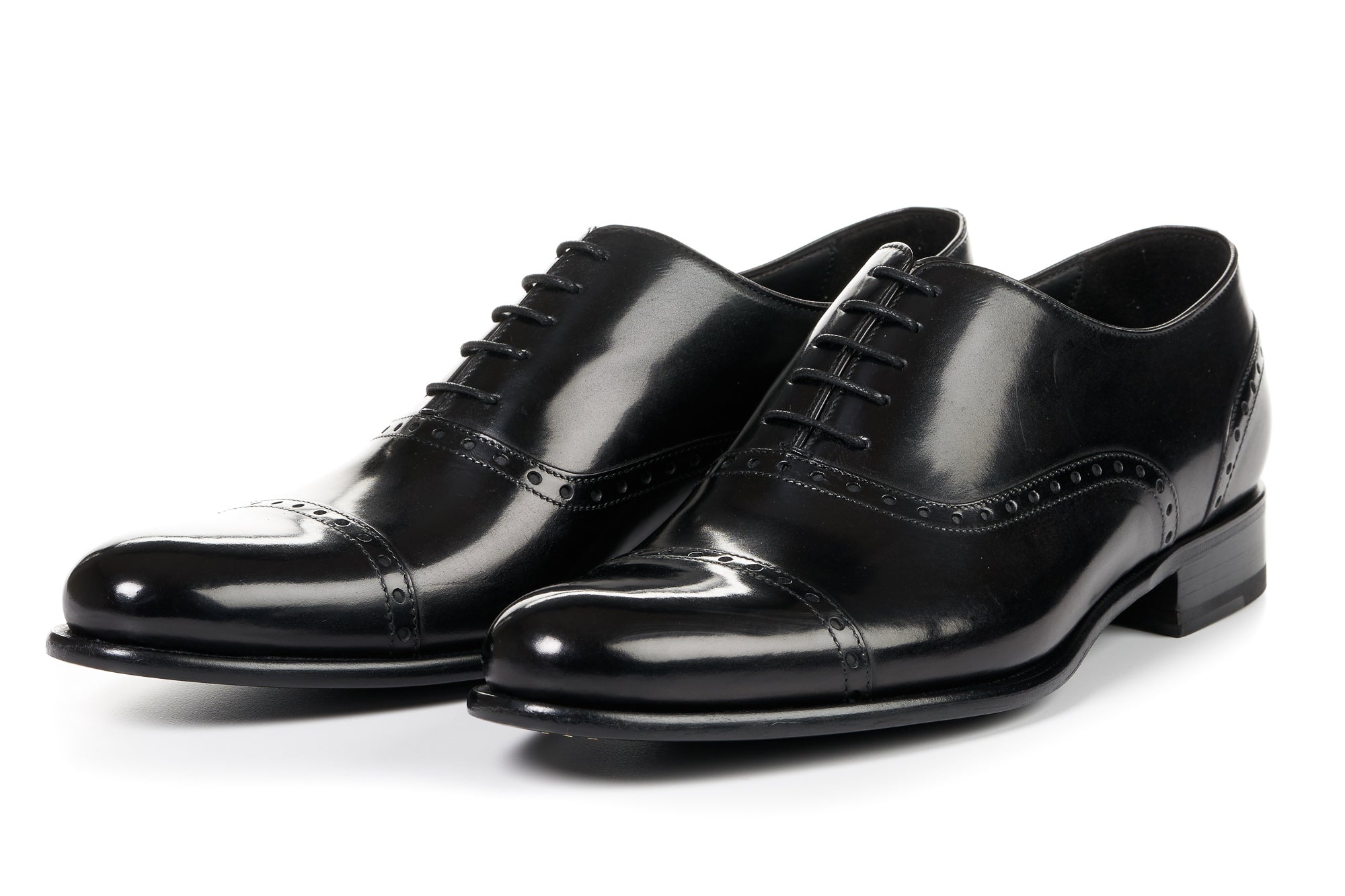
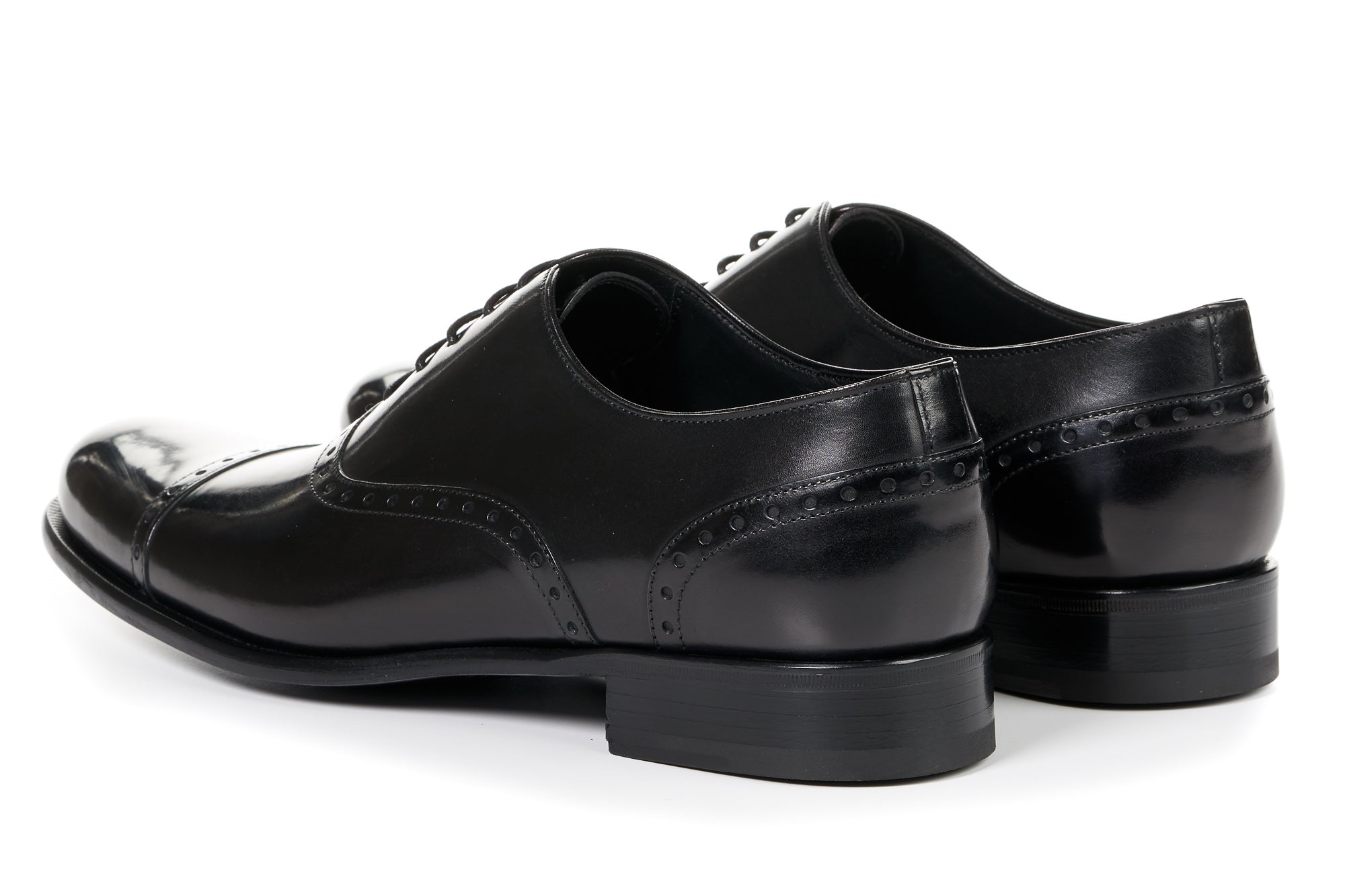
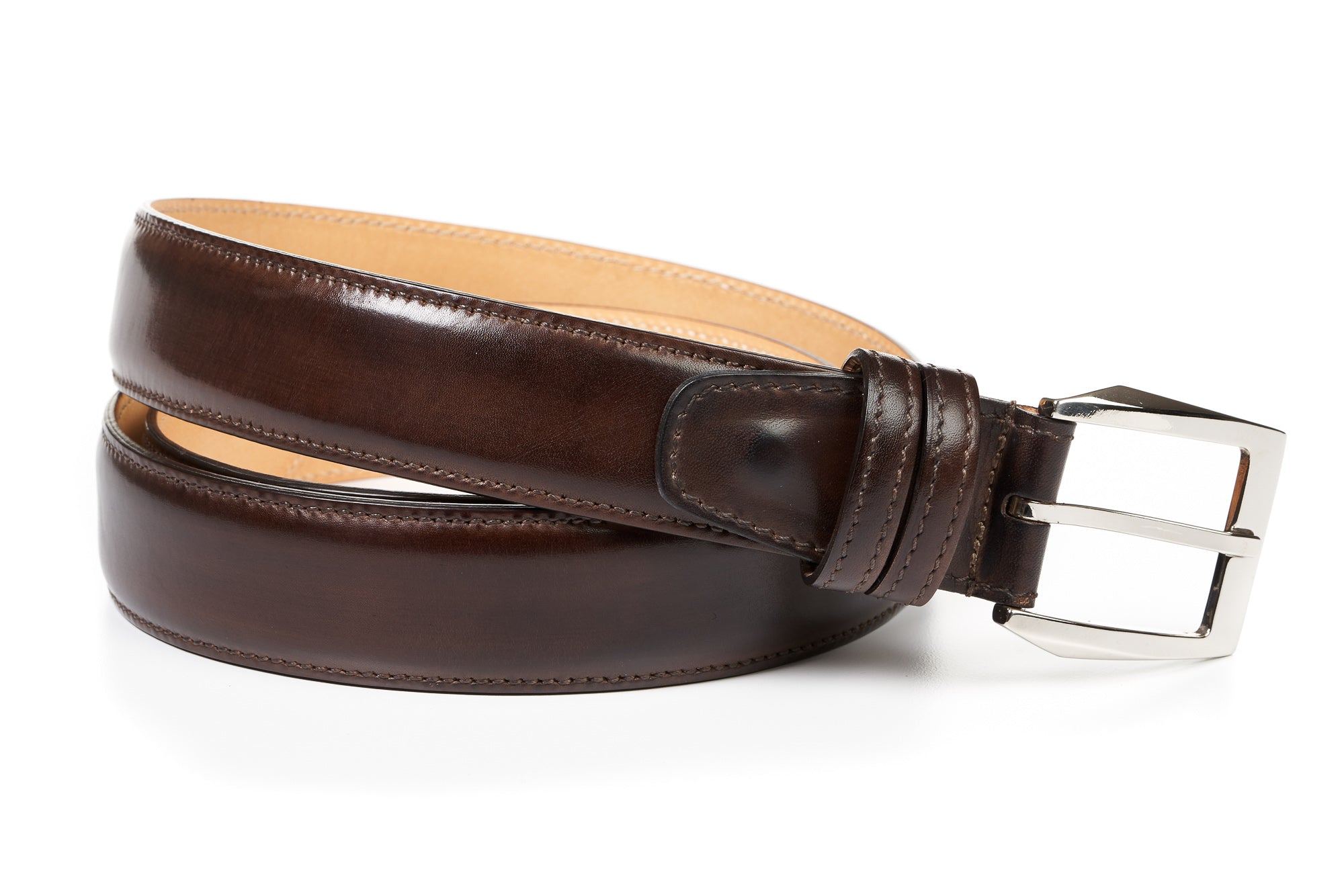
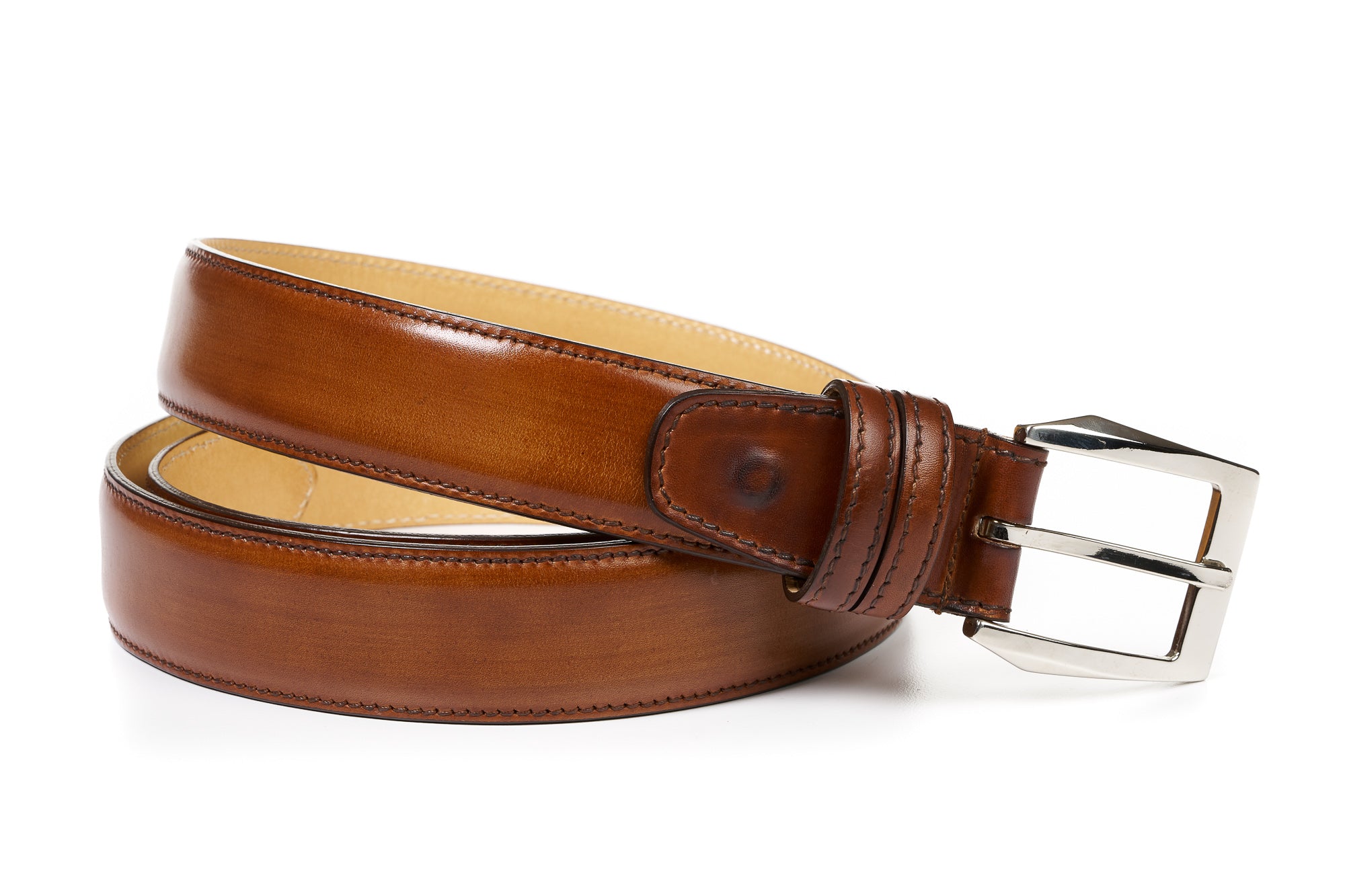
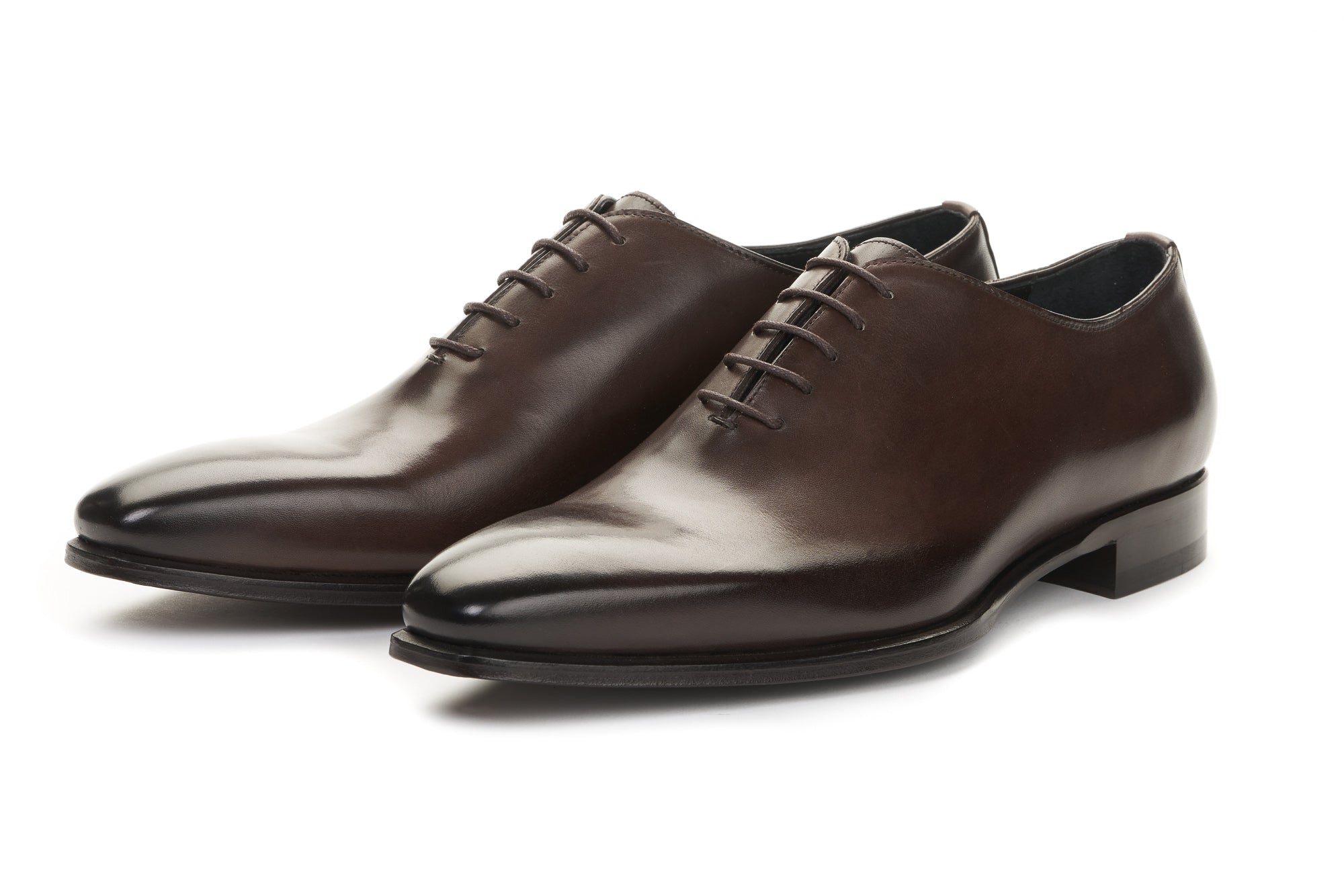
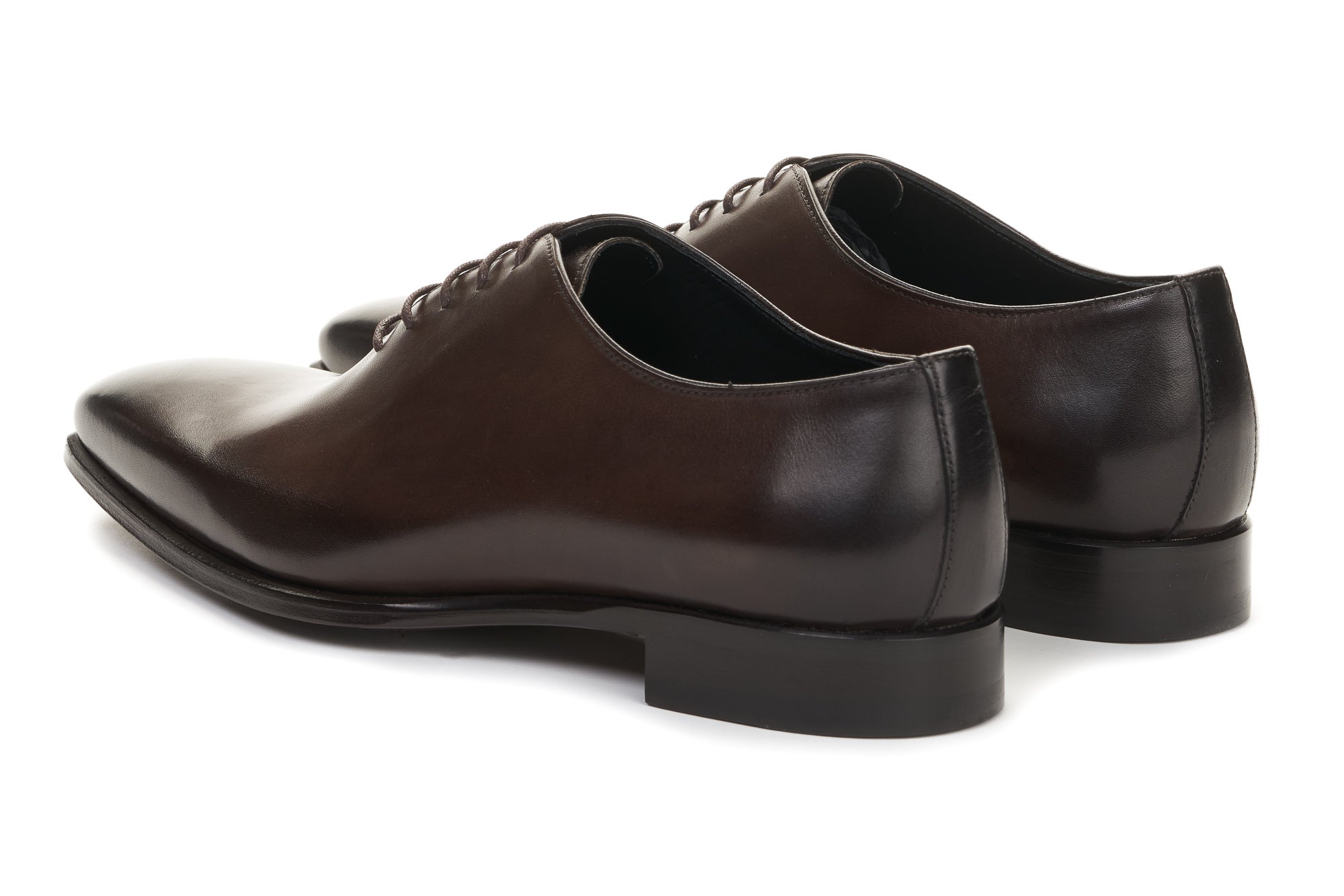
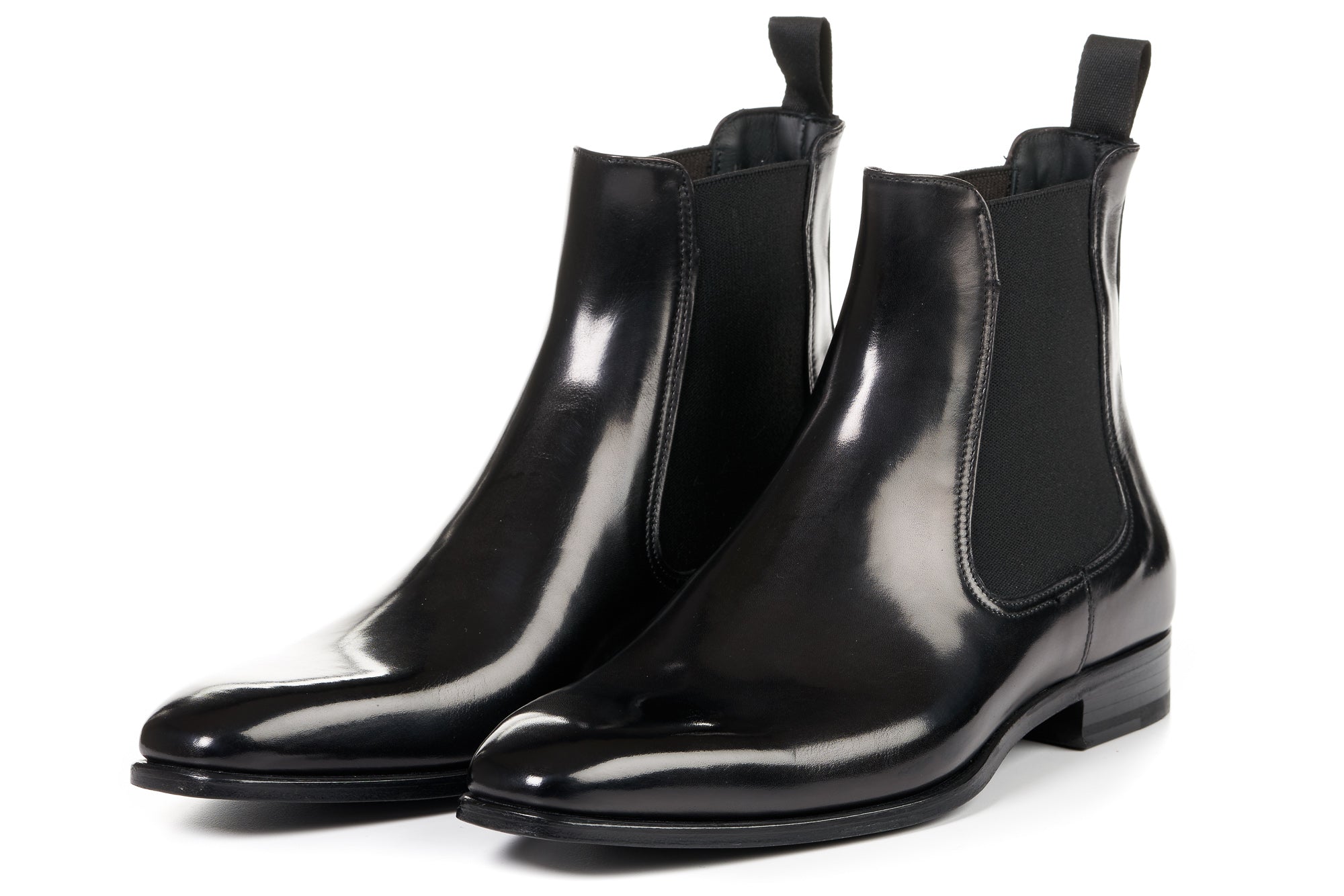
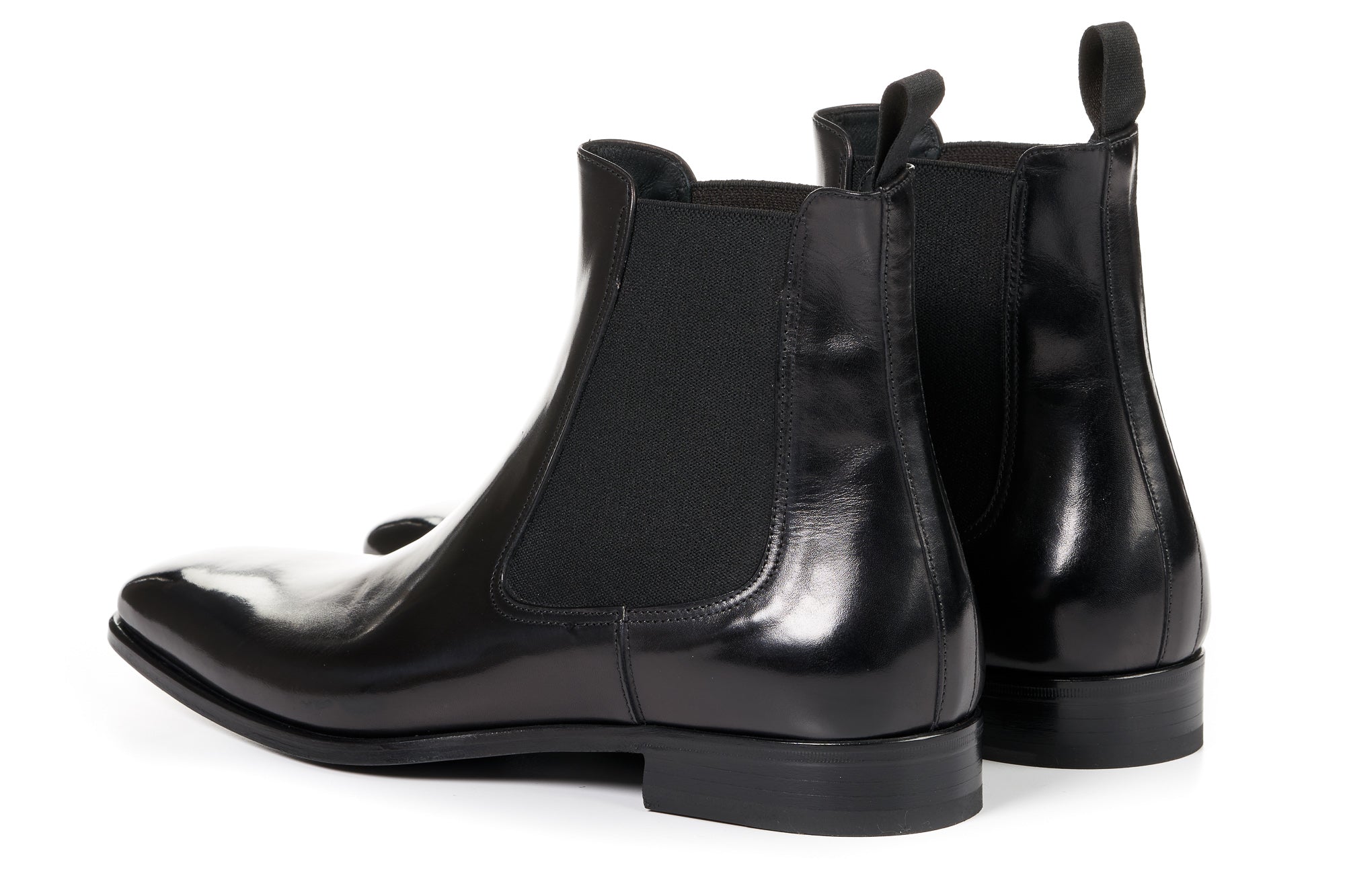
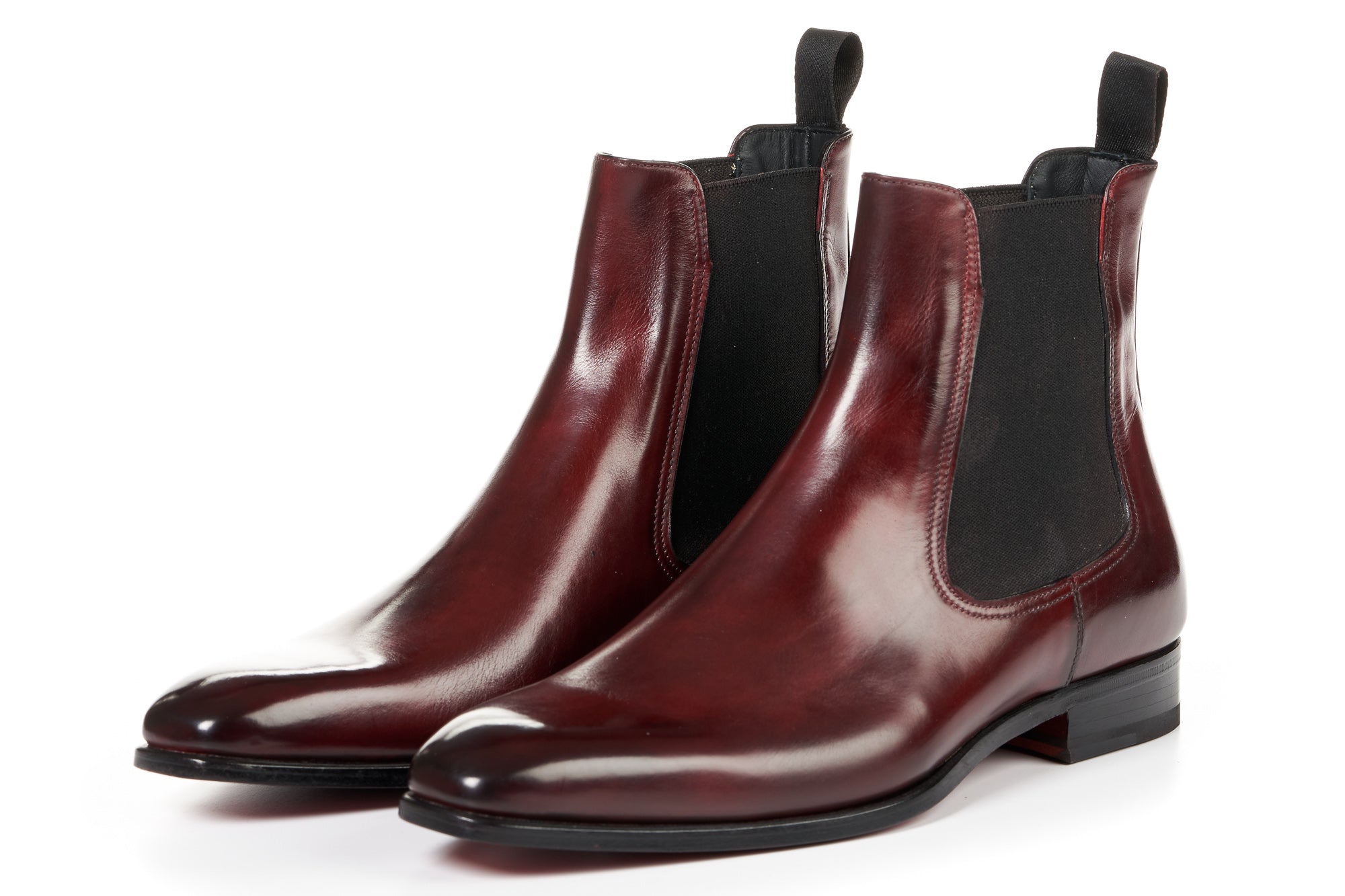
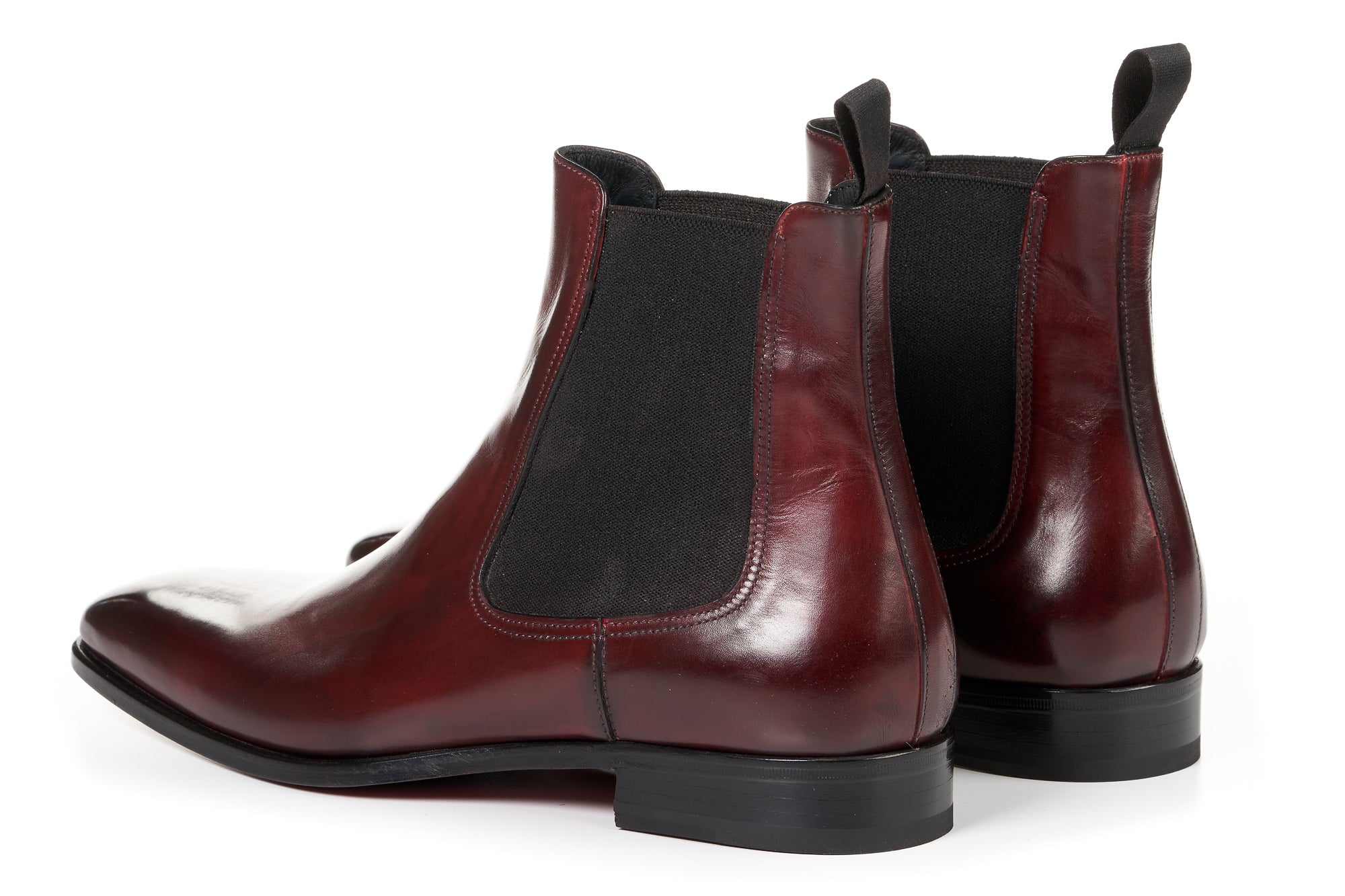
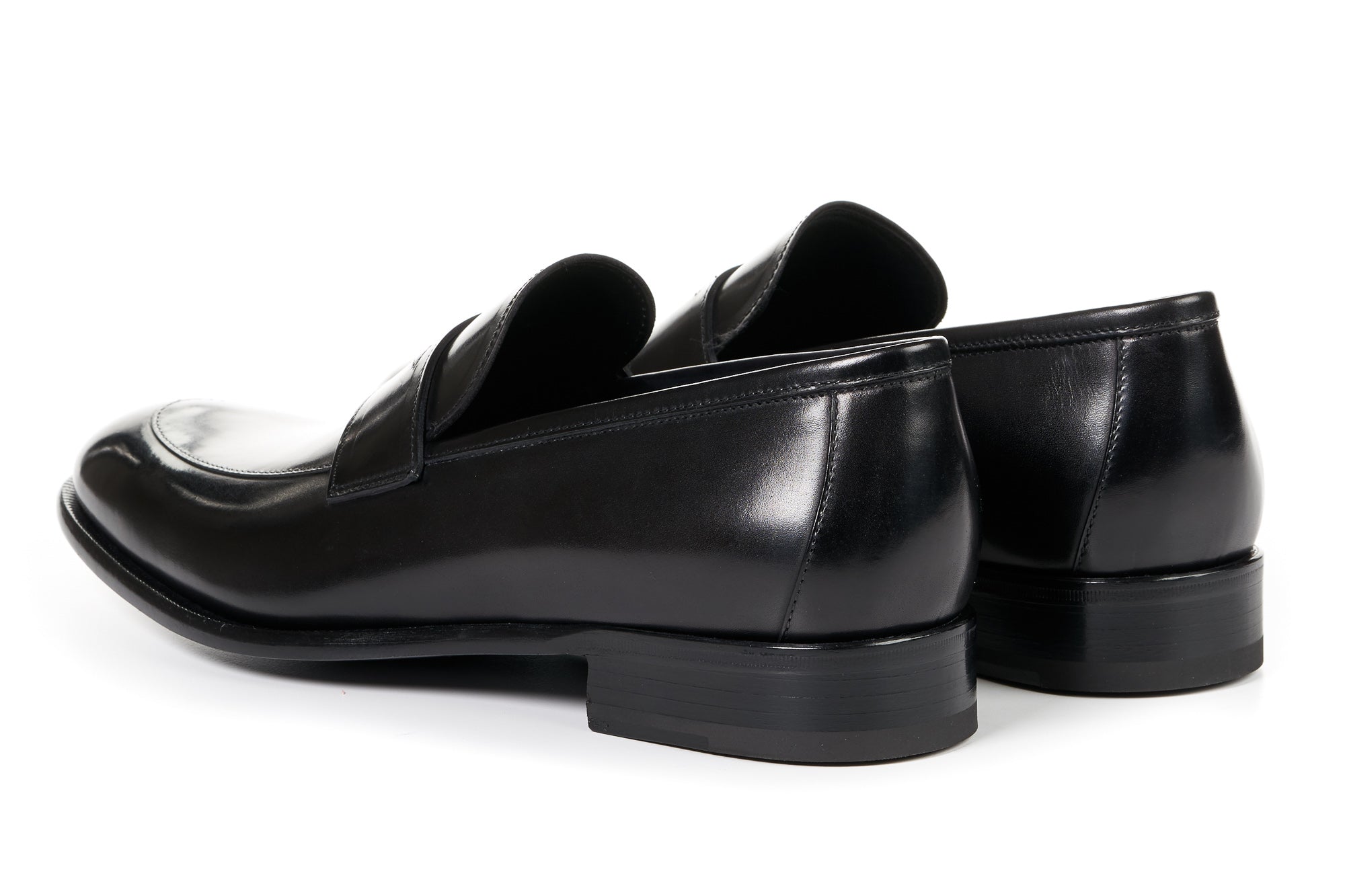
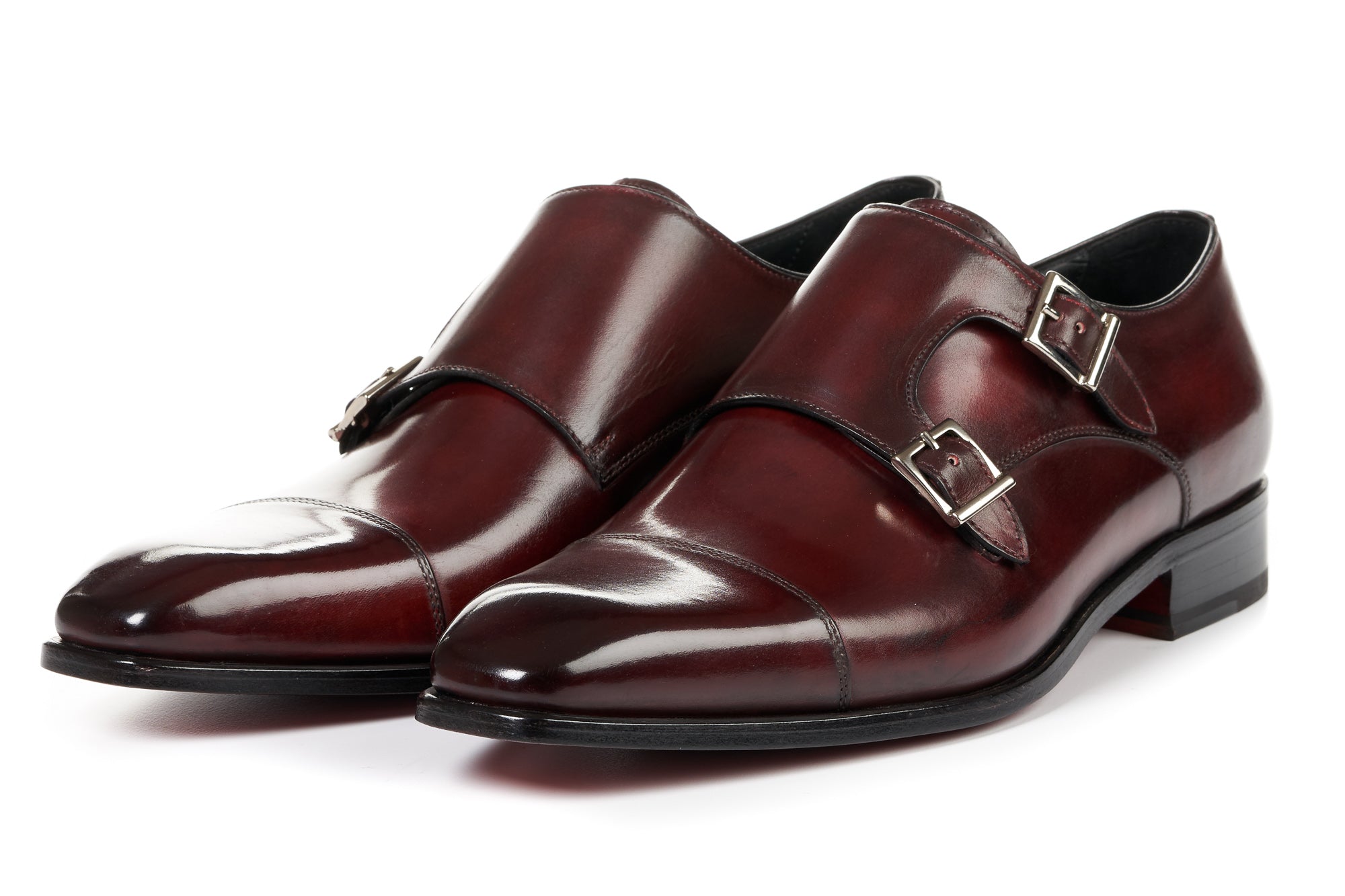
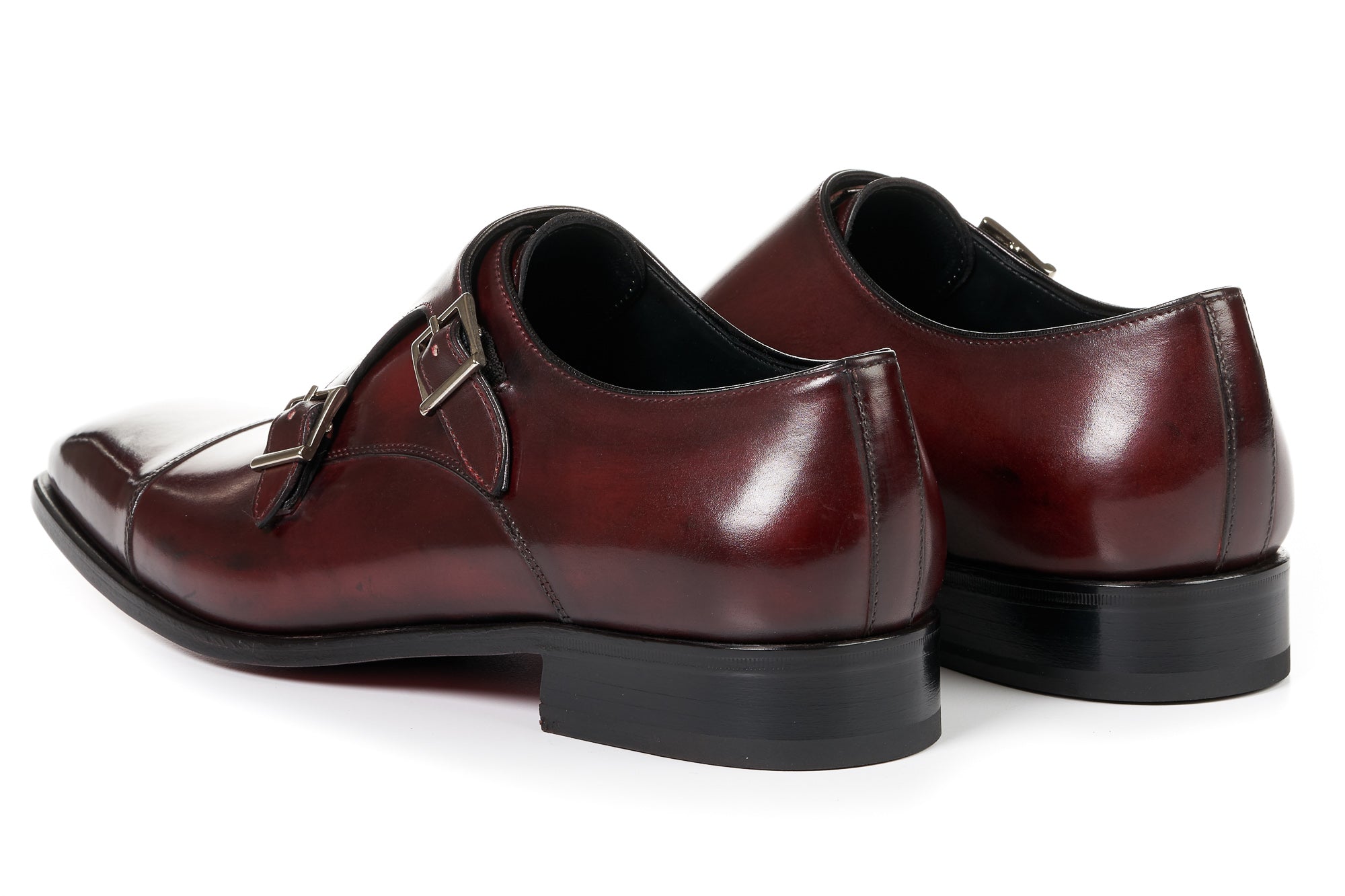
Black is the standard choice for a formal or traditional wedding. It pairs with charcoal, navy, and black suits without any tension and is the correct color for a tuxedo. Brown or tan shoes read warmer and work well for lighter suits, linen separates, and outdoor or seasonal ceremonies. Burgundy is a strong alternative for men who want a groomsmen shoe with more character — it reads formal while still being distinct. Avoid two-tone and novelty finishes unless the wedding dress code explicitly calls for something non-traditional.
Can groomsmen wear the same shoes as the groom?
Yes, and coordinating groomsmen shoes from the same collection is a clean, considered choice. Matching the style while varying the color is one approach: the groom in black, groomsmen in dark brown or oxblood. Matching everything exactly is equally strong and photographs well. Paul Evans carries a full range of formal wedding shoes in consistent sizing and construction, so ordering for a wedding party is straightforward. Reach out directly if you're coordinating five or more pairs — the team can help confirm availability and sizing.
How do you care for Italian leather wedding shoes after the wedding?
Clean the shoes with a soft brush or a dry cloth to remove any dust or surface scuffs as soon as possible after the event. Apply a full-grain leather conditioner to keep the leather supple, then follow with a matching wax polish if you want to restore the shine. Store them on cedar shoe trees — cedar pulls moisture from the leather and helps the shoe hold its shape between wears. Full-grain leather is durable and ages well with basic maintenance, so a well-made pair of men's wedding dress shoes from Paul Evans should wear for years past the wedding day, not just for one occasion.
What sole material works best for a wedding day?
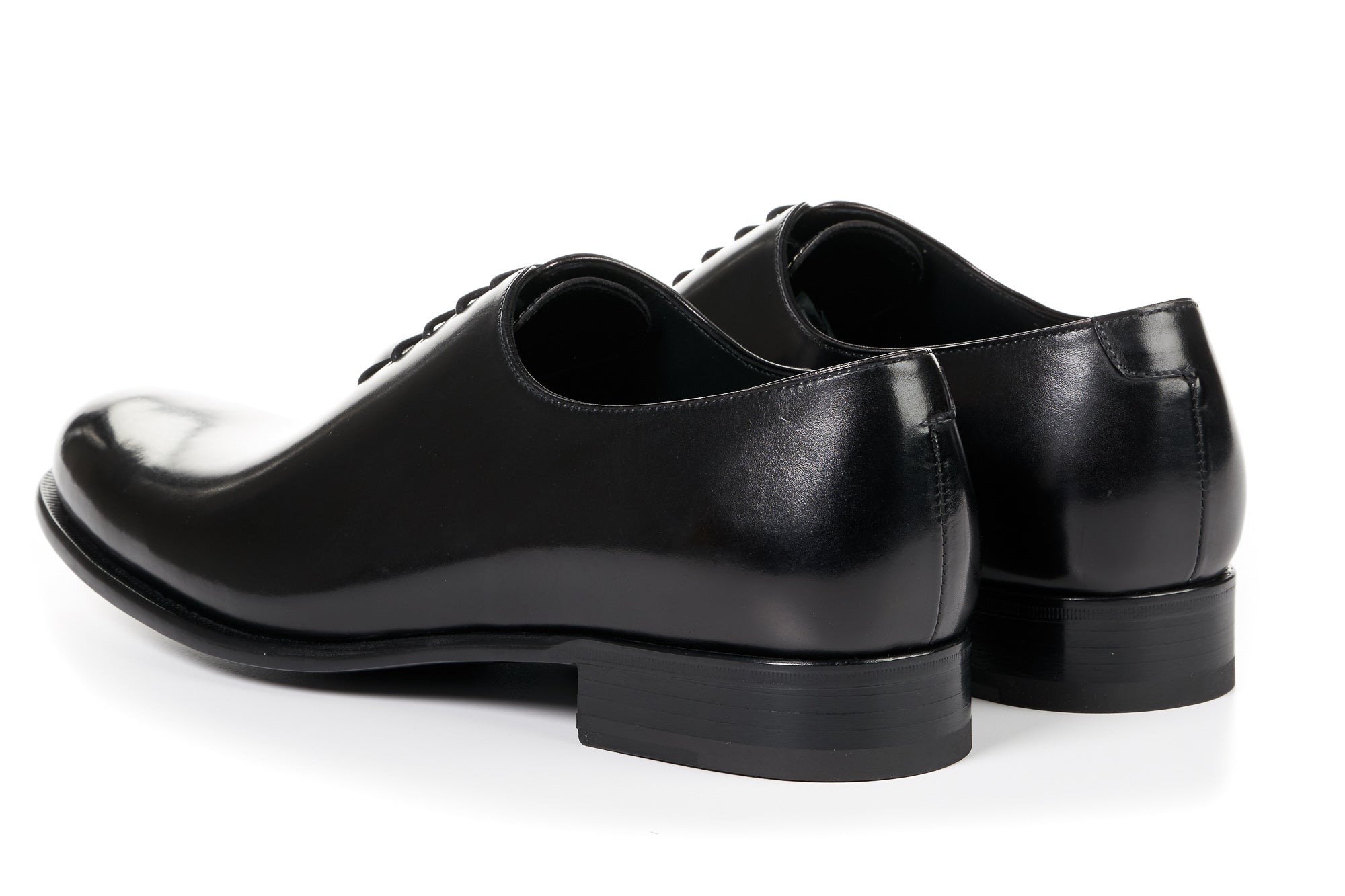
A leather sole is the traditional choice for formal dress shoes and is the correct pairing for Italian leather wedding shoes. Leather soles are thinner, quieter, and more refined-looking than rubber, and Blake-stitched construction keeps them as trim as possible. The trade-off is that a new leather sole is slick until it scuffs in. Adding a thin rubber half-sole at a cobbler before the wedding is a practical fix if you're walking on polished stone, grass, or an outdoor surface. It adds grip without affecting the look of the shoe.
What is the best men's shoe for a wedding that works beyond the day itself
The best wedding shoe for a man is one he'll actually wear again. A black Blake-stitched Oxford in full-grain Italian leather is the highest-value choice: it works for the wedding, for formal business, for black tie events, and for any occasion where a serious dress shoe is the right call. Paul Evans builds each shoe to last past a single occasion, which is part of why the construction and leather quality matter as much as the aesthetic. A shoe you'll wear twenty times is a better investment than one that lives in the box after the ceremony.