


Paul Evans Pebbled Leather Shoes Handcrafted in Italy
Paul Evans pebbled leather shoes are built for men who read a room without announcing themselves. Every pair in this collection is handcrafted in Naples from full-grain Italian leathers, Blake-stitched for a closer, cleaner profile, and finished with the kind of attention that shows up decades later when the shoes still look right.
This collection covers the spectrum of textured leather dress shoes for men — from pebble grain oxfords built for formal days to tumbled leather shoes that carry a boardroom into dinner without missing a step. The grain isn't decorative. Full-grain pebbled calfskin develops character with wear, hides minor scuffs naturally, and ages in a way smooth leather simply can't match.
If you know what scotch grain shoes are, you already understand the difference. If you're here to learn, the FAQ below has you covered.


Which Style Works for You
- Pebble Grain Oxford. A structured silhouette cut from full-grain pebbled calfskin with a closed lacing system — the right shoe for suits, formal occasions, and any day you need to look deliberate.
- Blake-Stitched Derby. Open lacing gives the derby a slightly more relaxed stance, but the scotch grain leather and Italian construction keep it firmly in dress territory.
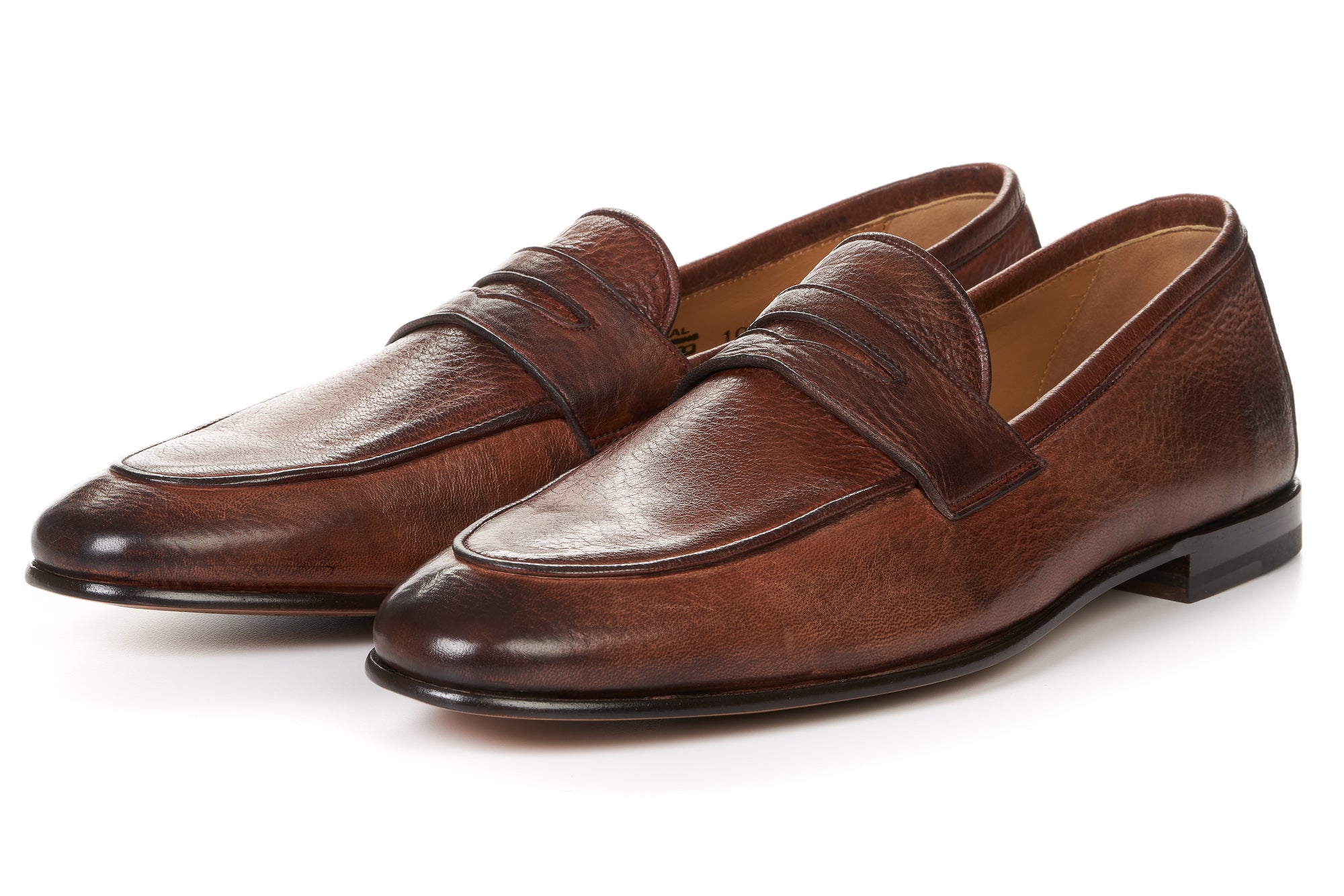
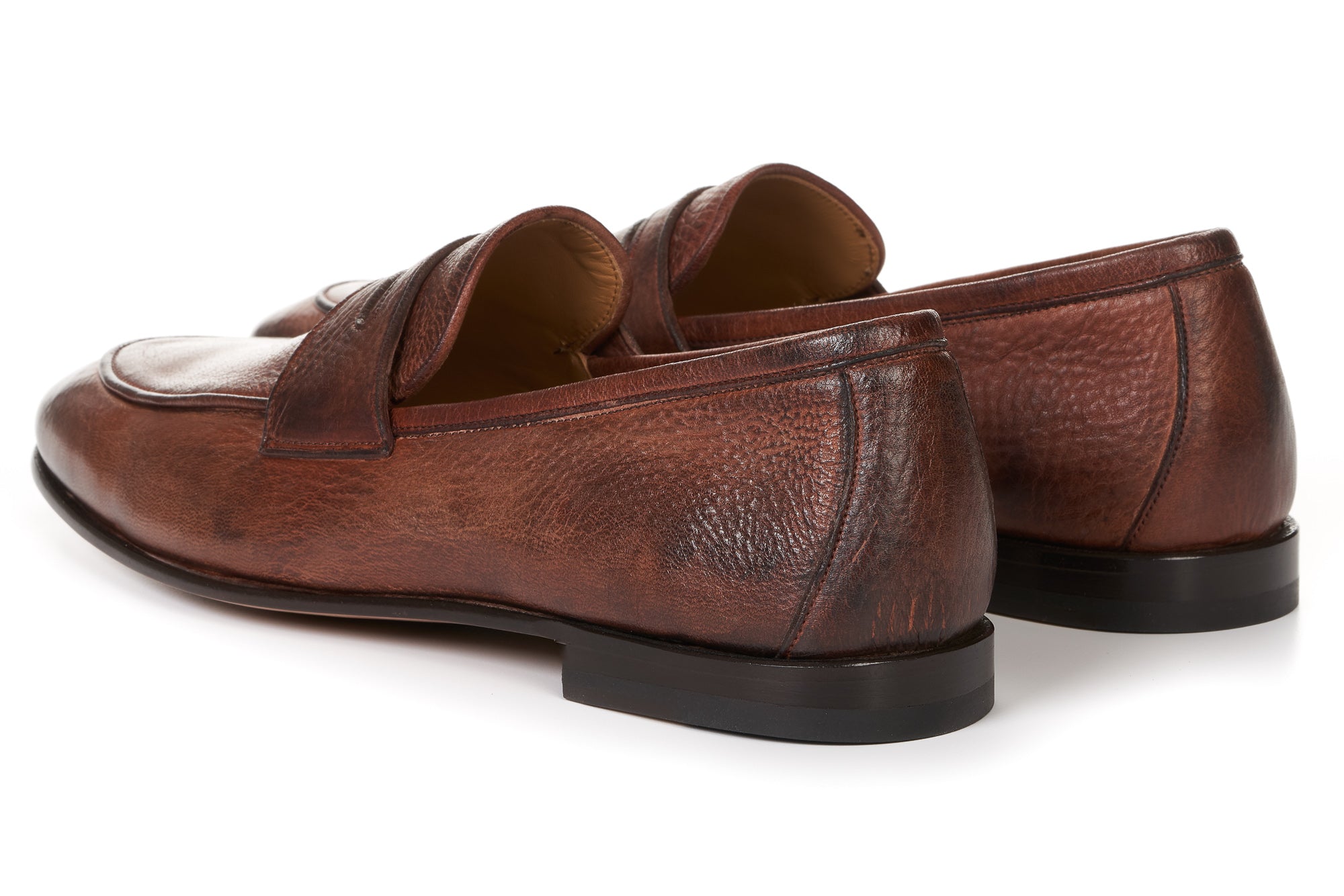
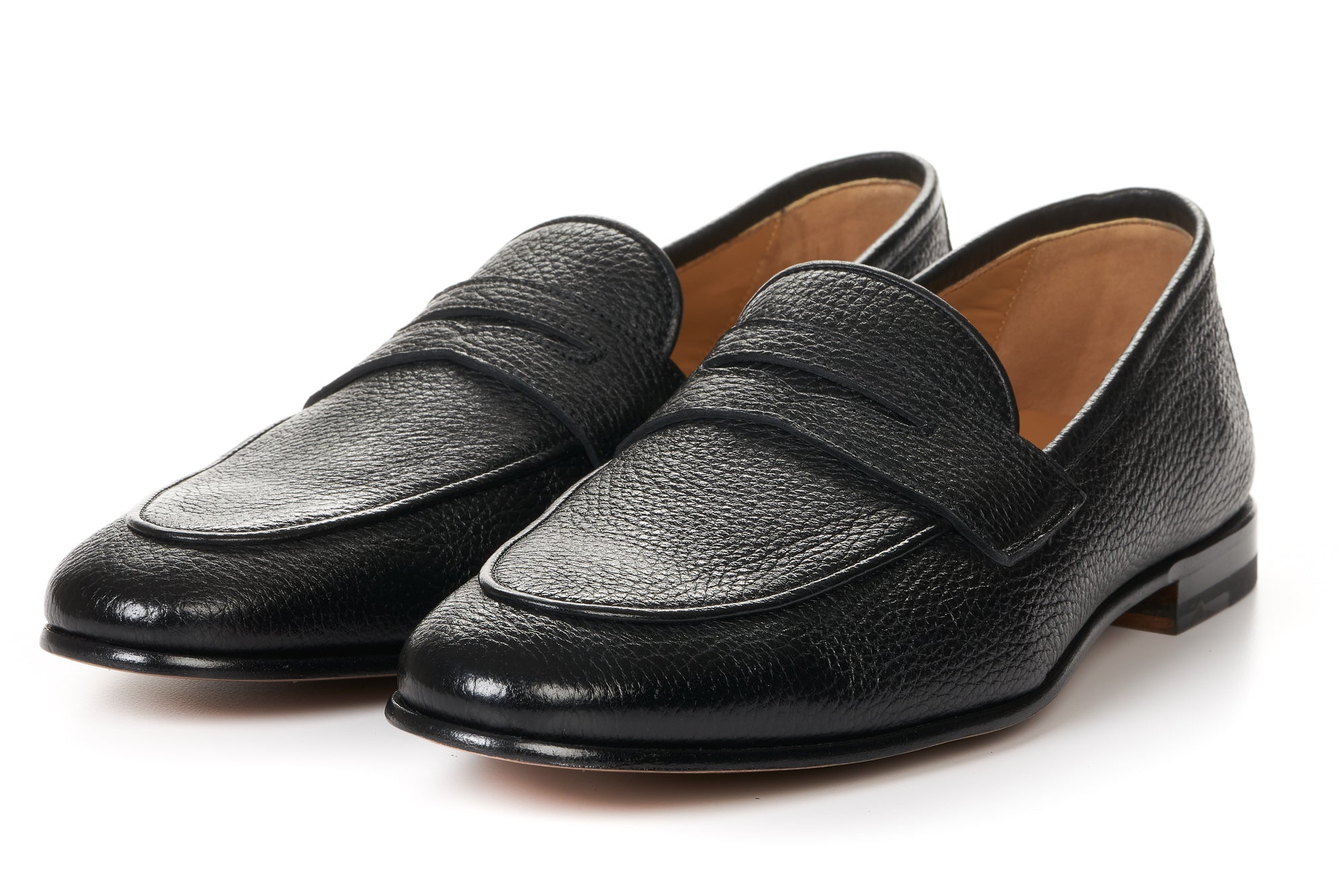
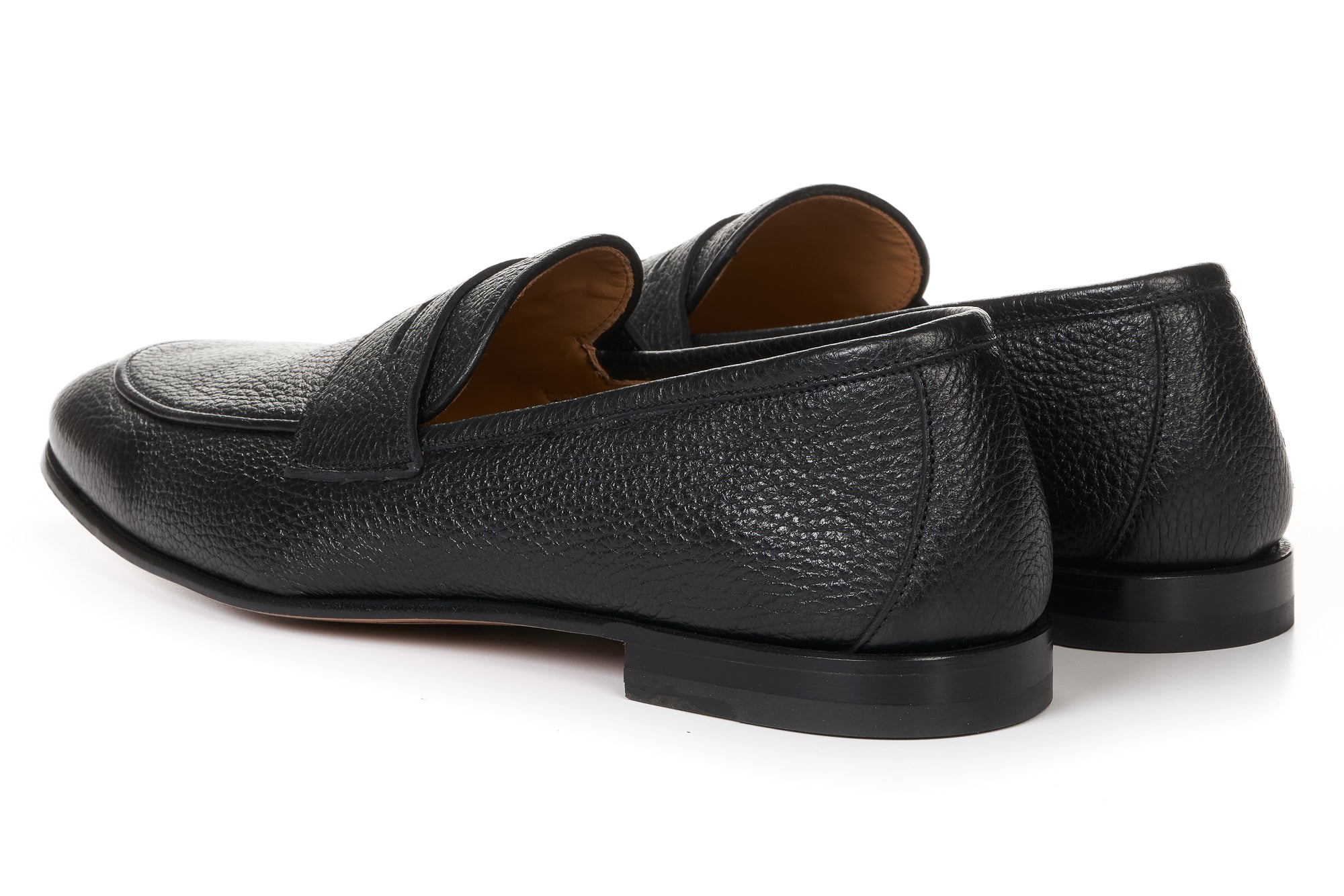
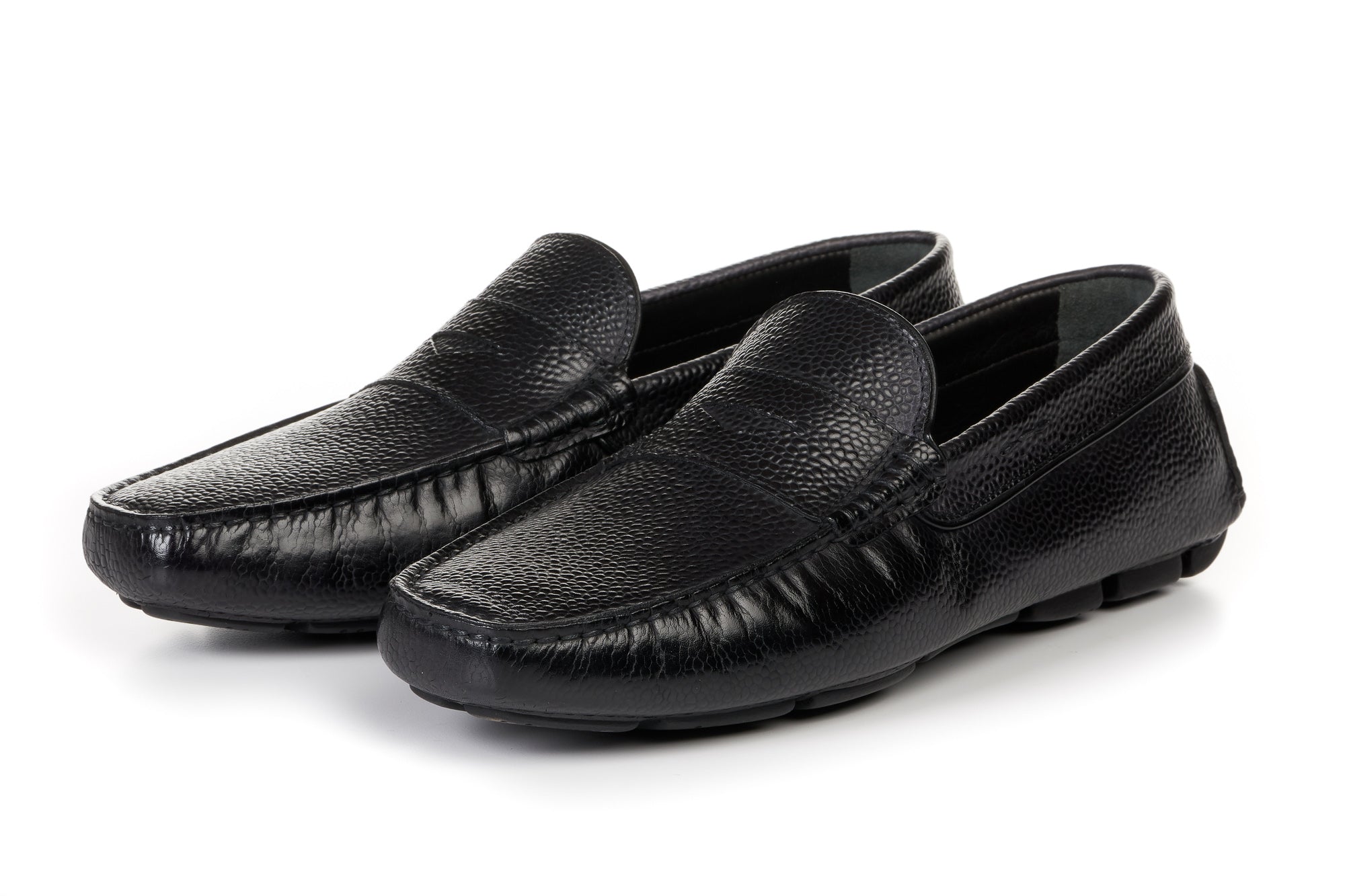
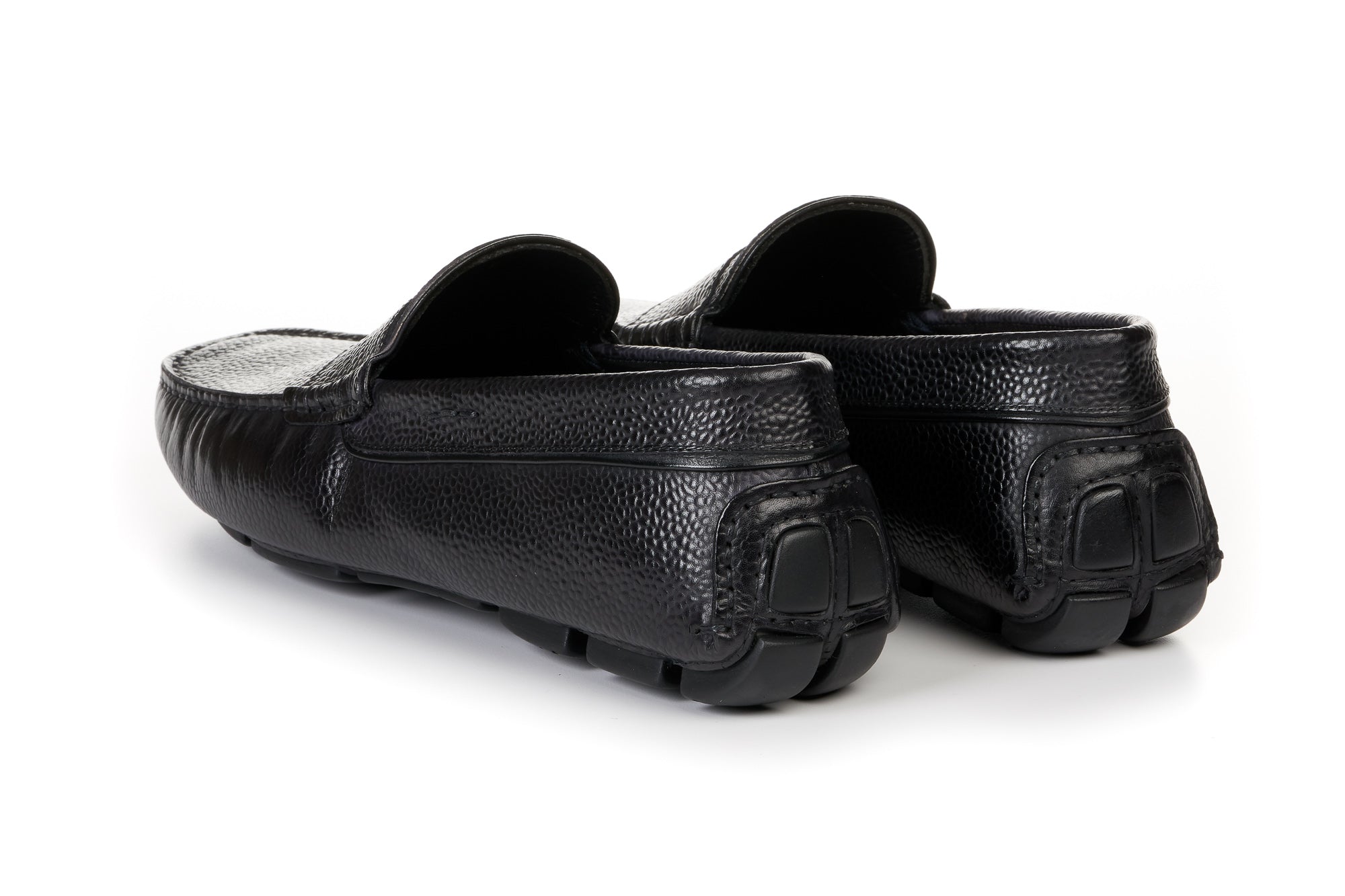
- Textured Leather Loafer. No laces, no fuss. Pebbled grain leather loafers move from desk to dinner without a wardrobe change — the most versatile shoe in the collection.
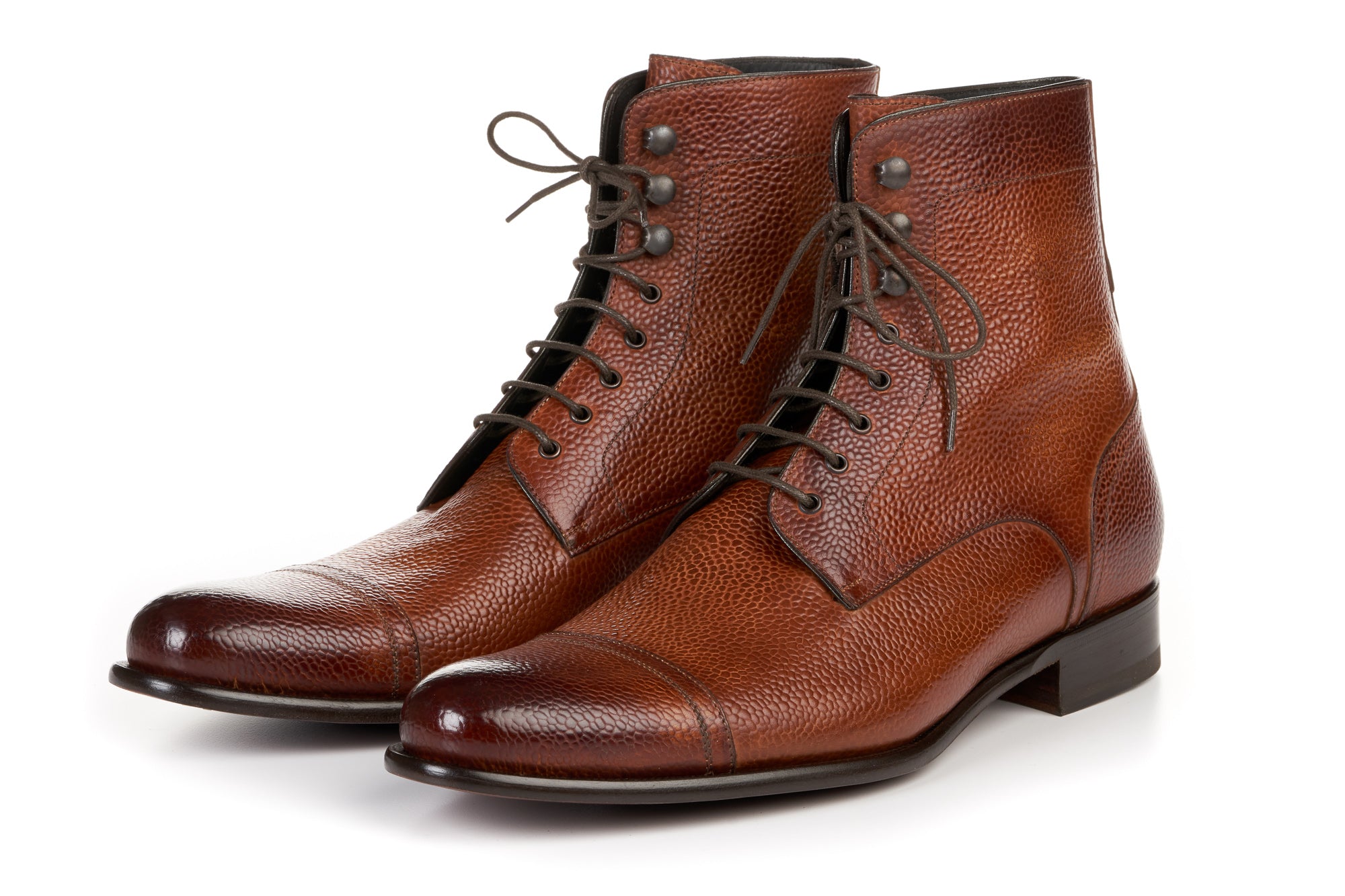
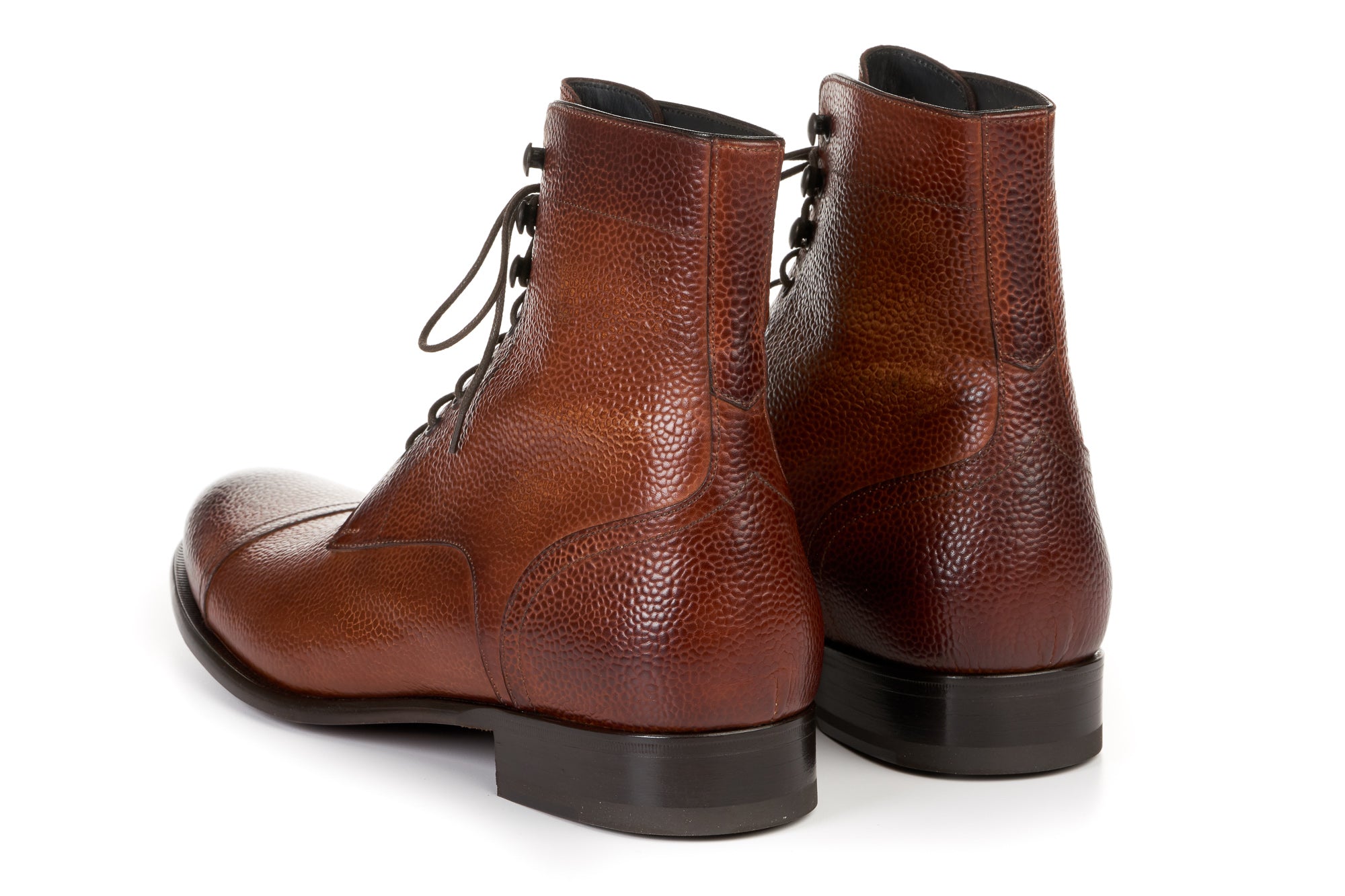
- Grain Leather Dress Boot. When the weather calls for a boot, these carry the same full-grain pebbled leather and Blake-stitch construction as the oxfords. Nothing is sacrificed for the ankle height.
Frequently Asked Questions
What is pebbled leather?
Pebbled leather is full-grain leather that's been tumbled or drum-milled during the tanning process, which raises the natural grain of the hide into a textured, pebbly surface. The process doesn't add anything to the leather — it brings out what's already there. Because it starts from full-grain hide, pebbled calfskin retains the fiber density and durability that lower-grade leathers can't match. The texture also makes the surface more forgiving, hiding light scuffs and moisture that would mark a smooth dress shoe immediately.
What's the difference between pebbled leather and scotch grain?
Both are textured leather finishes, but they're produced differently. Scotch grain shoes get their texture from an embossing plate pressed into the leather under heat and pressure, creating a uniform, bolder pattern. Pebbled leather uses a tumbling or drum-milling process that works the natural grain of the hide, producing a finer and more organic texture. Scotch grain tends to have a slightly more pronounced, geometric surface. Pebbled calfskin reads as more refined up close, which is why it translates well across formal and business-casual settings.
Are pebbled leather dress shoes appropriate for formal occasions?
Yes. Pebbled grain oxfords in black or dark brown are appropriate for business formal, black-tie optional events, and professional settings where presentation matters. The texture adds visual depth without sacrificing formality — it actually makes the shoe more interesting than a plain smooth-calf oxford without lowering its dress code standing. For white-tie or the most strictly formal occasions, smooth black calf remains the convention. But for everything short of that, a well-constructed pebble grain oxford holds its ground.
How does the Blake stitch construction affect the shoe?
Blake stitching runs a single thread through the insole, welt, and outsole in one pass, which creates a slimmer, lower-profile silhouette than a Goodyear welt. The result is a shoe that sits closer to the foot, flexes more naturally from the start, and looks cleaner from the side. Paul Evans uses Blake stitching specifically because it produces a sleeker dress shoe profile that works with tailored trousers and slim suits. The construction also allows for resoling, so a well-cared-for pair can be rebuilt rather than replaced.
How do Paul Evans pebbled leather shoes fit?
Paul Evans shoes are lasted on a European toe shape — slightly tapered without being pointed, with enough room across the ball of the foot to be comfortable through a full day. The shoes run true to size in most cases, though men between half sizes typically find sizing up works better for the lace-up styles. If you're new to Blake-stitched shoes, the break-in period is shorter than a heavy welted boot — most pairs feel noticeably better by the third or fourth wear as the leather conforms to your foot.
What's the difference between tumbled leather and pebbled leather?
The terms are used almost interchangeably in the industry, and for practical purposes they refer to the same process. Tumbled leather is the process; pebbled leather describes the result. When a hide is drum-milled or tumbled during tanning, the surface grain rises into the characteristic pebbly texture. Some makers use "tumbled leather shoes" to describe a softer, more relaxed grain, while "pebbled calfskin" often implies a crisper, more refined texture — but there's no universal standard. At Paul Evans, the grain is worked to produce a texture that's fine enough to wear formally without looking casual.
How should I care for pebbled leather shoes?
Brush off any dust or dirt with a soft horsehair brush after each wear. Condition the leather every four to six wears with a quality cream conditioner — avoid wax-heavy products that can flatten the grain over time. For pebbled calfskin shoes specifically, a conditioner rather than a heavy polish lets the texture stay defined. Cedar shoe trees should go in immediately after you take them off to hold the shape and pull moisture from the lining. Rotate between at least two pairs if you're wearing them regularly; leather needs 24 hours to fully dry between wears.
Can these shoes handle rain or wet pavement?
Pebbled leather handles light exposure to moisture better than smooth calfskin because the textured surface doesn't show water spots as clearly. That said, Paul Evans shoes are full-grain dress shoes, not weather boots — prolonged exposure to heavy rain or standing water will damage the leather and the Blake stitch over time. If you're caught in the rain, let the shoes dry at room temperature with shoe trees in place, never near direct heat. A light application of leather conditioner after they dry will restore the suppleness of the grain. For frequent wet-weather wear, a waterproofing spray designed for smooth leathers can be applied sparingly without choking the grain.
What trousers and suits work best with grain leather dress shoes?
Pebble grain oxfords and derbies pair cleanly with charcoal, navy, and mid-grey suits. The texture adds enough visual interest that they don't need the suit to do heavy lifting. With tailored trousers in flannel or cavalry twill, the textured leather reads as intentional rather than dressed-down. Brown and cognac pebbled leather shoes work particularly well with earth-tone separates and less formal tailoring. The one pairing to avoid is a very light-grey or summer-weight suit with heavy brown scotch grain — the visual weight imbalance rarely works in person the way it does on a style board.
What makes Paul Evans pebbled leather shoes different from other dress shoes at this price point?
Paul Evans shoes are made in Naples, Italy, in the same workshops that supply European luxury houses — but sold direct, which removes the retail markup without removing the construction. The full-grain Italian calfskin used in the pebbled leather collection is sourced specifically for its grain quality and fiber density. Blake stitching is done by hand, not machine assembly-line, which means the lasting and stitching quality is consistent pair to pair. The last shapes are developed in-house for a fit that works on an American foot without compromising the Italian silhouette. At this price, you're getting construction that would cost significantly more through a traditional retail channel — and shoes built to be resoled when the time comes, not replaced.