What makes a full-grain leather belt better than other options?
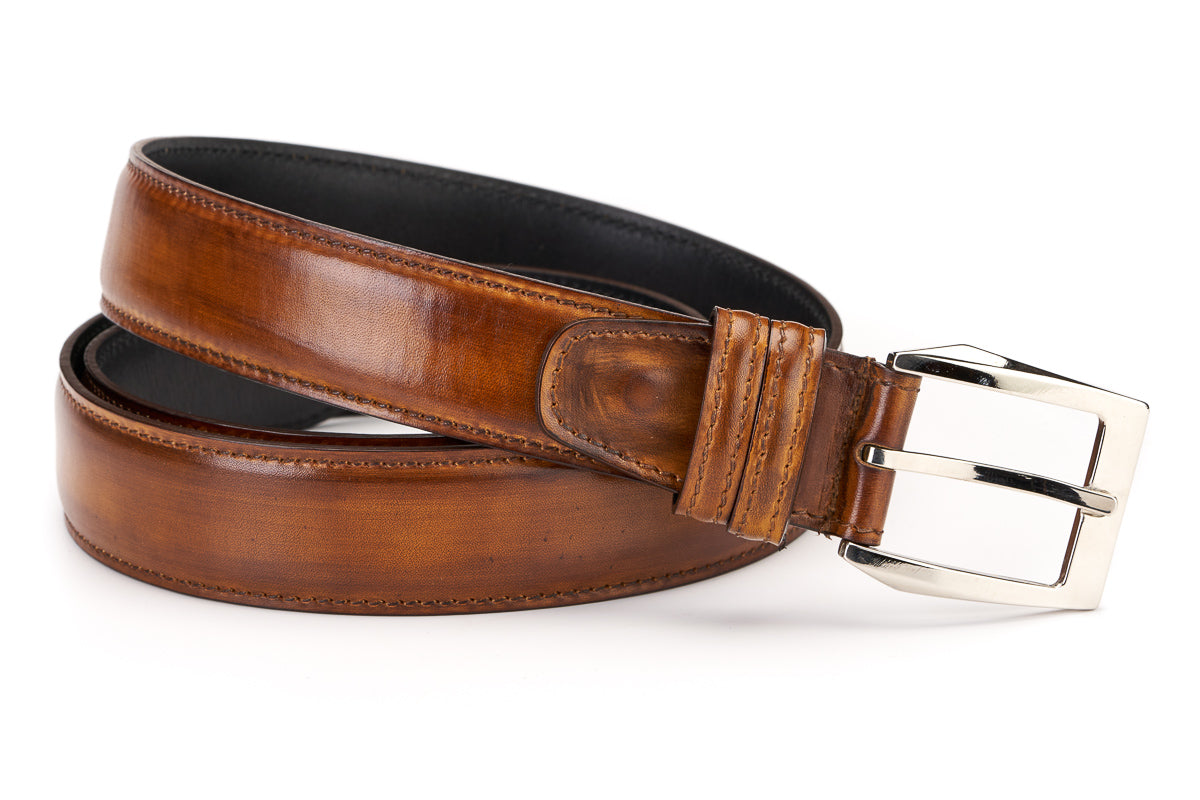
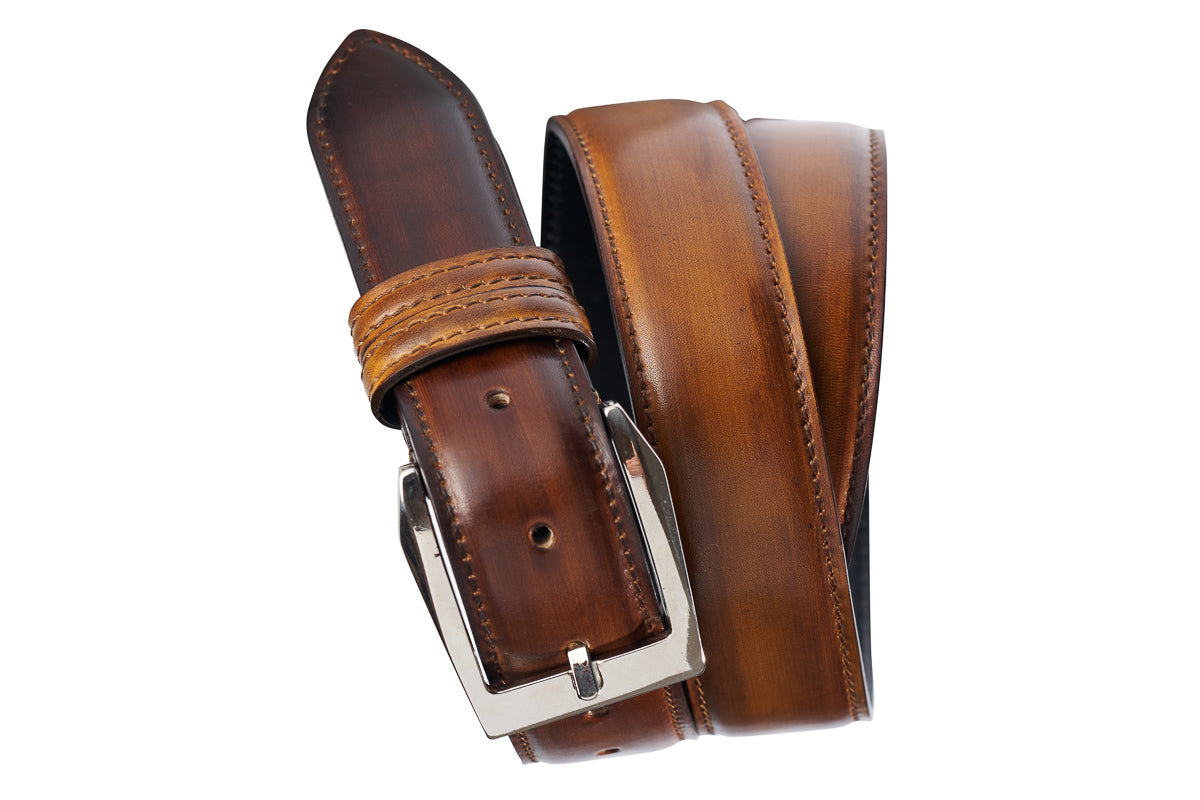
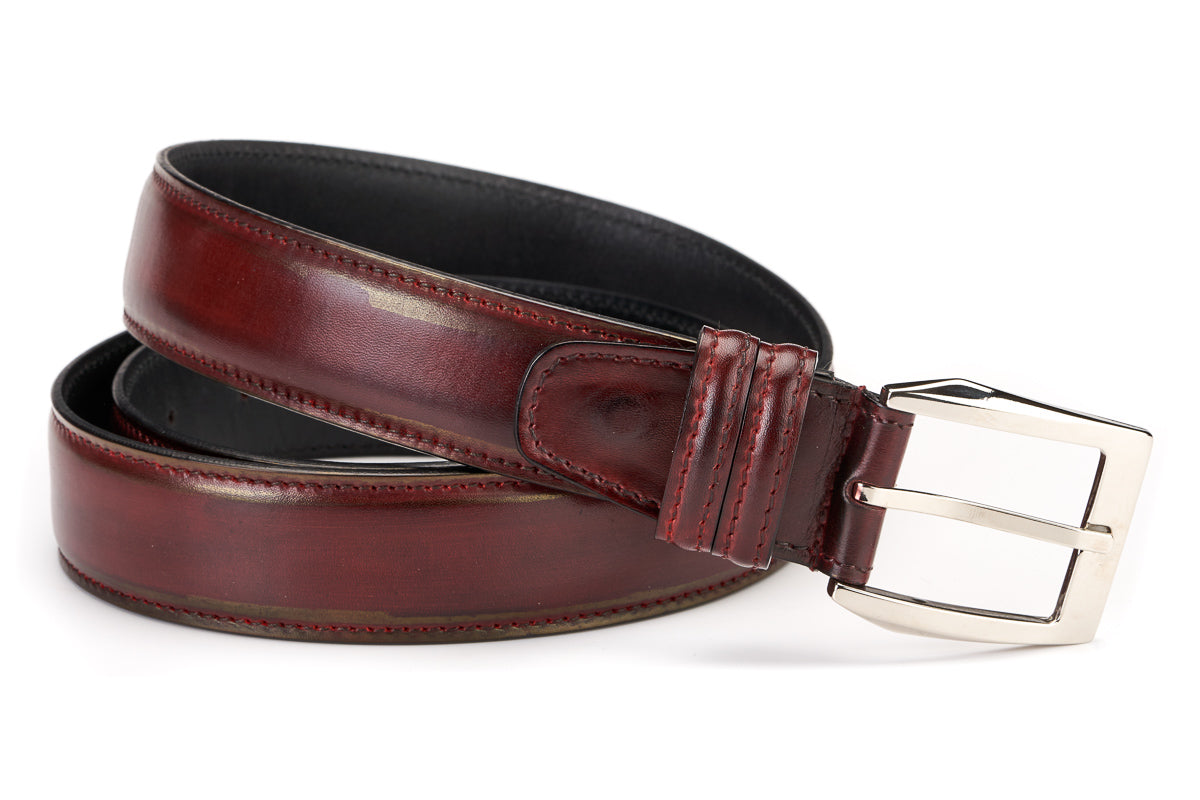
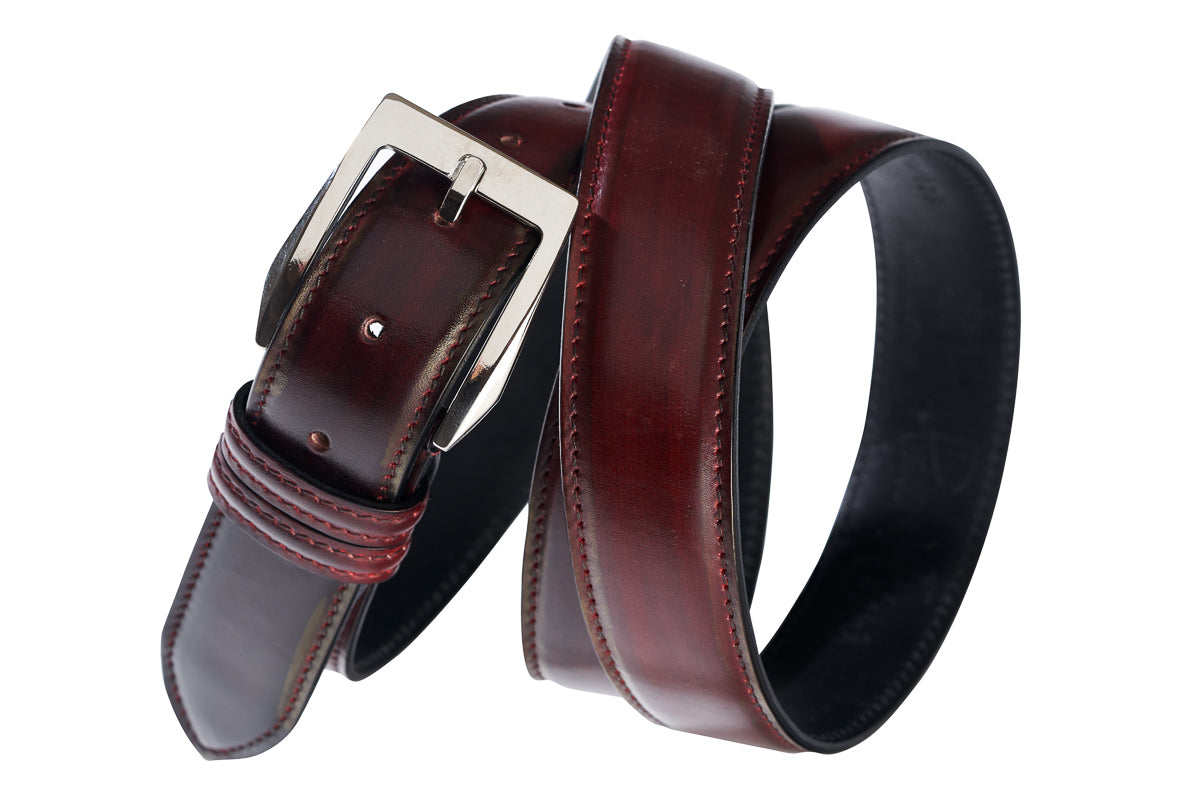
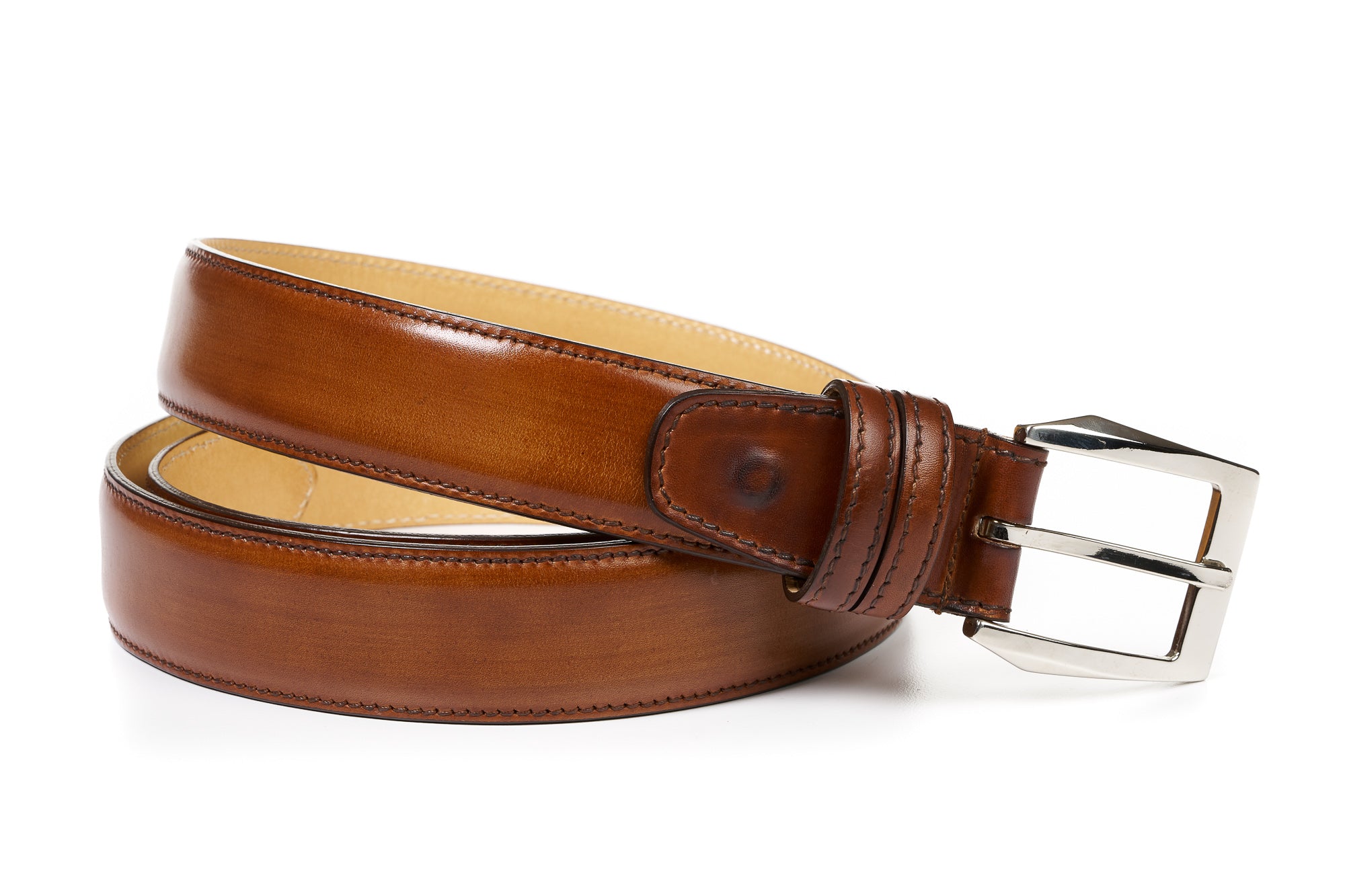
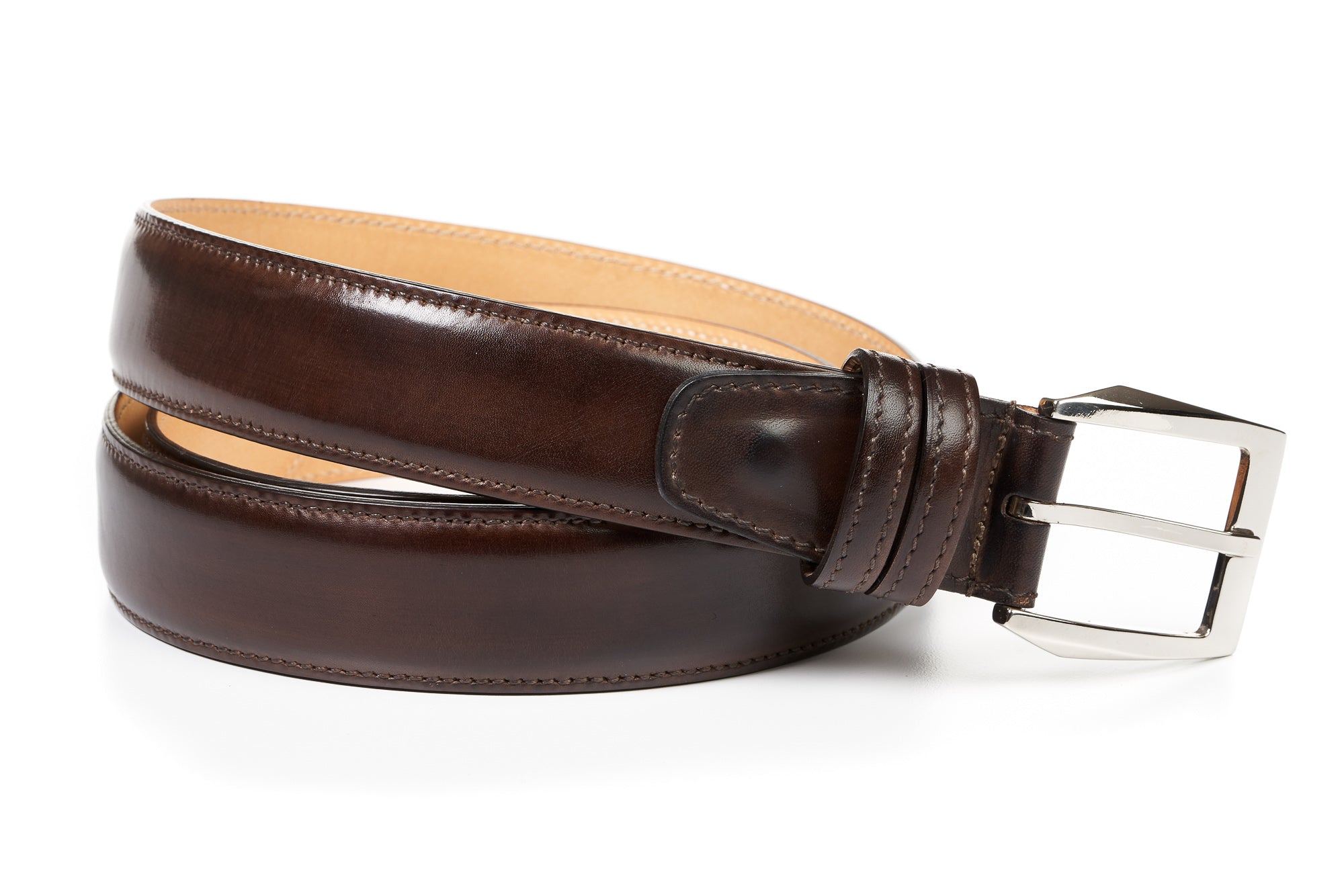
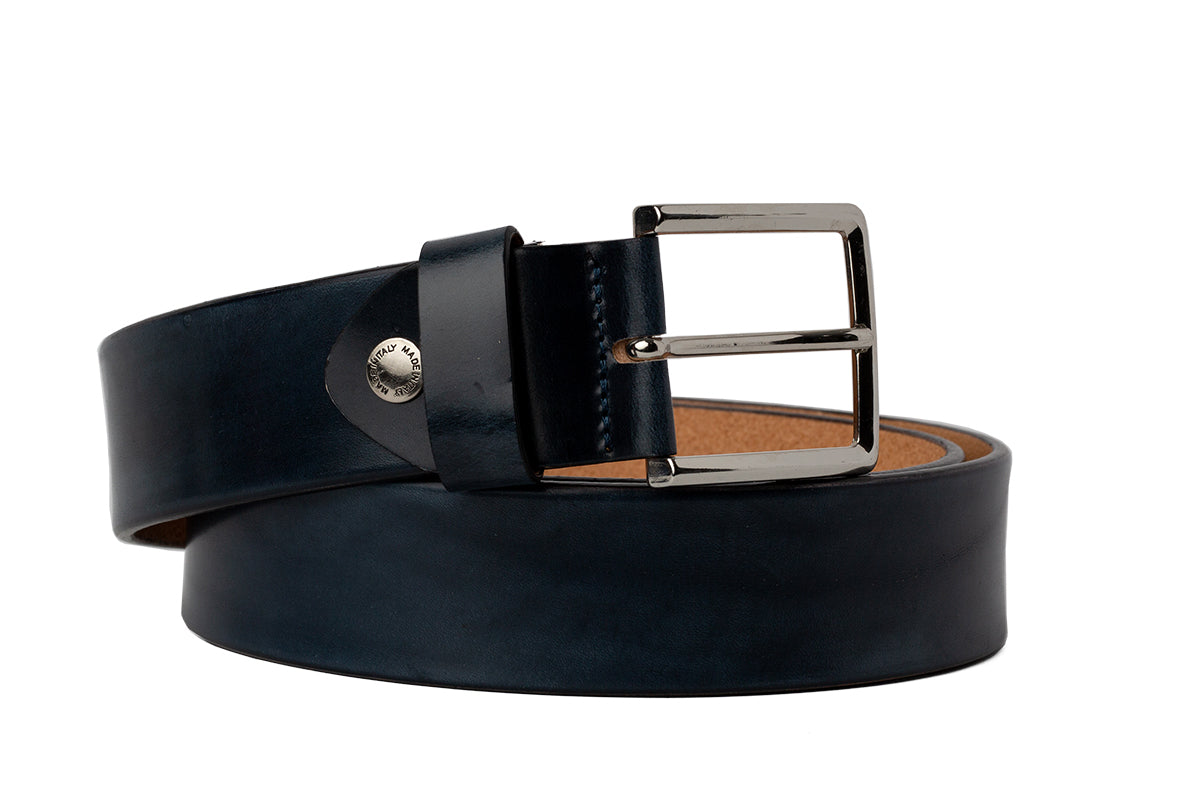
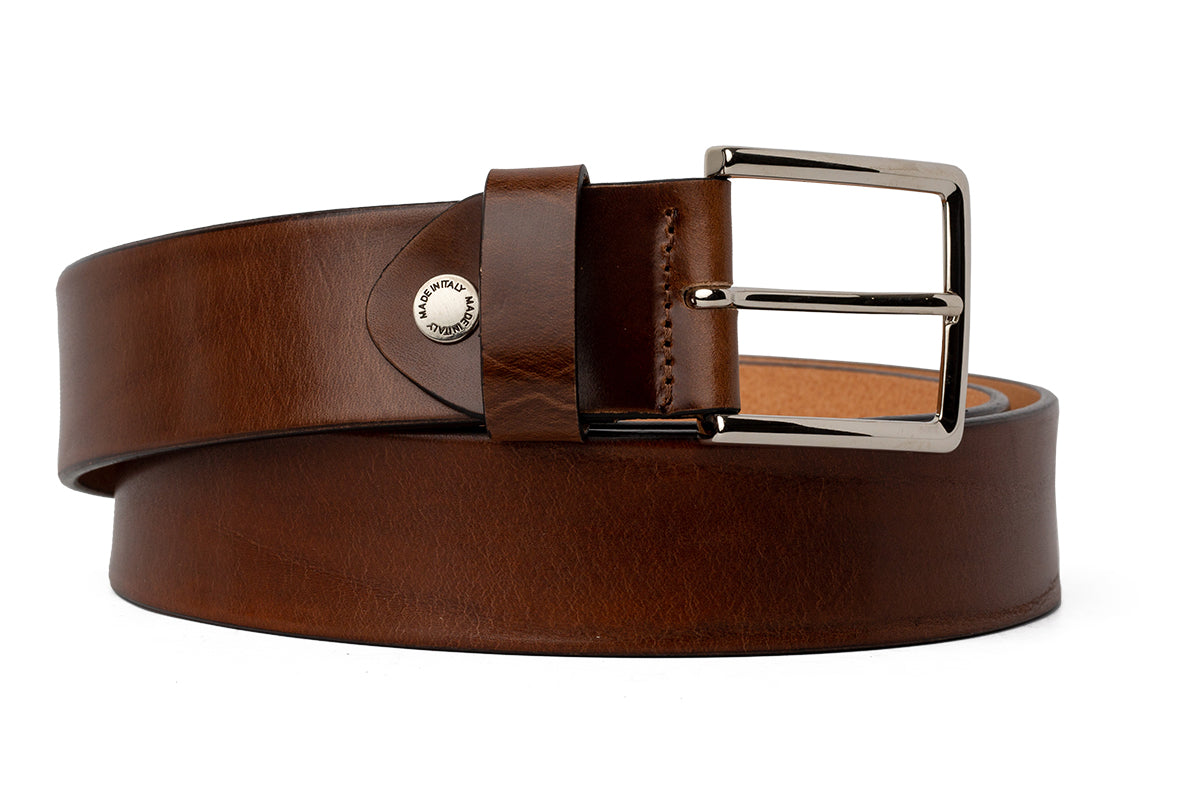
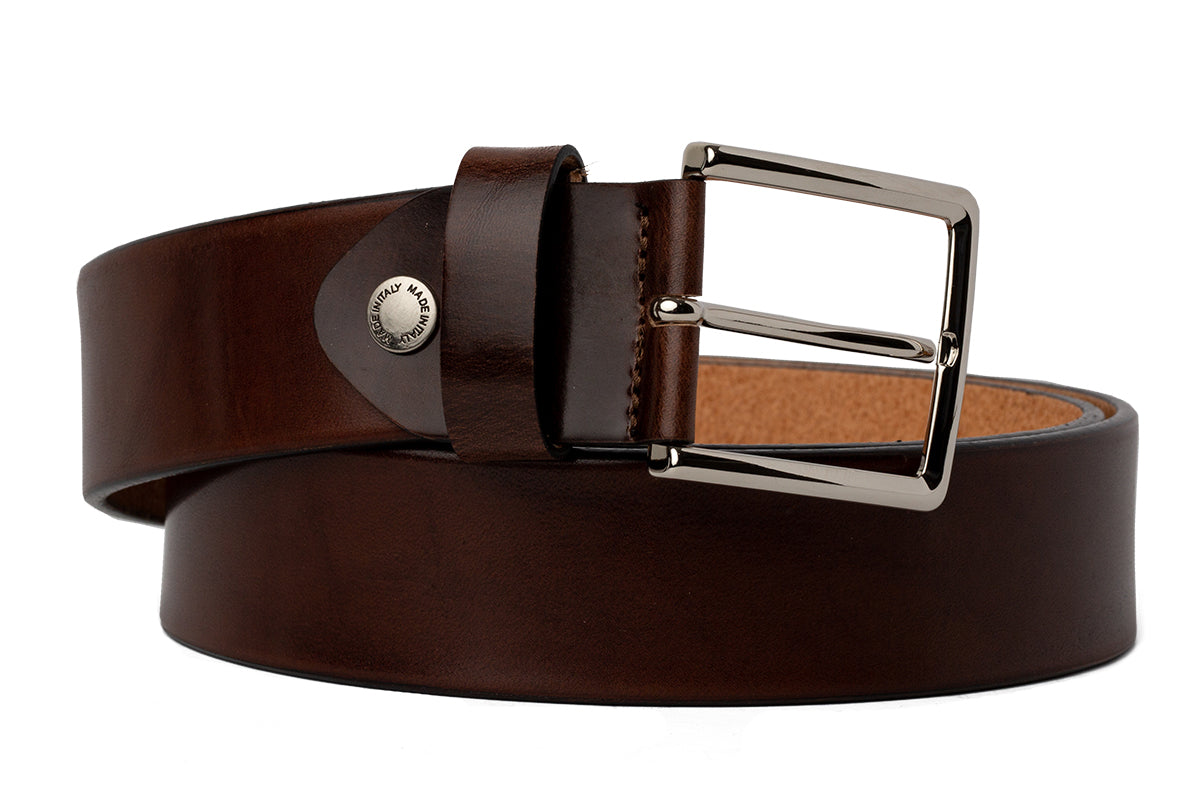
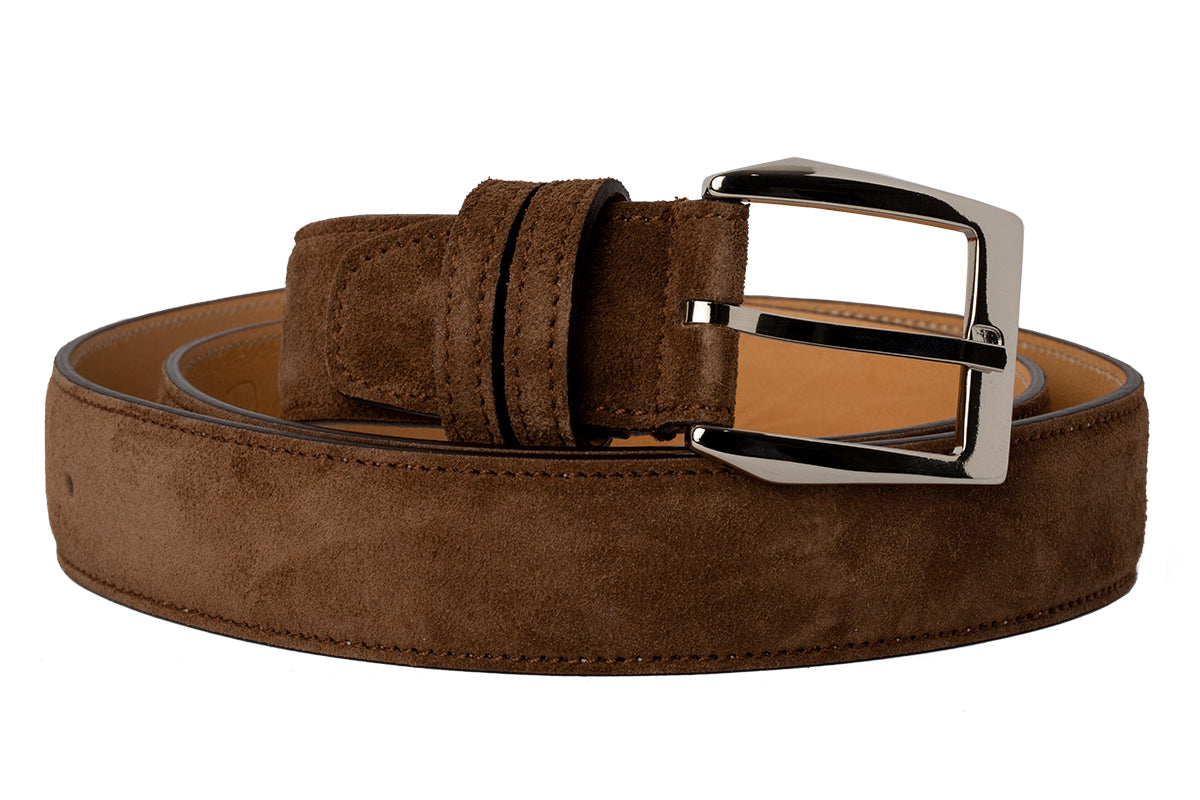
Full-grain leather is the highest quality cut of hide available, and it's the only type Paul Evans uses. Unlike top-grain or bonded leather, full-grain hasn't had its surface altered to remove imperfections — the natural grain remains intact, which means the fiber structure is denser, stronger, and more resistant to wear. Over time, full-grain leather develops a patina that top-grain and corrected leathers simply can't replicate. A belt made from it doesn't just hold up — it actually gets more interesting to look at with age.
What's the difference between an Italian leather belt and a standard leather belt?
Italian leather refers to leather tanned and finished in Italy, typically using traditional vegetable or pit-tanning methods developed over centuries in regions like Tuscany. The tanning process is slower and more controlled than industrial chrome tanning, which produces leather with better structure, a more natural hand feel, and superior aging characteristics. Paul Evans sources full-grain Italian leather specifically because it behaves differently under stress — it resists cracking, holds its shape on the buckle bar, and softens in the right places without losing structure. Not all leather marketed as "Italian" is the same, but full-grain, vegetable-tanned Italian hide from a reputable tannery is a measurably different product.
How should I match a men's leather dress belt to my shoes?
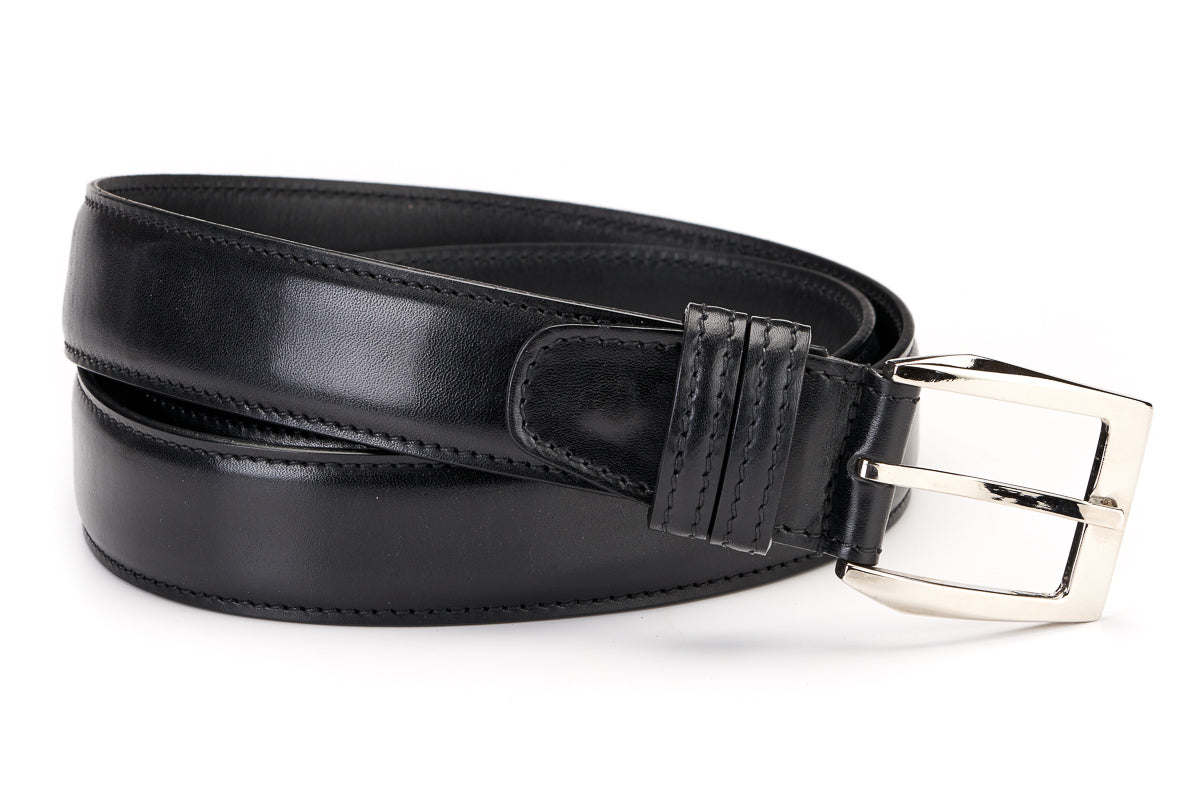
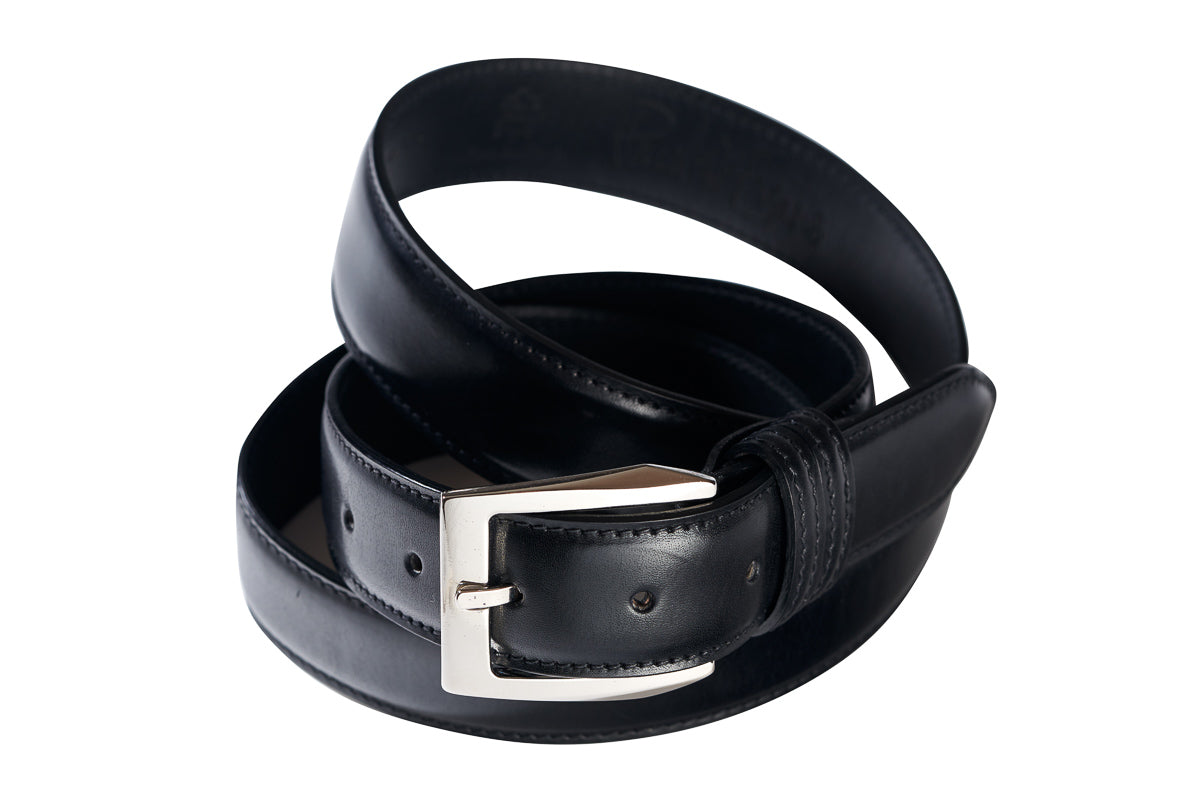
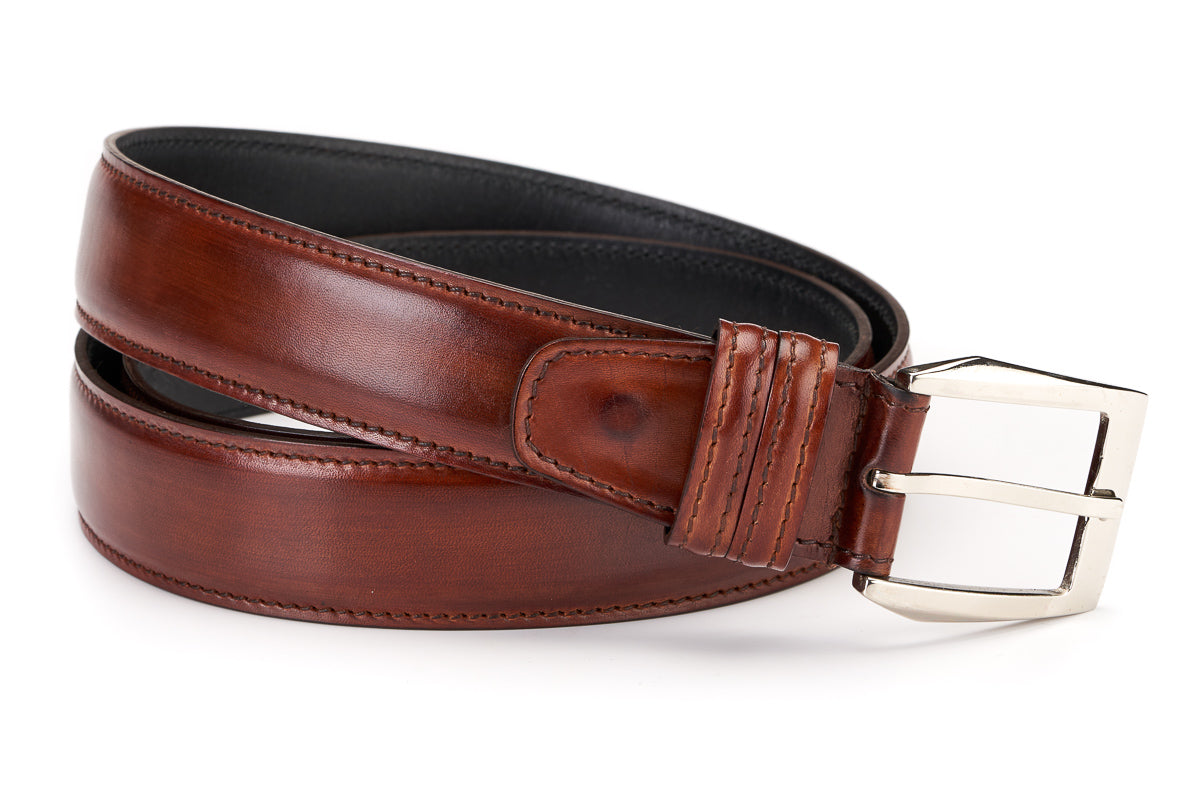
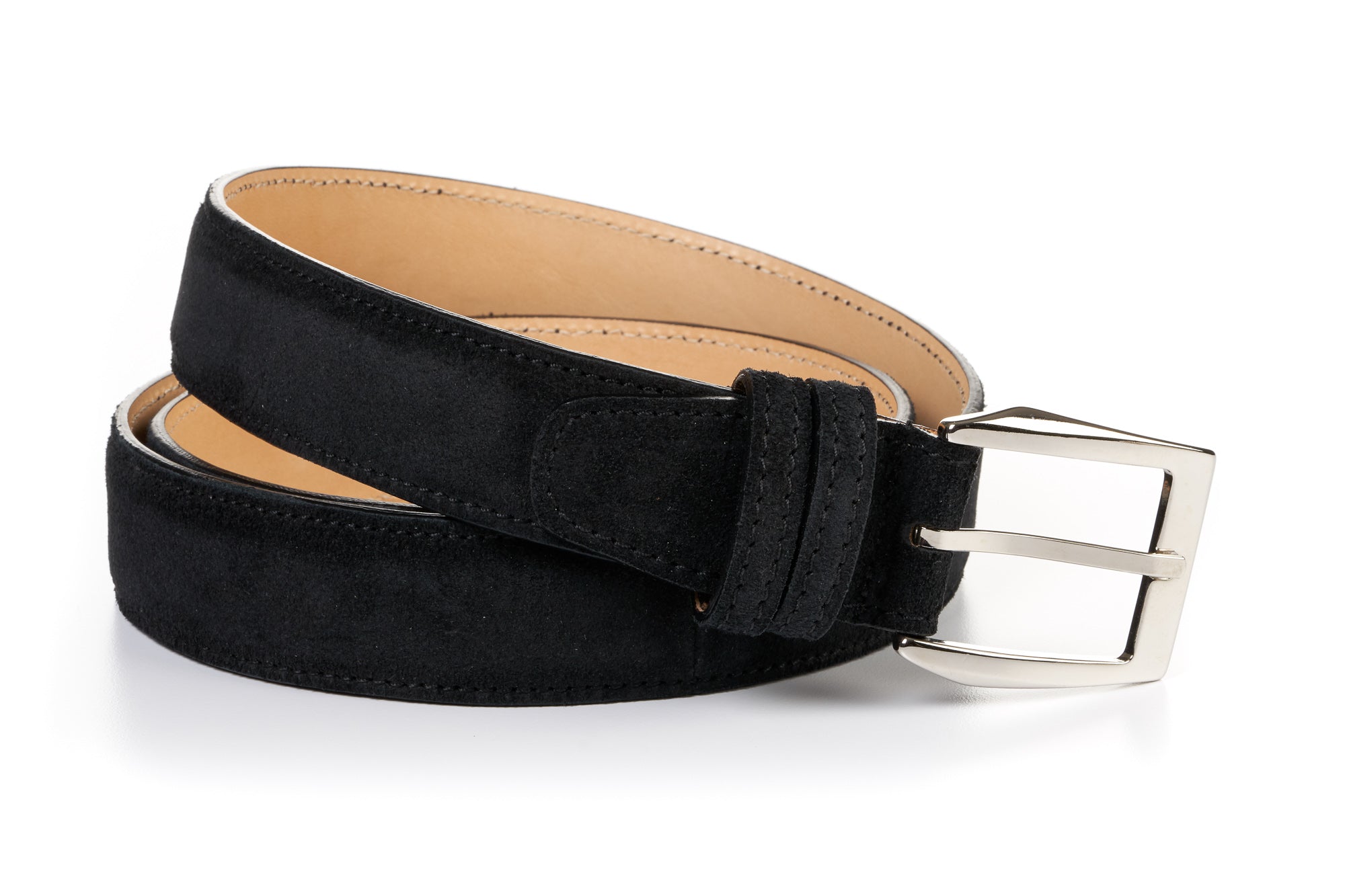
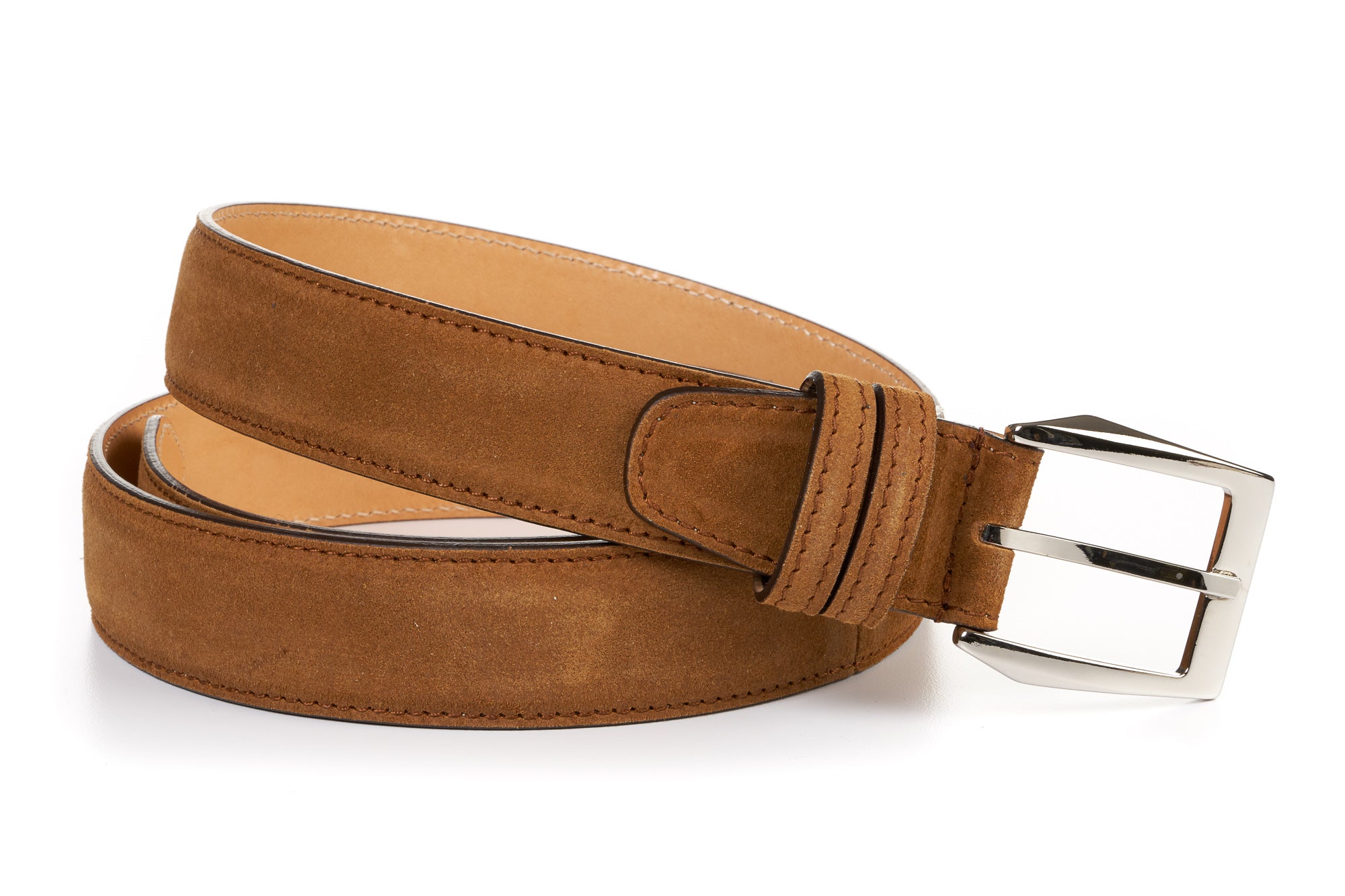
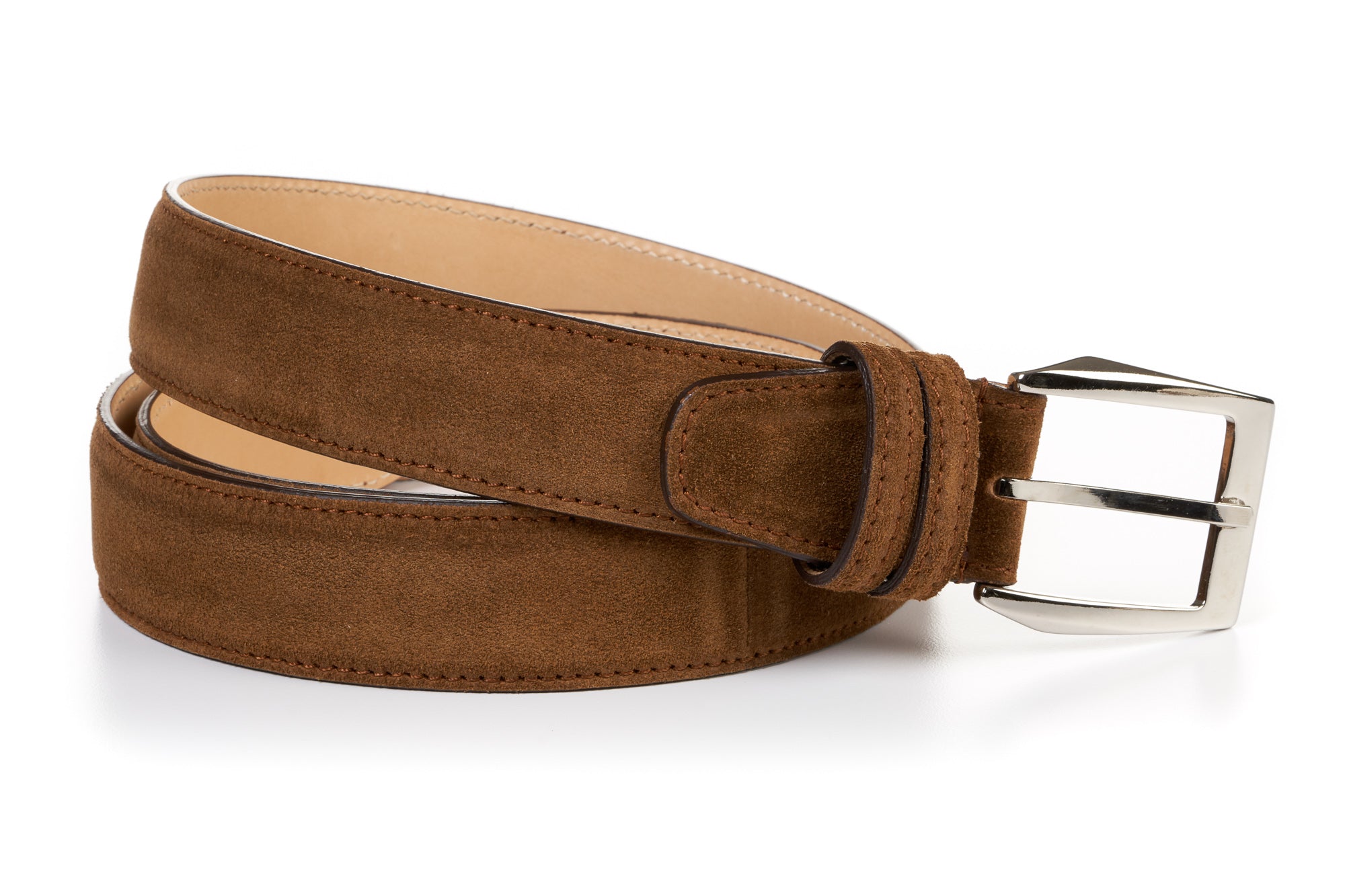
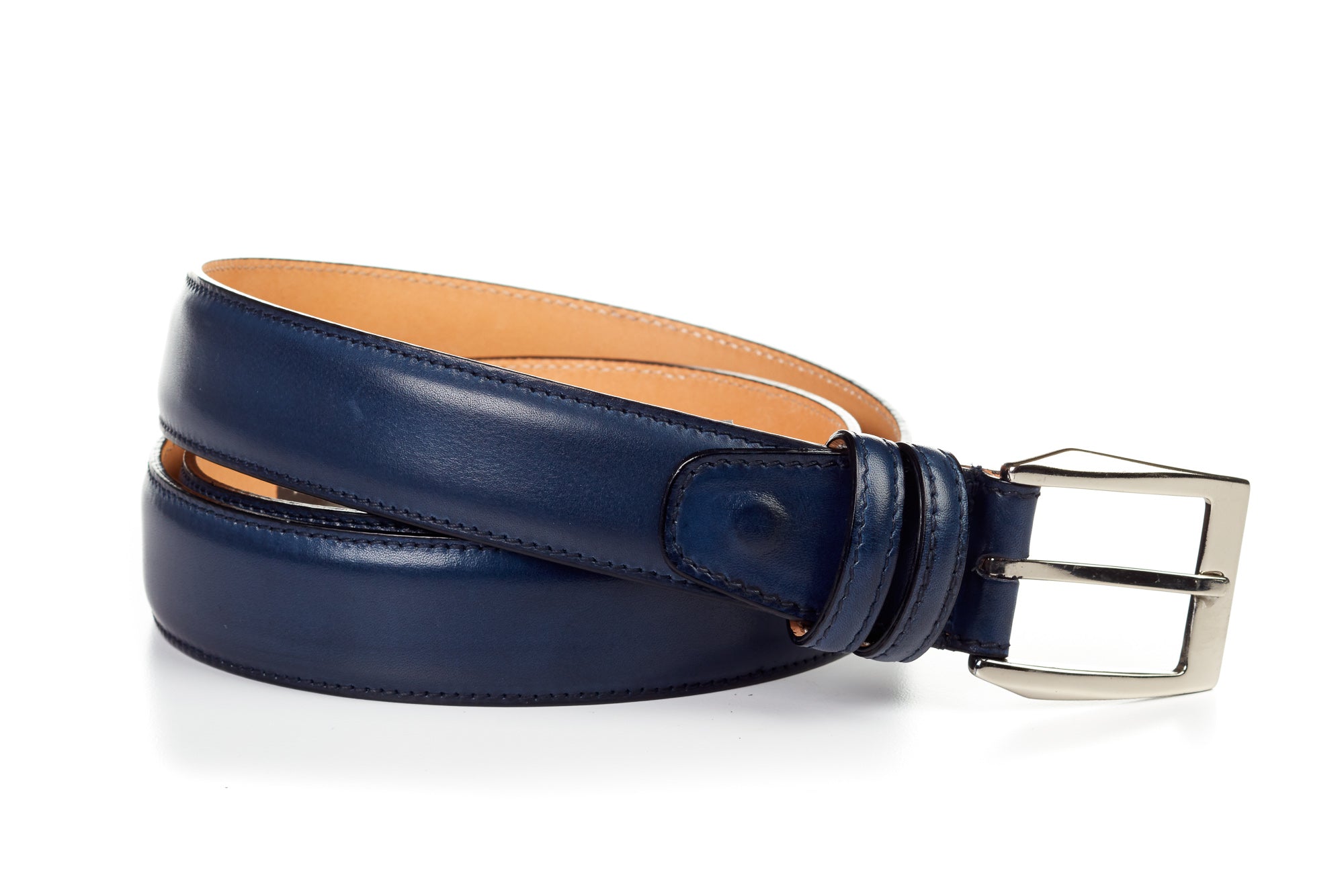
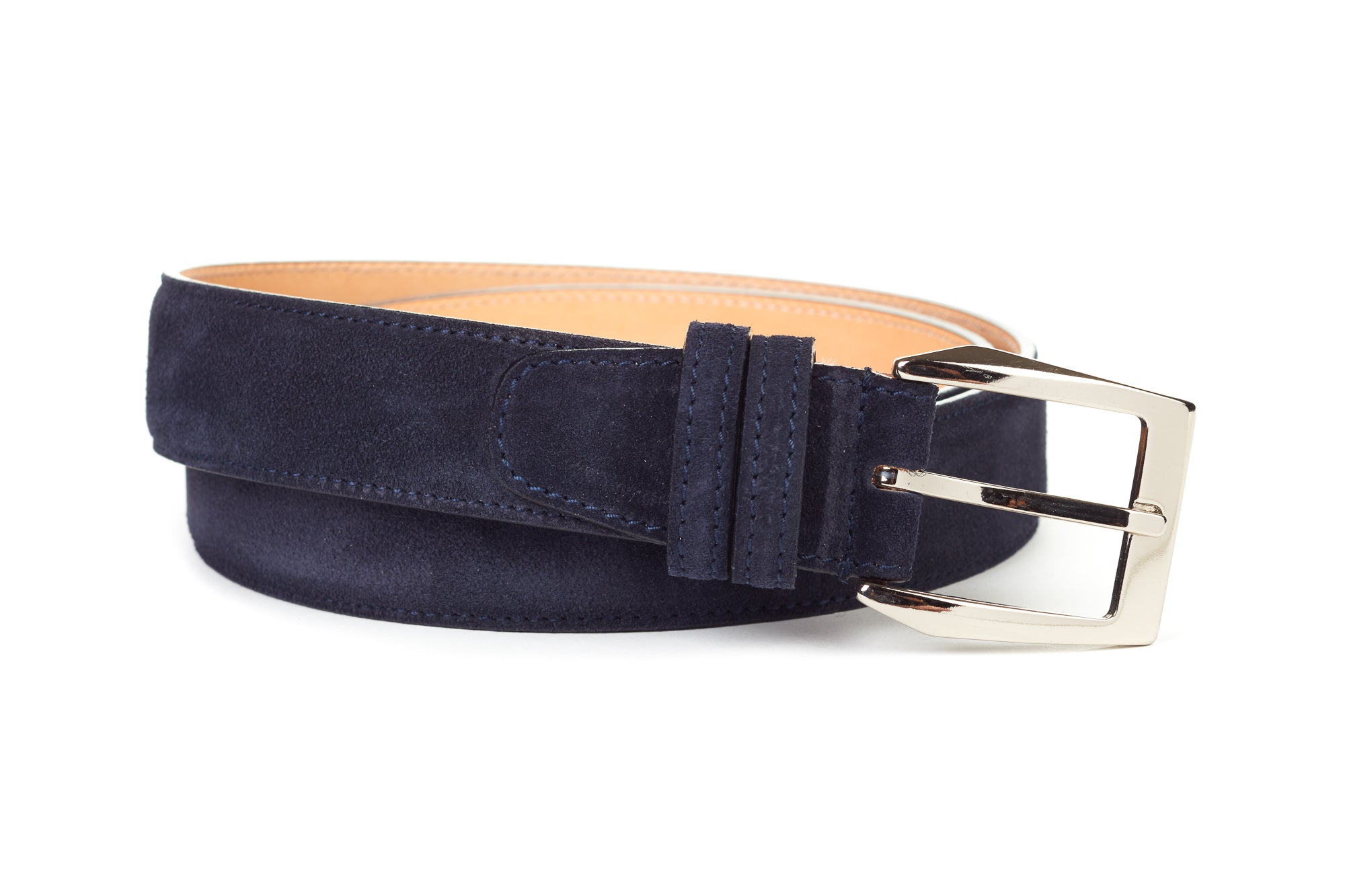
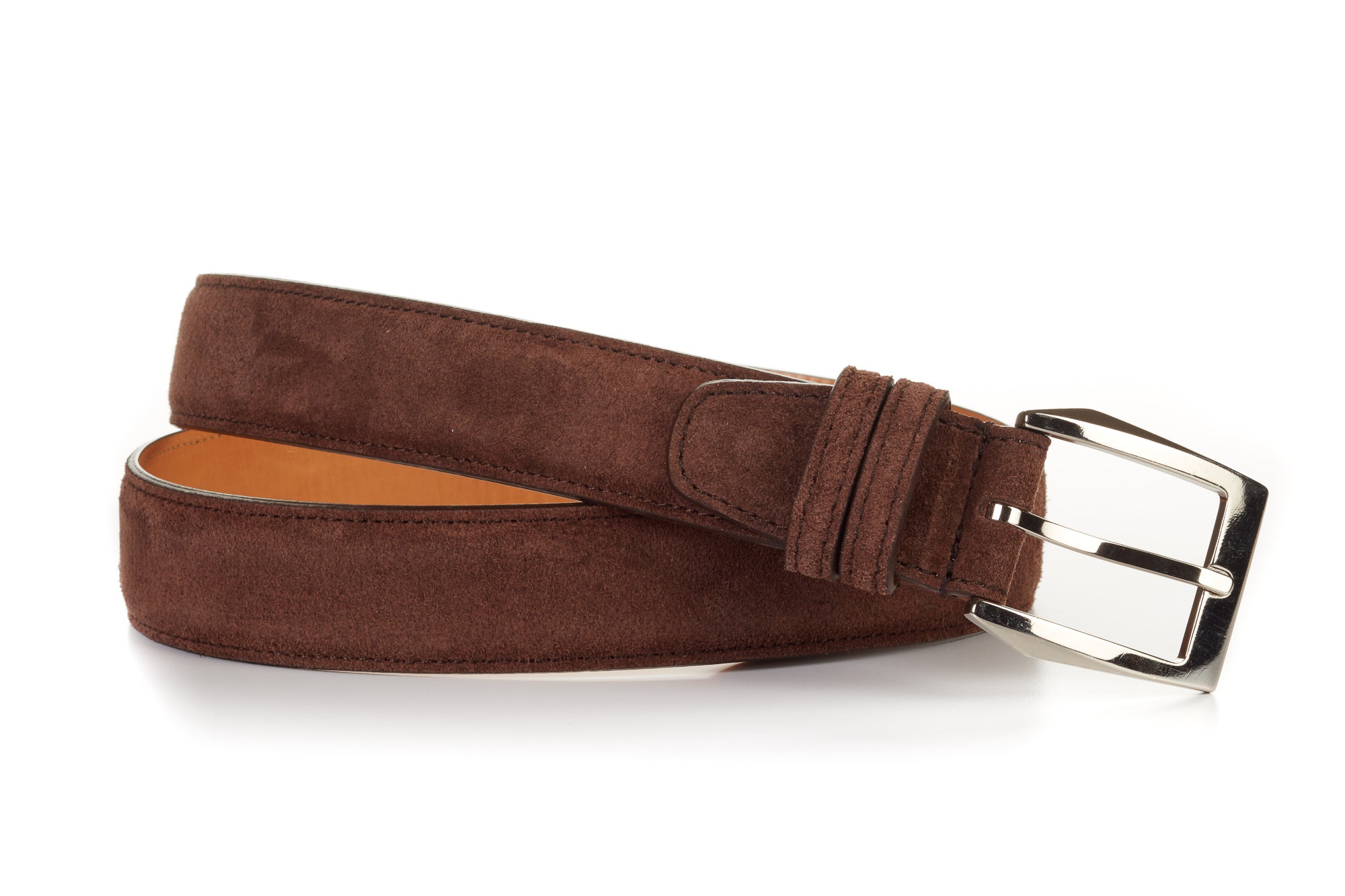
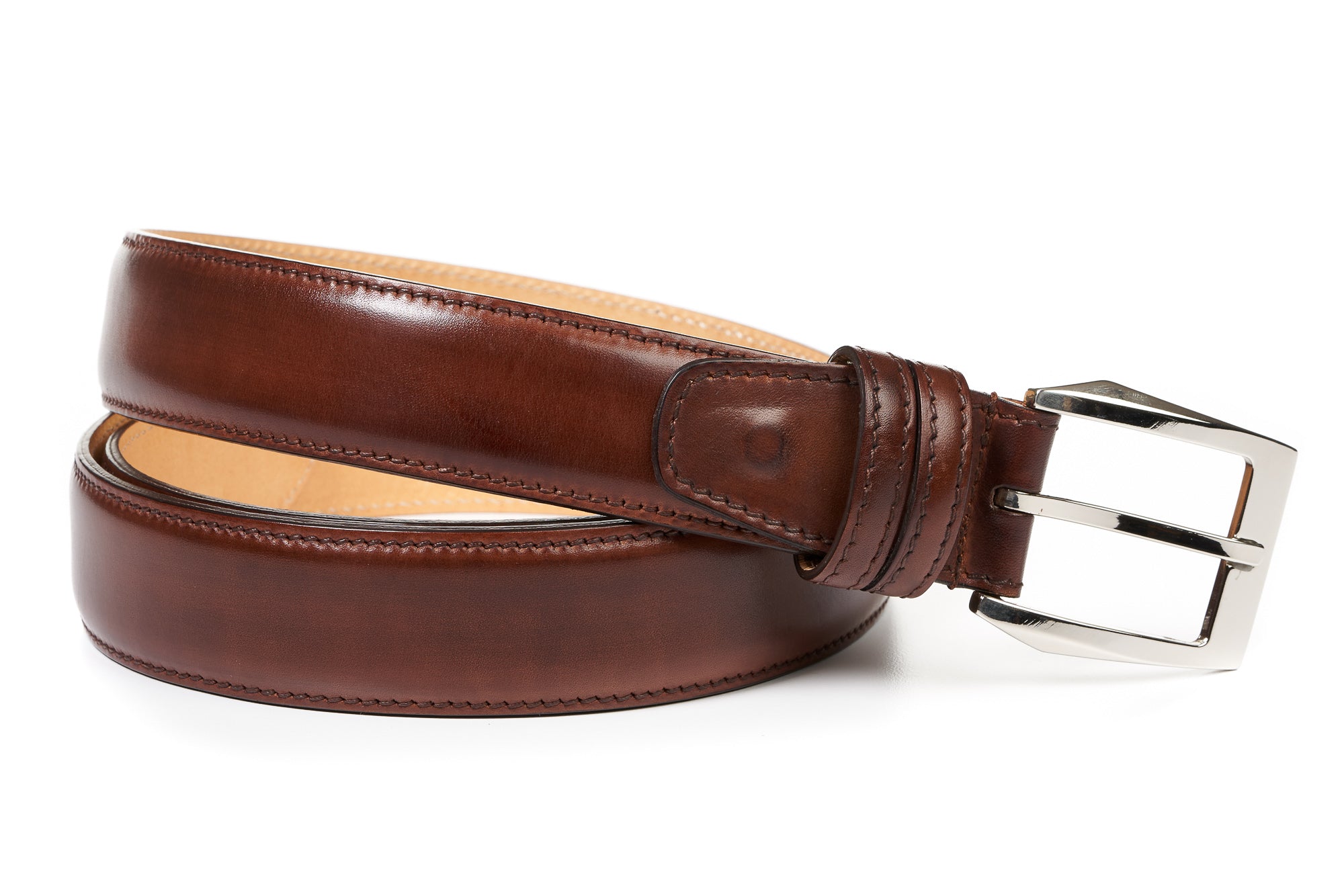
The rule is simple: match the leather finish and hardware tone. A black calfskin dress belt pairs with black Oxford or Derby shoes. A dark brown or burnished tan belt works with chocolate, cognac, or mid-brown leather shoes. Beyond color, match the hardware finish — silver buckle with silver shoe hardware, gold with gold. Paul Evans belts are designed with their shoe collection in mind, so if you're buying both together, the matching is built in. Width matters too: a 1.25-inch or 1.3-inch belt is correct for dress trousers; anything wider reads casual regardless of the leather.
Are Paul Evans belts true to size?
Paul Evans belts are sized to the center hole, which means if you wear a 34-inch trouser, you order a 34. Most belts in this collection have five holes spaced one inch apart, so there's room to adjust if your waist size sits between sizes. When in doubt, size up — it's better to use the inner holes than to run out of length. If you're between sizes, the product page notes which direction to go based on the specific cut.
How do I care for a full-grain Italian leather belt?
Clean it with a slightly damp cloth when needed and let it dry naturally, away from direct heat. Once or twice a year, condition the leather with a high-quality leather cream or balm — this keeps the grain supple and slows any surface drying. Avoid silicone-based products, which sit on the surface rather than penetrating the hide. Store the belt flat or loosely coiled, not cinched tight through a loop, which can crease the leather along the same line over time. Full-grain leather is forgiving, but basic maintenance extends its life significantly.
What width belt should I wear with a suit?
For a suit or formal dress trousers, a belt width between 1.1 and 1.3 inches is correct. Anything wider disrupts the clean line of a tailored waistband and reads more casual than the outfit calls for. Paul Evans dress belts are cut in this range by design — they sit flat through dress trouser loops without bunching or pulling. If you're wearing the belt with flat-front trousers specifically, err toward the narrower end of that range for the sharpest result.
What's the difference between a dress belt and a casual leather belt?
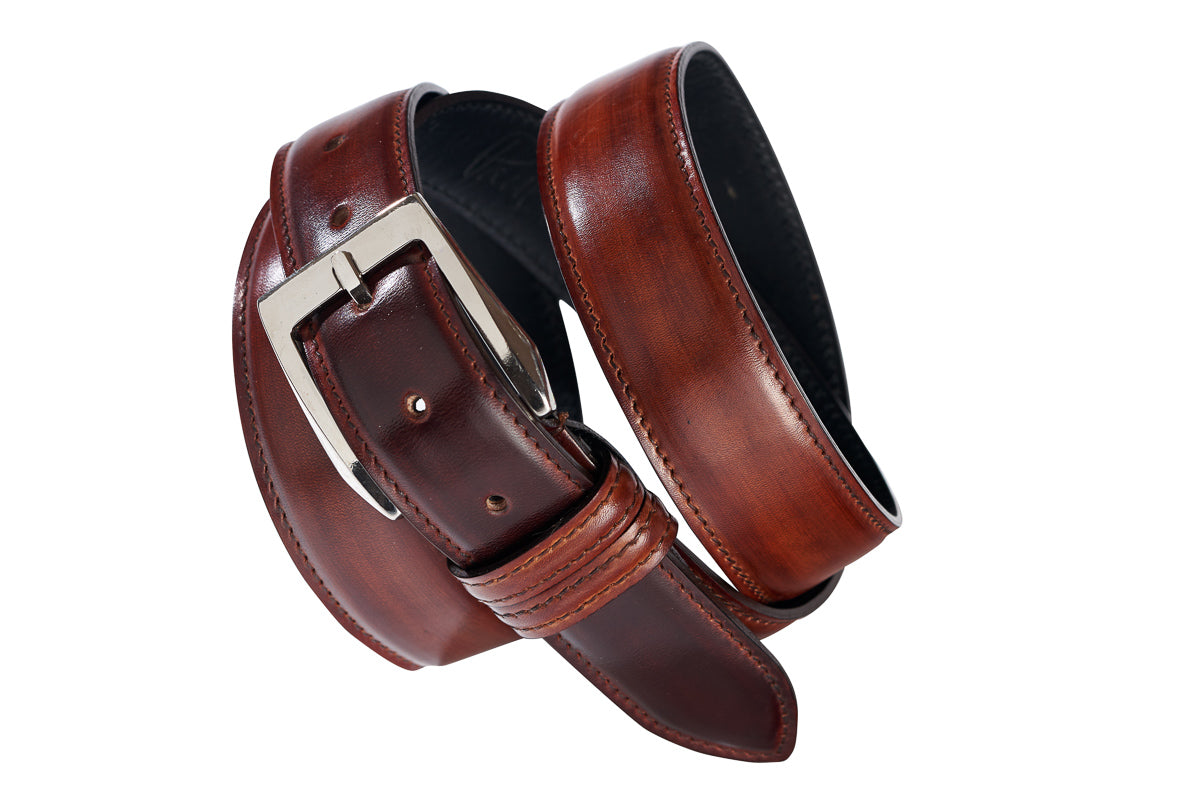
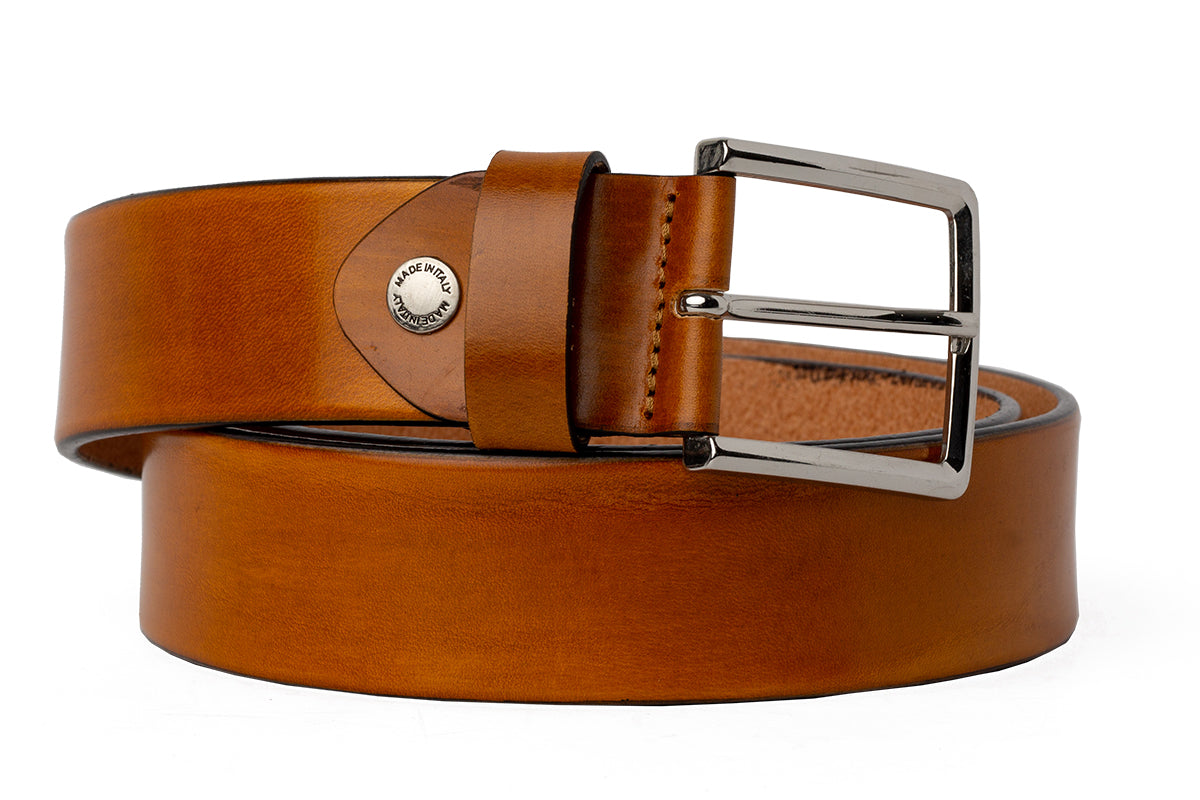
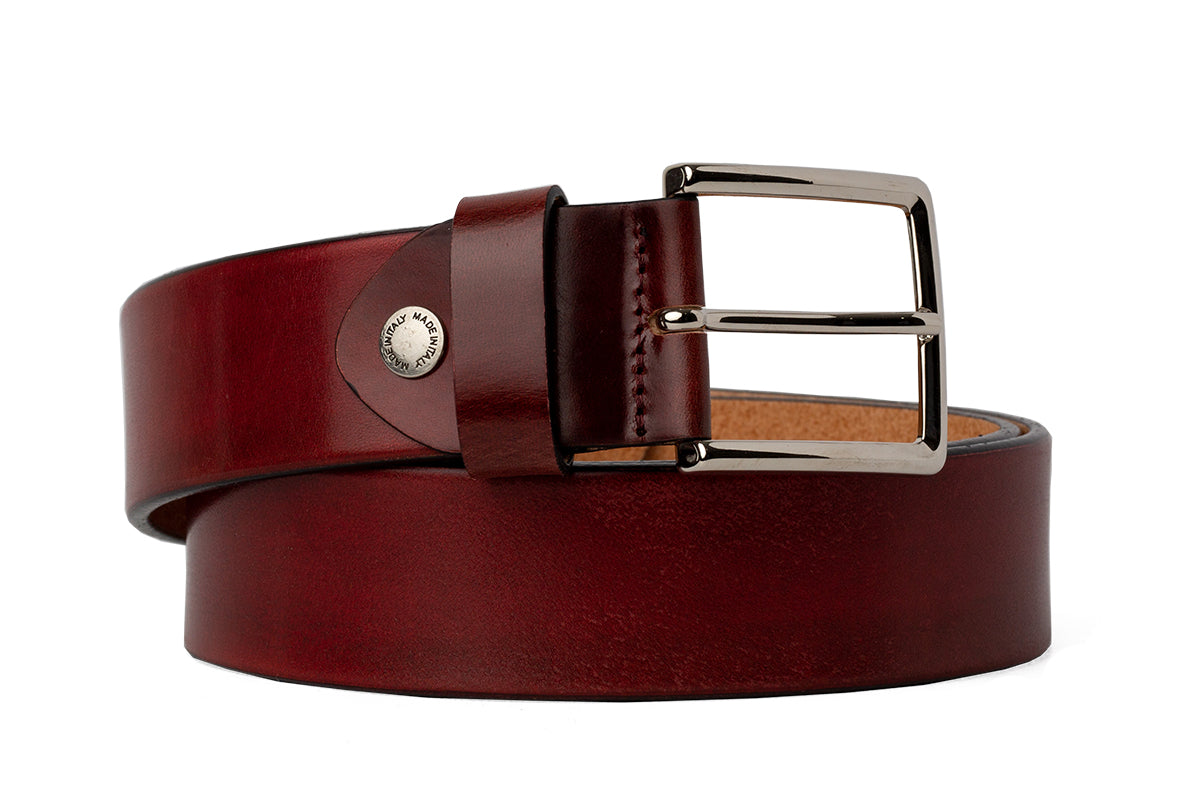
The distinction comes down to width, finish, and hardware. A men's dress belt is narrower (typically 1.1 to 1.3 inches), made from smooth or lightly textured full-grain leather, and fitted with a clean, flat-profile buckle in polished silver or gold. A casual leather belt runs wider (1.5 inches or more), may feature a burnished or matte finish, and often uses heavier hardware with a boxier frame. You can wear a dress belt with casual clothing and it tends to look intentional. Going the other direction — a wide casual belt with tailored trousers — doesn't work. When in doubt, the dress belt is the more versatile option.
Is a luxury men's belt actually worth the price compared to a mid-range option?
The difference shows up in three places: leather quality, construction, and longevity. A luxury men's belt made from full-grain Italian leather, with a properly set buckle bar and clean edge finishing, will outlast three or four mid-range belts over a ten-year period. The hardware won't pit or corrode. The leather won't crack at the fold point after a year of regular wear. And it won't look cheap against tailored clothing, which is often where mid-range belts expose themselves. Buying once and buying well is the more economical position over any meaningful timeframe.
What makes Paul Evans Italian leather belts different from other luxury options?
Paul Evans belts are made in Naples, Italy, using full-grain Italian leather from tanneries with decades of provenance. The construction is handled by craftsmen working in the same tradition as their shoe production — the same attention to edge finishing, hardware setting, and leather selection applies. The brand doesn't use corrected or top-grain leathers in this collection. Every belt is designed to work directly alongside the Paul Evans shoe range in terms of leather finish, hardware tone, and overall profile. You're not buying a belt as an afterthought — you're buying one built to the same standard as the shoes it's meant to match.